Wrapping up Q2 earnings, we look at the numbers and key takeaways for the finance and hr software stocks, including Workday (NASDAQ: WDAY) and its peers.
Organizations are constantly looking to improve organizational efficiencies, whether it is financial planning, tax management or payroll. Finance and HR software benefit from the SaaS-ification of businesses, large and small, who much prefer the flexibility of cloud-based, web-browser delivered software paid for on a subscription basis than the hassle and expense of purchasing and managing on-premise enterprise software.
The 12 finance and hr software stocks we track reported a mixed Q2. As a group, revenues beat analysts’ consensus estimates by 1.9% while next quarter’s revenue guidance was 0.8% below.
Thankfully, share prices of the companies have been resilient as they are up 8.2% on average since the latest earnings results.
Workday (NASDAQ: WDAY)
Born from the vision of PeopleSoft founders after Oracle's hostile takeover of their previous company, Workday (NASDAQ: WDAY) provides cloud-based software for financial management, human resources, planning, and analytics to help organizations manage their business operations.
Workday reported revenues of $2.65 billion, up 12.8% year on year. This print exceeded analysts’ expectations by 0.5%. Overall, it was a strong quarter for the company with a solid beat of analysts’ adjusted operating income estimates and an impressive beat of analysts’ billings estimates.
"We had a strong Q2, with AI driving more than 25% of our new ACV and more than 5,500 customers now using at least one of our organic agents," said Aneel Bhusri, co-founder, CEO, and chair, Workday. "Because of Workday's deterministic rails, customers can trust our agents with the work that matters, and you're seeing that in the numbers."
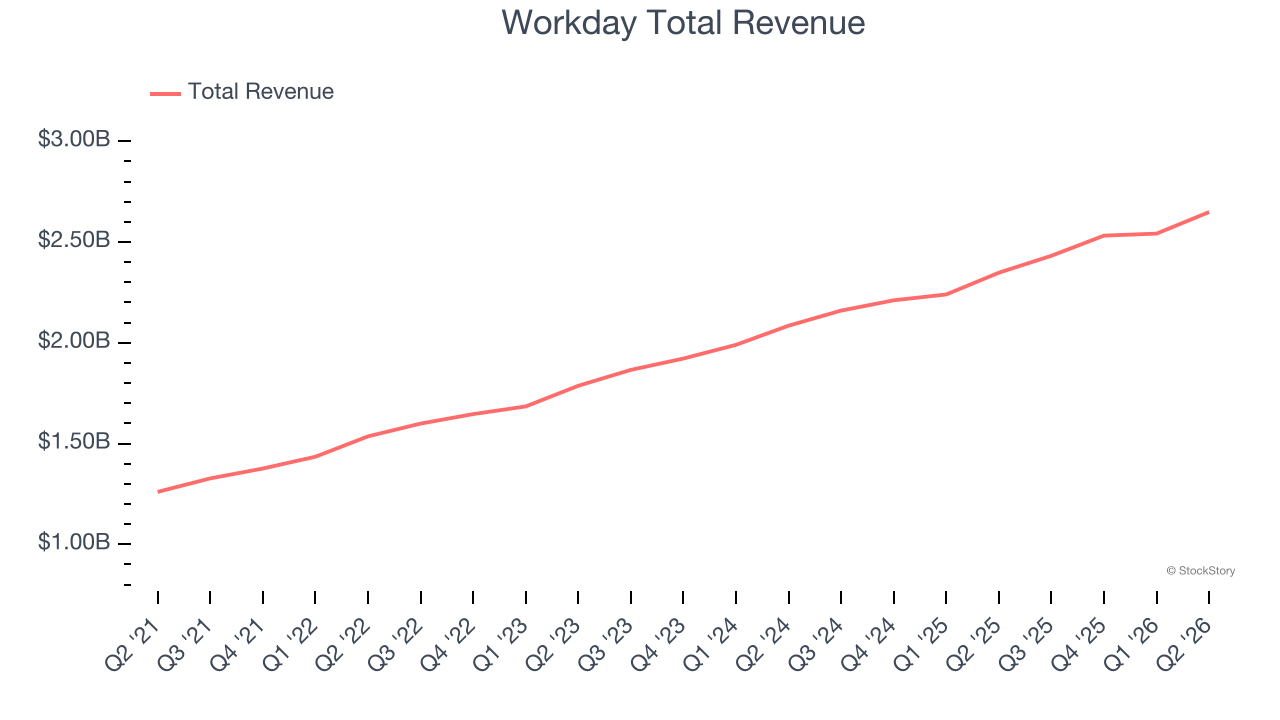
Interestingly, the stock is up 2.4% since reporting and currently trades at $198.20.
Is now the time to buy Workday? Access our full analysis of the earnings results here, it’s free.
Best Q2: Paycom (NYSE: PAYC)
Pioneering the concept of employees doing their own payroll with its "Beti" technology, Paycom (NYSE: PAYC) provides cloud-based human capital management software that helps businesses manage the entire employment lifecycle from recruitment to retirement.
Paycom reported revenues of $531.2 million, up 9.8% year on year, outperforming analysts’ expectations by 3.5%. The business had a very strong quarter with full-year EBITDA guidance exceeding analysts’ expectations and an impressive beat of analysts’ billings estimates.
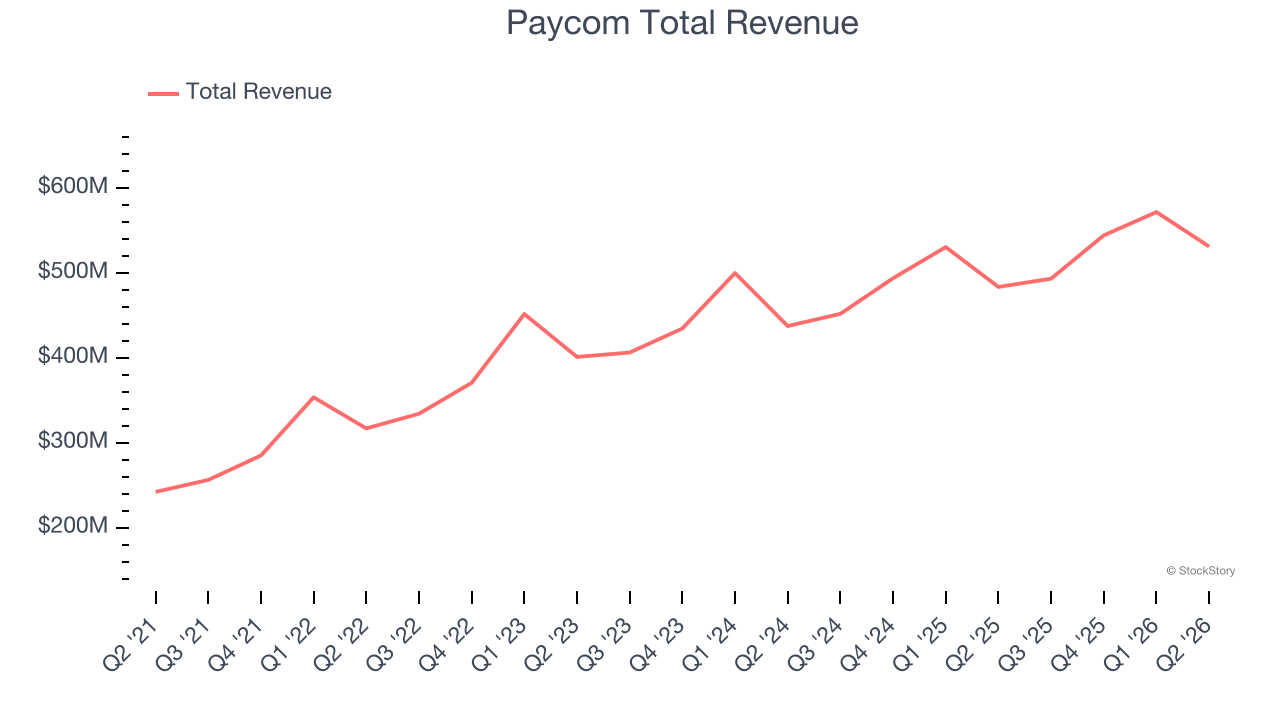
Paycom achieved the highest full-year guidance raise of the whole group. The market seems happy with the results as the stock is up 36.2% since reporting. It currently trades at $238.
Is now the time to buy Paycom? Access our full analysis of the earnings results here, it’s free.
Weakest Q2: Intuit (NASDAQ: INTU)
Originally named after its founding product "Intuitive for the first-time user," Intuit (NASDAQ: INTU) provides financial management software and services including TurboTax, QuickBooks, Credit Karma, and Mailchimp to help consumers and small businesses manage their finances.
Intuit reported revenues of $4.35 billion, up 13.7% year on year, exceeding analysts’ expectations by 2%. Still, it was a softer quarter as it posted full-year guidance of slowing revenue growth and full-year EPS guidance missing analysts’ expectations significantly.
Intuit delivered the weakest full-year guidance update among its peers. As expected, the stock is down 3.4% since the results and currently trades at $345.15.
Read our full analysis of Intuit’s results here.
BILL (NYSE: BILL)
Transforming the messy back-office financial operations that plague small business owners, BILL (NYSE: BILL) provides a cloud-based platform that automates accounts payable, accounts receivable, and expense management for small and midsize businesses.
BILL reported revenues of $436.2 million, up 13.8% year on year. This number beat analysts’ expectations by 1.4%. Taking a step back, it was a satisfactory quarter as it also logged EPS guidance for next quarter exceeding analysts’ expectations but full-year revenue guidance slightly missing analysts’ expectations.
The company lost 14,500 customers and ended up with a total of 479,300. The stock is flat since reporting and currently trades at $47.58.
Read our full, actionable report on BILL here, it’s free.
Marqeta (NASDAQ: MQ)
Powering the cards behind innovative fintech services like Block's Cash App, Marqeta (NASDAQ: MQ) provides a cloud-based platform that allows businesses to create customized payment card programs and process card transactions.
Marqeta reported revenues of $176 million, up 17% year on year. This result topped analysts’ expectations by 1.5%. However, it was a softer quarter as it produced revenue guidance for next quarter missing analysts’ expectations significantly.
Marqeta had the weakest guidance update of the whole group. The stock is down 9.2% since reporting and currently trades at $16.29.
Read our full, actionable report on Marqeta here, it’s free.
Market Update
Over the past year, investors have been forced to repeatedly answer the same question: what is the market’s biggest risk? The answer has changed several times, and each shift has reshaped market leadership.
Late in 2025 and early 2026, artificial intelligence became the market’s primary uncertainty. Investors questioned whether AI would erode software pricing power and weaken competitive moats as AI made it easier to replicate once-differentiated products.
By the spring, technology took a back seat to geopolitics. The U.S. conflict with Iran briefly became the market’s dominant narrative, raising concerns about oil prices, inflation, and global growth. But as energy markets remained orderly and fears of a prolonged supply disruption faded, investors quickly turned their focus back to fundamentals.
Want to invest in winners with rock-solid fundamentals? Check out our 9 Best Market-Beating Stocks and add them to your watchlist. These companies are poised for growth regardless of the political or macroeconomic climate.