Railcar products and services provider Trinity (NYSE: TRN) will be announcing earnings results this Thursday morning. Here’s what to expect.
Trinity missed analysts’ revenue expectations last quarter, reporting revenues of $492 million, down 16% year on year. It was a softer quarter for the company, with a significant miss of analysts’ EPS estimates.
Is Trinity a buy or sell going into earnings? Read our full analysis here, it’s free for active Edge members.
This quarter, the market is expecting Trinity’s revenue to decline 6.2% year on year, improving from the 39.8% decrease it recorded in the same quarter last year.
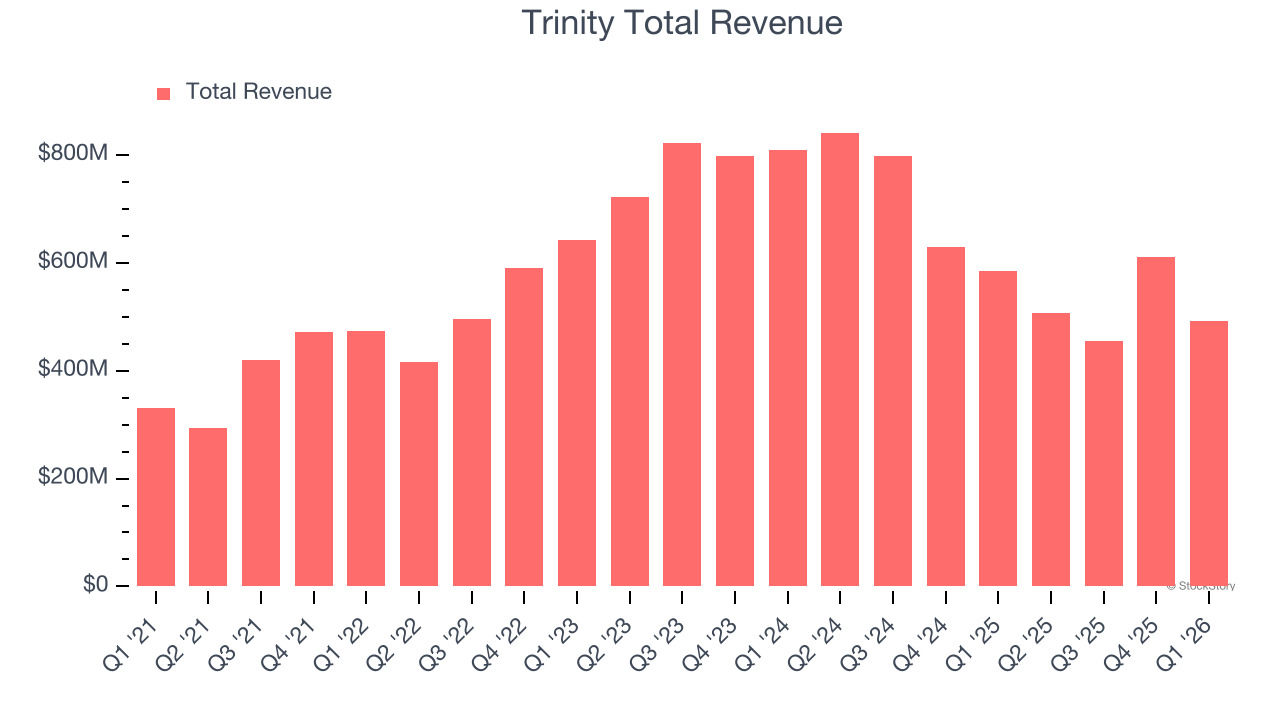
Analysts covering the company have generally reconfirmed their estimates over the last 30 days, suggesting they anticipate the business will stay the course heading into earnings. Trinity has missed Wall Street’s revenue estimates multiple times over the last two years.
Looking at Trinity’s peers in the heavy transportation equipment segment, some have already reported their Q2 results, giving us a hint as to what we can expect. Oshkosh delivered year-on-year revenue growth of 6.7%, beating analysts’ expectations by 3.3%, and Wabtec reported revenues up 17.5%, topping estimates by 3.3%. Wabtec traded up 13.1% following the results.
Read our full analysis of Oshkosh’s results here and Wabtec’s results here.
In the last twelve months or so, the market has shifted its attention from one area of macro importance to the next (AI disintermediation and AI capex spending to geopolitical conflict, rates, and whether the economy is on solid footing or not). While some of the heavy transportation equipment stocks have shown solid performance in this choppy environment, the group has generally underperformed, with share prices down 3.3% on average over the last month. Trinity is up 9.2% during the same time and is heading into earnings with an average analyst price target of $35 (compared to the current share price of $38.08).
ALSO WORTH WATCHING: Nvidia’s Quiet Partner. Nvidia’s chips cost a hundred grand. The connectors that make them work cost even more. One company makes them all.
Every AI server needs specialized infrastructure the chip companies don’t make. High-speed cables. Power connectors. Thermal sensors. This 90-year-old company built a monopoly on it. The AI boom just started. This stock is still flying under the radar. Claim The Stock Ticker Here for FREE.