Motion control and electronic systems manufacturer Helios Technologies (NYSE: HLIO) reported revenue ahead of Wall Street’s expectations in Q1 CY2026, with sales up 16.8% year on year to $228.4 million. On top of that, next quarter’s revenue guidance ($229.5 million at the midpoint) was surprisingly good and 8.7% above what analysts were expecting. Its non-GAAP profit of $0.80 per share was 16.1% above analysts’ consensus estimates.
Is now the time to buy Helios? Find out by accessing our full research report, it’s free.
Helios (HLIO) Q1 CY2026 Highlights:
- Revenue: $228.4 million vs analyst estimates of $220.3 million (16.8% year-on-year growth, 3.7% beat)
- Adjusted EPS: $0.80 vs analyst estimates of $0.69 (16.1% beat)
- Adjusted EBITDA: $46.5 million vs analyst estimates of $43.54 million (20.4% margin, 6.8% beat)
- The company lifted its revenue guidance for the full year to $855 million at the midpoint from $840 million, a 1.8% increase
- Management raised its full-year Adjusted EPS guidance to $2.88 at the midpoint, a 4.5% increase
- Operating Margin: 13.1%, up from 8.7% in the same quarter last year
- Free Cash Flow Margin: 7.5%, similar to the same quarter last year
- Organic Revenue rose 14% year on year (miss)
- Market Capitalization: $2.26 billion
“We started 2026 with another strong quarter, extending the performance we built last year and reflecting the strength of our global team across all regions, along with disciplined execution in both business segments. I want to thank our colleagues around the world for delivering an outstanding start to the year. Notably, the Company delivered one of the highest sales quarters in its 56-year history, while Enovation Controls achieved a record quarter. These results reflect our accelerated pace of innovation and the go-to-market initiatives we have been advancing over the past year. Importantly, this performance was delivered against a backdrop of continued geopolitical volatility and limited recovery across our end markets,” said Sean Bagan, President & Chief Executive Officer of Helios.
Company Overview
Founded on the principle of treating others as one wants to be treated, Helios (NYSE: HLIO) designs, manufactures, and sells motion and electronic control components for various sectors.
Revenue Growth
Reviewing a company’s long-term sales performance reveals insights into its quality. Any business can experience short-term success, but top-performing ones enjoy sustained growth for years. Thankfully, Helios’s 7.8% annualized revenue growth over the last five years was decent. Its growth was slightly above the average industrials company and shows its offerings resonate with customers.
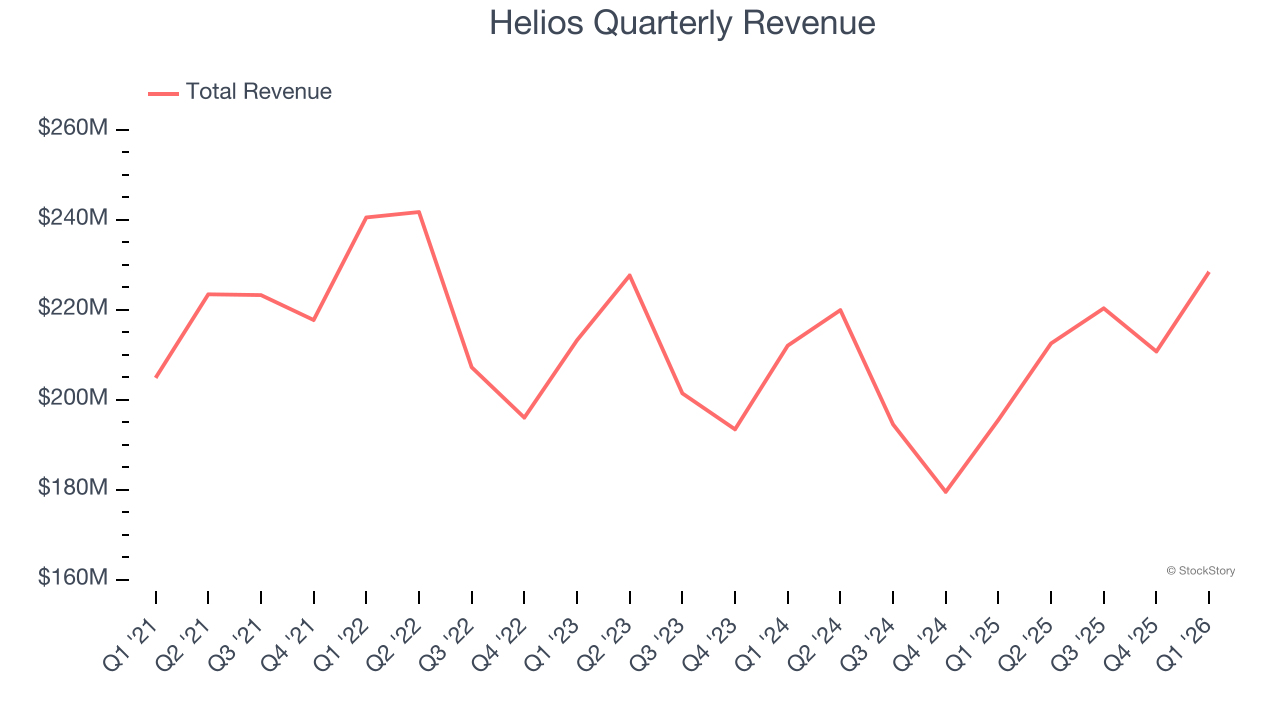
Long-term growth is the most important, but within industrials, a half-decade historical view may miss new industry trends or demand cycles. Helios’s recent performance shows its demand has slowed as its annualized revenue growth of 2.2% over the last two years was below its five-year trend. We’re wary when companies in the sector see decelerations in revenue growth, as it could signal changing consumer tastes aided by low switching costs. 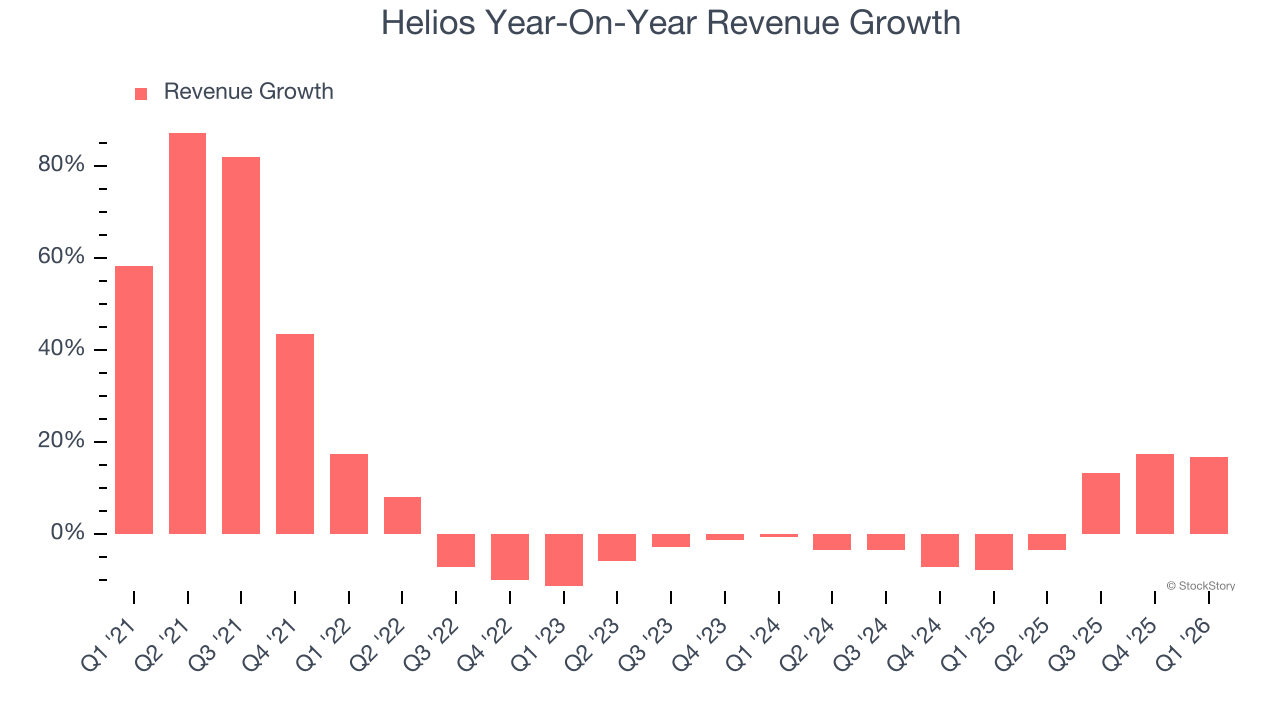
Helios also reports organic revenue, which strips out one-time events like acquisitions and currency fluctuations that don’t accurately reflect its fundamentals. Over the last two years, Helios’s organic revenue averaged 3.3% year-on-year growth. Because this number aligns with its two-year revenue growth, we can see the company’s core operations (not acquisitions and divestitures) drove most of its results. 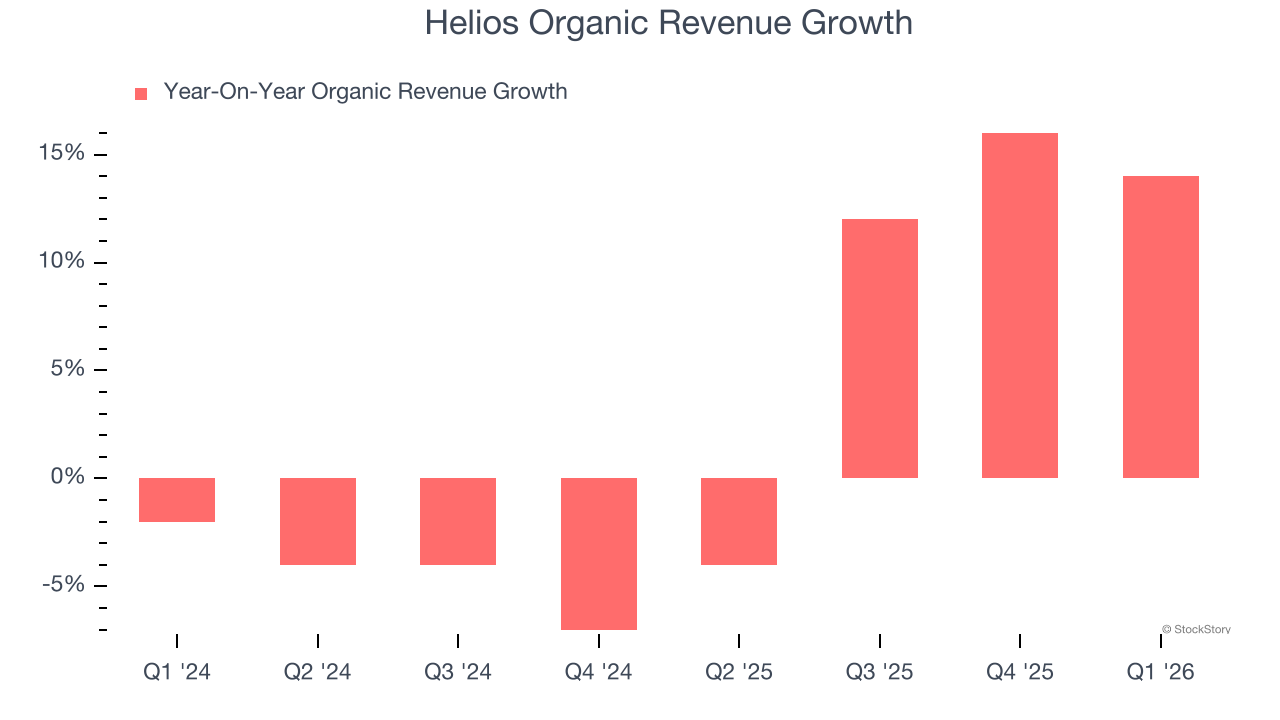
This quarter, Helios reported year-on-year revenue growth of 16.8%, and its $228.4 million of revenue exceeded Wall Street’s estimates by 3.7%. Company management is currently guiding for a 8% year-on-year increase in sales next quarter.
Looking further ahead, sell-side analysts expect revenue to decline by 3.8% over the next 12 months, a deceleration versus the last two years. This projection doesn't excite us and implies its products and services will see some demand headwinds.
WHILE YOU’RE HERE: The Next Palantir? One satellite company captures images of every point on Earth. Every single day. The Pentagon wants it. Hedge funds are using it to beat earnings. You’ve probably never heard of it.
This is what the early days of Palantir looked like before it became a $437 billion giant. Same playbook. Different technology. If you missed Palantir, you need to see this. Claim The Stock Ticker for Free HERE.
Operating Margin
Operating margin is an important measure of profitability as it shows the portion of revenue left after accounting for all core expenses – everything from the cost of goods sold to advertising and wages. It’s also useful for comparing profitability across companies with different levels of debt and tax rates because it excludes interest and taxes.
Helios has been an efficient company over the last five years. It was one of the more profitable businesses in the industrials sector, boasting an average operating margin of 12%.
Analyzing the trend in its profitability, Helios’s operating margin decreased by 8.4 percentage points over the last five years. This raises questions about the company’s expense base because its revenue growth should have given it leverage on its fixed costs, resulting in better economies of scale and profitability.
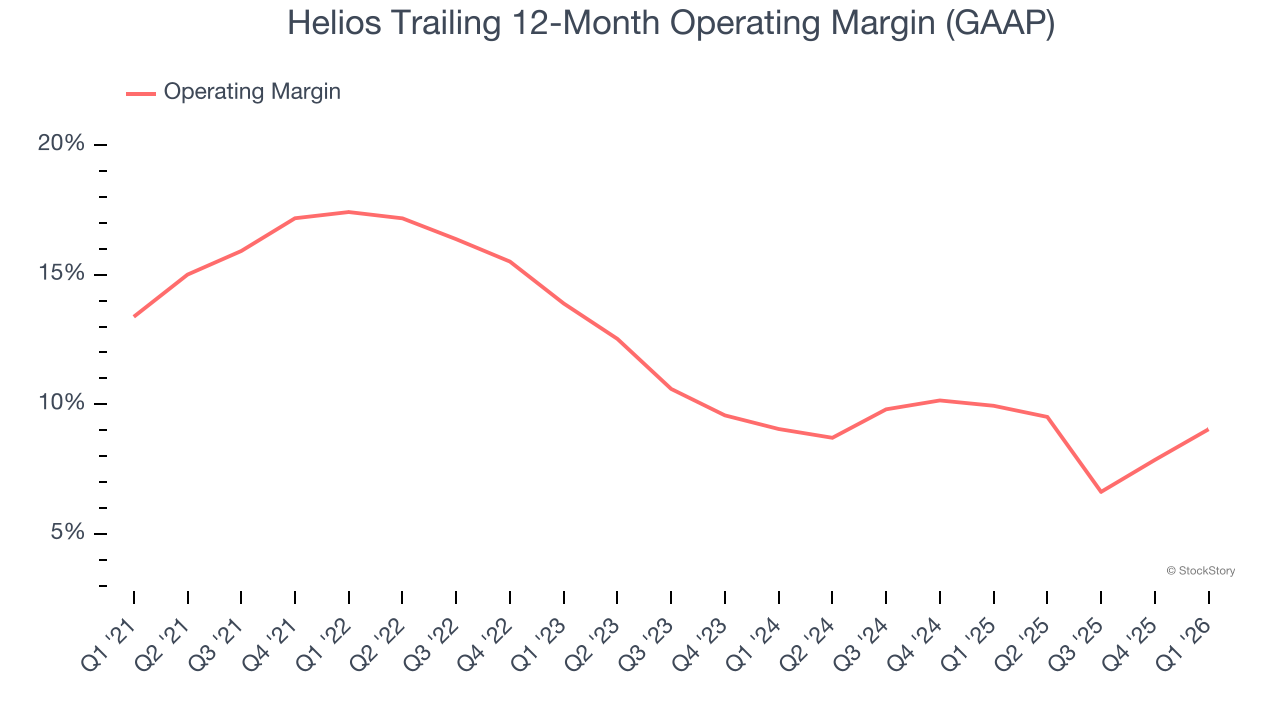
In Q1, Helios generated an operating margin profit margin of 13.1%, up 4.4 percentage points year on year. The increase was encouraging, and because its operating margin rose more than its gross margin, we can infer it was more efficient with expenses such as marketing, R&D, and administrative overhead.
Earnings Per Share
We track the long-term change in earnings per share (EPS) for the same reason as long-term revenue growth. Compared to revenue, however, EPS highlights whether a company’s growth is profitable.
Helios’s EPS grew at a weak 1.8% compounded annual growth rate over the last five years, lower than its 7.8% annualized revenue growth. This tells us the company became less profitable on a per-share basis as it expanded.
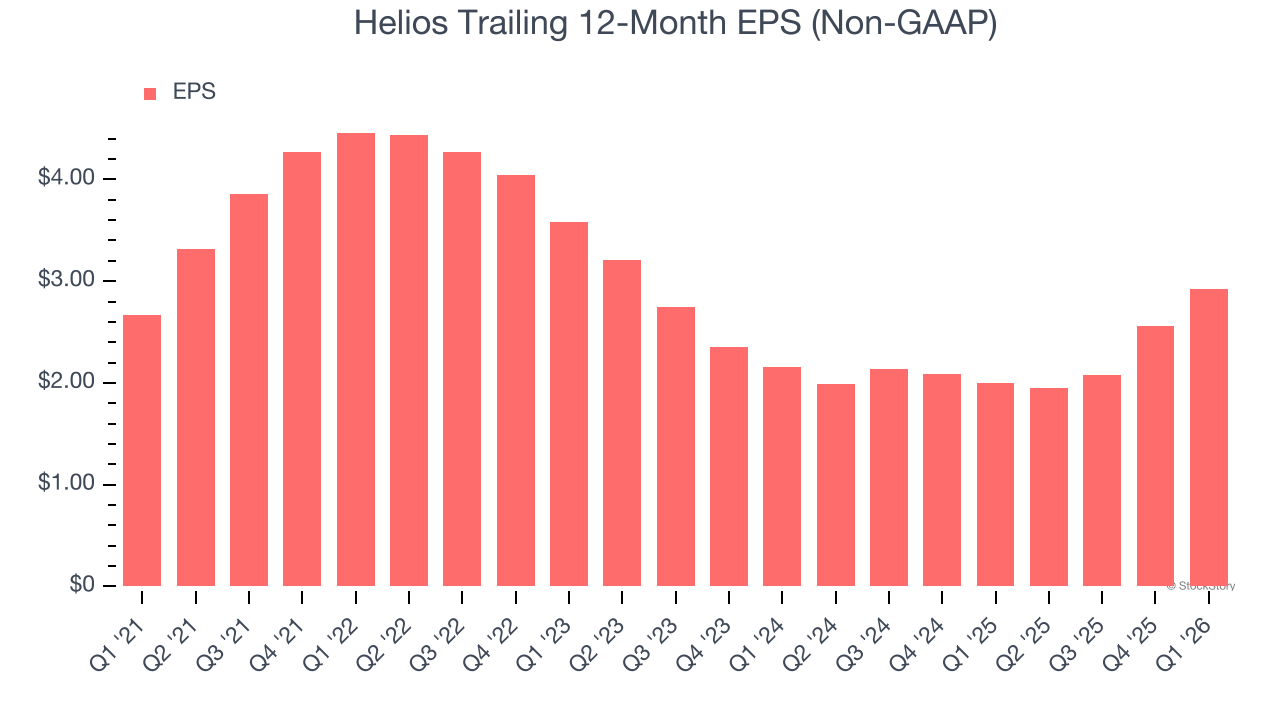
Diving into the nuances of Helios’s earnings can give us a better understanding of its performance. As we mentioned earlier, Helios’s operating margin expanded this quarter but declined by 8.4 percentage points over the last five years. Its share count also grew by 3%, meaning the company not only became less efficient with its operating expenses but also diluted its shareholders. 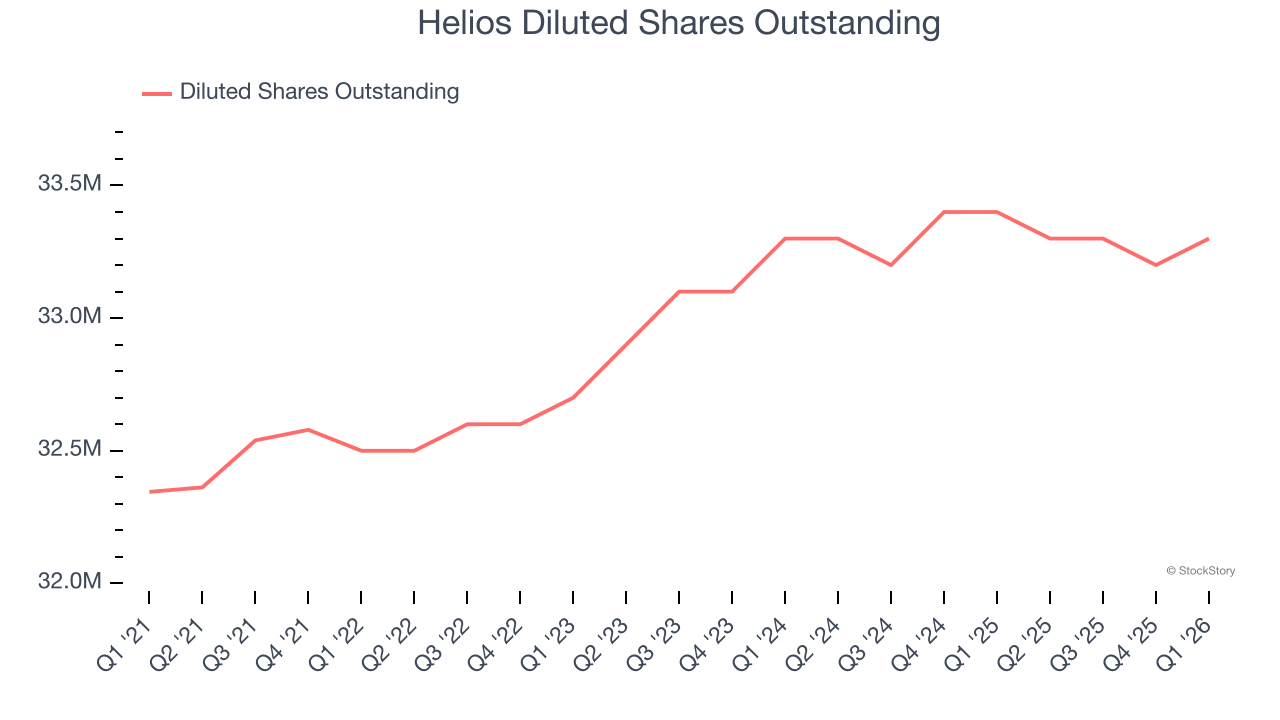
Like with revenue, we analyze EPS over a shorter period to see if we are missing a change in the business.
For Helios, its two-year annual EPS growth of 16.3% was higher than its five-year trend. This acceleration made it one of the faster-growing industrials companies in recent history.
In Q1, Helios reported adjusted EPS of $0.80, up from $0.44 in the same quarter last year. This print easily cleared analysts’ estimates, and shareholders should be content with the results. Over the next 12 months, Wall Street expects Helios’s full-year EPS of $2.92 to stay about the same.
Key Takeaways from Helios’s Q1 Results
We were impressed by Helios’s optimistic EPS guidance for next quarter, which blew past analysts’ expectations. We were also excited its adjusted operating income outperformed Wall Street’s estimates by a wide margin. On the other hand, its organic revenue missed. Zooming out, we think this quarter featured some important positives. The stock traded up 8.2% to $73.70 immediately after reporting.
Helios may have had a good quarter, but does that mean you should invest right now? The latest quarter does matter, but not nearly as much as longer-term fundamentals and valuation, when deciding if the stock is a buy. We cover that in our actionable full research report which you can read here (it’s free).