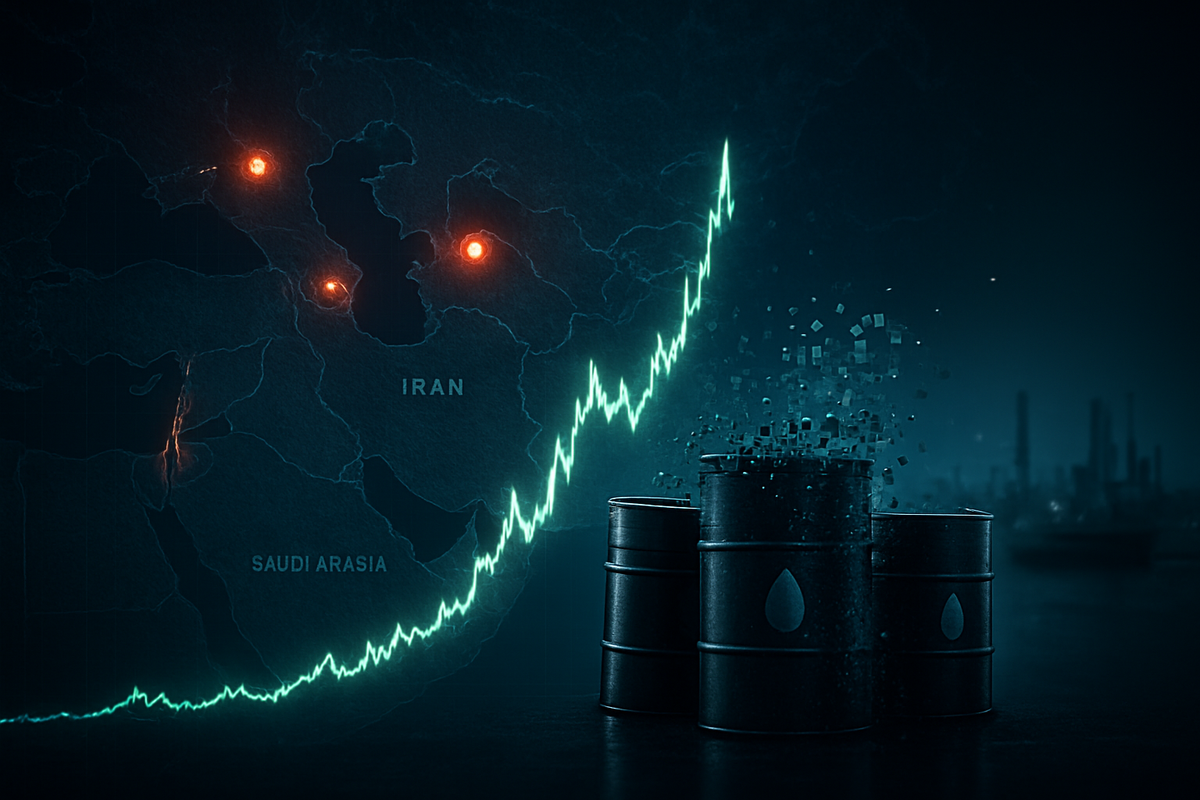
The global energy landscape has been thrust into an unprecedented crisis as a widening conflict in the Middle East has effectively paralyzed the world’s most critical oil transit corridor. According to a harrowing new report from the International Energy Agency (IEA), the closure of the Strait of Hormuz and the subsequent halting of exports have resulted in a staggering 10 million barrel per day (mb/d) curtailment in Gulf production. This figure represents roughly 10% of total global demand, marking the single largest supply disruption in modern history and sending shockwaves through every corner of the financial markets.
As of today, March 26, 2026, the energy sector is grappling with a reality that many feared but few prepared for. The sudden evaporation of nearly 10 million barrels of daily output has forced world leaders into emergency protocols, triggered a record-breaking release from strategic reserves, and prompted major investment banks to rewrite their economic outlooks for the remainder of the decade. With oil prices in a state of vertical ascent, the immediate implications for global inflation and consumer spending are nothing short of dire.
The current crisis traces its immediate origins to late February 2026, when a rapid escalation of military hostilities led to the blockade of the Strait of Hormuz. By March 1, the primary waterway for Middle Eastern crude was effectively sealed, trapping millions of barrels of oil and liquefied natural gas (LNG) within the Persian Gulf. In response to the inability to export their product, major producers including Saudi Arabia, the United Arab Emirates, and Kuwait were forced to shutter production facilities almost overnight. The IEA’s latest assessment confirms that by mid-March, these combined curtailments surpassed the 10 million mb/d threshold.
The timeline of this catastrophe has been agonizingly swift. Following the initial military strikes on February 28, the market initially hoped for a diplomatic de-escalation. However, by the second week of March, it became clear that the disruption would be prolonged. The IEA has labeled this an "existential threat" to global energy security, noting that the sheer volume of lost production exceeds the impacts of both the 1973 oil embargo and the 1979 Iranian Revolution combined. Market participants have watched in disbelief as the global supply-demand balance, already tight from years of underinvestment in new capacity, simply shattered.
Key stakeholders, including the 32 member nations of the IEA, have moved into a "war footing." The initial market reaction was characterized by extreme volatility, with Brent crude futures spiking by double digits in single sessions. Traders have described the environment as "devoid of liquidity," as the uncertainty regarding the duration of the blockade makes pricing any long-term contracts nearly impossible.
The fallout from this supply shock has created a stark divide between the "haves" and "have-nots" of the corporate world. Integrated oil giants such as ExxonMobil (NYSE: XOM) and Chevron (NYSE: CVX) have emerged as the primary beneficiaries, at least from a valuation perspective. As of late March, Chevron has hit an all-time high, with investors flocking to the company’s diversified upstream and downstream assets as a hedge against soaring energy prices. Similarly, domestic producers with minimal Middle Eastern exposure, such as Occidental Petroleum (NYSE: OXY), are seeing increased interest as their North American production becomes more valuable by the hour.
Conversely, the transport and logistics sectors are facing what some analysts call an "extinction-level event" for their current profit margins. The airline industry has been hit particularly hard. Major carriers including Delta Air Lines (NYSE: DAL), United Airlines (NASDAQ: UAL), and American Airlines (NASDAQ: AAL) have seen their fuel costs double in a matter of weeks. While these companies are attempting to pass costs onto consumers through aggressive fare hikes of 10% or more, the potential for "demand destruction"—where travelers simply stop booking flights due to high costs—looms large.
Beyond transportation, the manufacturing sector is bracing for a massive spike in input costs. Companies that rely heavily on petroleum-based plastics or energy-intensive processes are seeing their margins evaporate. Retailers like Walmart (NYSE: WMT) and Amazon (NASDAQ: AMZN) are also under pressure, as the cost of moving goods through their vast logistics networks skyrockets. For these firms, the supply shock isn't just about the price at the pump; it’s a systemic increase in the cost of doing business that could persist for years.
To combat the spiraling prices, the IEA has authorized the largest coordinated emergency action in its 50-year history: the release of 400 million barrels of oil from strategic reserves. The United States is spearheading this effort, contributing 172 million barrels from its Strategic Petroleum Reserve. While the 400-million-barrel figure is visually impressive, analysts warn it acts only as a temporary "band-aid." At a 10 million b/d deficit, the entire 400-million-barrel release only covers approximately 40 days of the lost production, assuming the conflict does not escalate further.
The gravity of the situation is perhaps best reflected in the actions of Goldman Sachs (NYSE: GS). The investment bank’s energy analysts have raised their price forecasts twice in just the last two weeks—an extremely rare move that highlights the velocity of the crisis. Goldman now projects Brent crude to average $110 per barrel through the second quarter, with a "worst-case" risk scenario of $135 if the Strait of Hormuz remains closed through June. This aggressive re-forecasting has sent a clear signal to the broader market: the "cheap energy" era is officially on hiatus.
This event is already drawing comparisons to the stagflationary periods of the 1970s. However, the 2026 shock is arguably more complex due to the interconnectedness of modern global supply chains and the ongoing, albeit now hindered, transition toward renewable energy. Policy implications are already emerging, with several G7 nations considering emergency subsidies for energy bills and a renewed, desperate push for domestic energy independence through both nuclear and renewable projects.
Looking ahead, the short-term outlook remains tethered entirely to the geopolitical situation in the Gulf. If a diplomatic solution or a military breakthrough reopens the Strait of Hormuz within the next month, the market may see a rapid "relief sell-off." However, the longer the blockade persists, the more likely we are to see permanent structural shifts in the global economy. Strategic pivots are already underway; many industrial firms are accelerating plans to electrify their operations, while logistics companies are exploring more efficient, albeit slower, alternative routes that bypass the Middle East entirely.
Market opportunities may emerge in the renewable energy sector and in energy efficiency technology. As traditional fuel becomes prohibitively expensive, the ROI for solar, wind, and battery storage projects becomes significantly more attractive. However, these are long-term solutions to a very immediate problem. In the coming months, the biggest challenge for the market will be navigating the inflationary pressure that this 10 million b/d hole creates. We are likely to see central banks forced into a difficult position—hiking rates to curb oil-induced inflation while the economy simultaneously slows due to high energy costs.
The 10 million b/d supply shock of 2026 will likely be remembered as the moment the global energy transition moved from a policy goal to a national security mandate. The IEA’s report serves as a stark reminder of the world's continued, and perhaps dangerous, reliance on a handful of volatile geographic regions for its primary energy needs. While the 400-million-barrel reserve release provides a temporary cushion, it cannot replace the massive volume of oil currently locked behind a wall of conflict.
Investors should prepare for sustained volatility and a "higher-for-longer" energy price environment. Moving forward, the key metrics to watch will be the weekly IEA inventory reports and any official statements regarding the status of the Strait of Hormuz. For the broader market, the focus will shift to how well the "losers" of this shock—airlines, shippers, and manufacturers—can adapt to a world where oil is no longer a cheap or reliable commodity. The resilience of the global consumer, faced with record fuel prices and rising ticket costs, will ultimately determine if this energy crisis tips the world into a significant recession.
This content is intended for informational purposes only and is not financial advice.