Microsoft Corp. (NASDAQ: MSFT) shares have entered a period of intense volatility this March, as the market pivots from the euphoria of the artificial intelligence revolution to a cold, hard look at the balance sheet. Despite maintaining strong top-line revenue, the software giant is facing a "valuation digestion" period that has seen its stock price retreat significantly from its late 2025 highs, driven by growing skepticism over the massive capital requirements of its AI infrastructure and its increasingly complicated relationship with OpenAI.
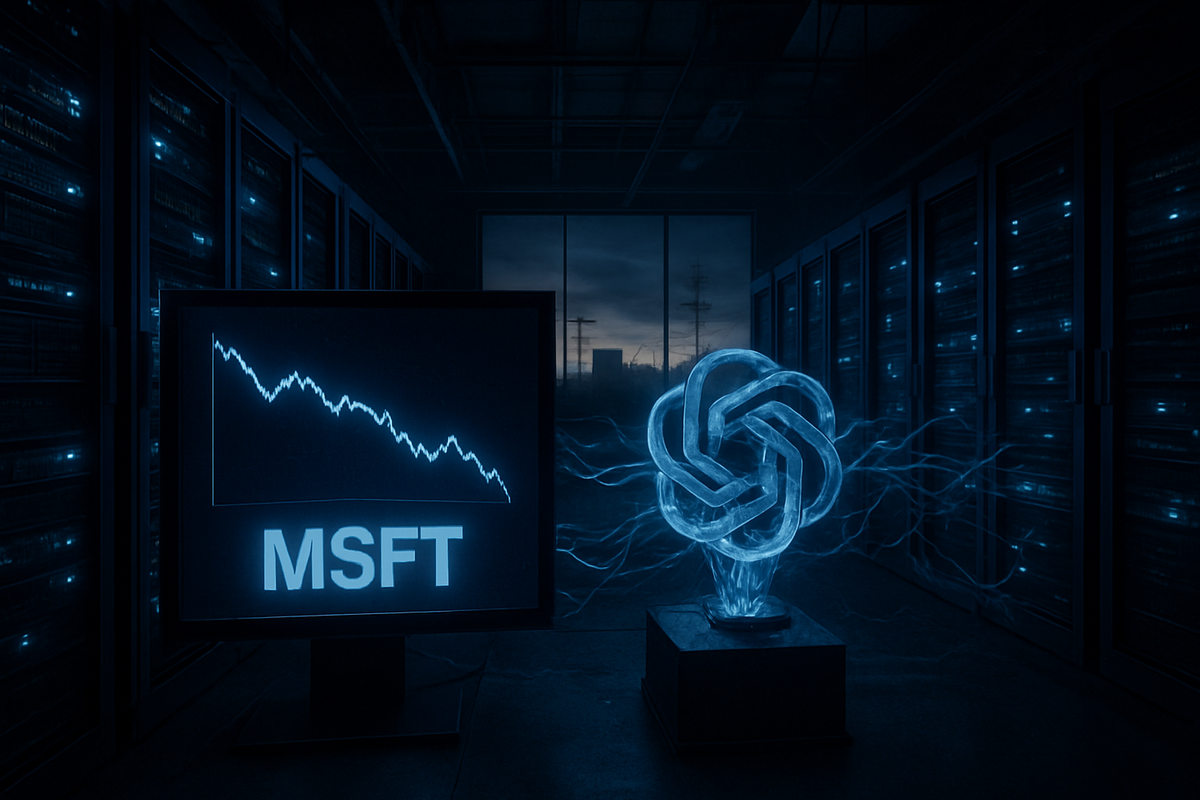
As of March 24, 2026, Microsoft stock is trading near $374, marking a year-to-date decline of approximately 21%. The slide reflects a fundamental shift in investor sentiment: the "show me the money" phase of AI has arrived. With Microsoft projected to spend a staggering $120 billion on capital expenditures this fiscal year, Wall Street is no longer content with promises of future dominance, demanding instead a clear timeline for a return on investment (ROI) that currently appears to be years away.
The Cost of the Future: Breaking Down the $120 Billion Spend
The primary catalyst for the recent sell-off is the sheer scale of Microsoft's infrastructure spending. In the most recent quarter alone, the company reported a record $37.5 billion in capital expenditures, largely dedicated to building massive data centers, securing limited power supplies, and ramping up production of its custom "Maia" AI chips. While CFO Amy Hood has highlighted an $80 billion backlog in Azure orders, the company remains "capacity-constrained," unable to fulfill demand due to global shortages in electrical grid capacity—a bottleneck that investors fear will cap growth in the near term.
The timeline leading to this moment has been one of accelerating costs. Throughout 2025, Microsoft aggressively expanded its footprint to stay ahead of the AI curve, but the transition from high-margin software sales to the capital-intensive business of physical hardware and energy has begun to weigh on margins. Analysts estimate that at the current AI revenue run rate of $13 billion, it could take six to eight years for Microsoft to recoup its infrastructure investments. This "payback period" has become a central point of contention for institutional investors who were previously accustomed to the leaner business models of the cloud era.
Adding to the tension is the evolving nature of the partnership with OpenAI. What began as a symbiotic alliance has grown into a source of significant financial and strategic friction. Microsoft’s stake in the research lab has been restructured to approximately 27%, but the partnership is no longer exclusive in the way it once was. In February 2026, OpenAI launched "Frontier," its new enterprise agent platform, and notably signed a $50 billion exclusive cloud deal with Amazon.com, Inc. (NASDAQ: AMZN), arguing the platform falls outside its original contract with Microsoft. This move has shocked the industry and raised questions about the long-term defensibility of Microsoft’s multi-billion dollar bet.
Winners and Losers in the Hyperscaler Arms Race
In the current market environment, the "Big Five" tech giants are locked in an unprecedented spending war that is reshaping the competitive landscape. Amazon (NASDAQ: AMZN) appears to be a temporary winner in the eyes of some analysts, having successfully poached OpenAI’s "Frontier" platform for its AWS cloud service. By committing to a projected $200 billion in CapEx for 2026, Amazon is positioning itself as the infrastructure leader, though it faces the same long-term ROI risks as its peers.
Alphabet Inc. (NASDAQ: GOOGL), the parent company of Google, has also gained ground. Its Gemini AI system has matured significantly over the past year, and Google Cloud growth is now outpacing its core advertising business for the first time. With a 2026 CapEx budget of $175 billion, Google is benefiting from its vertical integration, using its own Tensor Processing Units (TPUs) to mitigate some of the costs that Microsoft incurs by relying heavily on third-party silicon and energy providers.
On the losing side of this shift are the software-only companies that lack the capital to build their own infrastructure. These firms are increasingly beholden to the hyperscalers, facing rising costs for the compute power necessary to run their AI features. Meanwhile, Meta Platforms, Inc. (NASDAQ: META) continues to spend aggressively on its open-source Llama models, creating a deflationary pressure on AI software pricing that further complicates Microsoft’s path to profitability for its premium Copilot services.
A Broader Shift: From Software Margins to Industrial Realities
This event marks a significant turning point in the technology sector, mirroring historical precedents like the massive build-out of fiber-optic networks in the late 1990s. The industry is shifting from a period of "light" capital requirements to an "industrial" phase of tech, where the ability to secure physical land, water for cooling, and gigawatts of power is more important than the code itself. This transition is naturally dilutive to the high profit margins that investors have come to expect from the NASDAQ's leaders.
Furthermore, the friction between Microsoft and OpenAI highlights the inherent risks of "kingmaker" partnerships. As AI labs grow in valuation and capability, their interests inevitably diverge from those of their initial backers. Regulatory scrutiny is also intensifying, with the Federal Trade Commission (FTC) and European regulators closely monitoring these cross-company investments for anti-competitive behavior. The "Frontier" dispute may set a legal precedent for how AI partnerships are governed, potentially limiting the exclusive advantages that early movers like Microsoft hoped to secure.
The ripple effects extend to the energy sector and power grid operators. The massive demand for data center power has led to a resurgence in nuclear energy and a scramble for renewable sources. For Microsoft, the challenge is no longer just beating Google at search or Amazon at cloud; it is out-maneuvering them in the global commodities and energy markets—a domain far removed from its traditional strengths in enterprise software.
The Road Ahead: Legal Battles and Strategic Pivots
Looking forward, the short-term focus for Microsoft will be the potential legal battle over OpenAI's "Frontier" platform. If Microsoft fails to re-assert its status as the exclusive cloud provider for OpenAI’s most advanced models, it may be forced to accelerate its own internal AI development to reduce its dependency on the Sam Altman-led lab. This would require even more investment in R&D and internal talent, adding further pressure to its balance sheet.
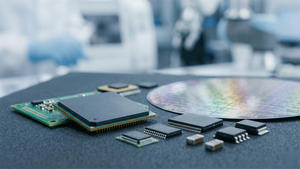
Strategically, Microsoft is likely to lean harder into its "Maia" chip program to reduce its multi-billion dollar annual payments to hardware providers like NVIDIA Corporation (NASDAQ: NVDA). By controlling its own silicon, Microsoft hopes to eventually reclaim the margins it is currently losing to the "AI tax." However, the design and manufacturing cycles for custom chips are long, and significant savings are unlikely to materialize before 2027 or 2028.
Investors should also watch for a potential "reorganization" of the Copilot product line. With enterprise adoption growing but monetization proving slower than expected, Microsoft may shift toward more specialized, industry-specific AI agents that offer higher value and better justification for their high compute costs. The goal will be to move from "general assistance" AI to "mission-critical" AI that enterprises cannot live without.
Final Assessment: A Long-Term Play with Short-Term Pain
The current slump in Microsoft's stock price represents a necessary "reset" of expectations. While the company remains the leader in enterprise AI and possesses an enviable portfolio of assets, the road to AI profitability is proving to be longer and more capital-intensive than many anticipated in the "hype phase" of 2023 and 2024. The $120 billion CapEx wall is a formidable challenge, but one that Microsoft is arguably better positioned to climb than almost any other company on Earth.
The market moving forward will likely remain bifurcated, rewarding companies that can demonstrate actual productivity gains from AI rather than just increased compute spending. For Microsoft, the next six months will be critical in proving that its Azure capacity constraints can be resolved and that its partnership with OpenAI remains a net positive despite the growing friction.
Ultimately, investors should view this as a transition from a software-growth story to an infrastructure-and-platform-utility story. The lasting impact of this period will be a redefined Microsoft—one that is as much an energy and hardware company as it is a software provider. While the stock may face continued pressure in the coming months, the foundational investments being made today will determine the hierarchy of the global economy for the next decade.
This content is intended for informational purposes only and is not financial advice.