SEATTLE — In a move that has sent shockwaves through global financial markets and the technology sector, Amazon.com, Inc. (NASDAQ: AMZN) has officially committed to a staggering $200 billion capital expenditure plan for the 2026 fiscal year. This historic investment, confirmed during recent strategic briefings in late February and consolidated in today’s market reports, marks the largest annual infrastructure spend by a single private enterprise in history. The plan signals Amazon’s aggressive pivot toward a future defined by "AI factories," global satellite connectivity, and a fully autonomous logistics network.
The immediate implications of this spending surge are twofold: a massive acceleration in the global AI infrastructure race and a temporary tightening of the company’s near-term free cash flow. While the sheer scale of the $200 billion figure—up more than 50% from 2025’s already record-breaking $131 billion—initially rattled investors, the long-term strategic intent is clear. Amazon is betting that the generative AI revolution requires a physical and digital foundation far larger than anything currently in existence.
The Infrastructure of Tomorrow: Inside the $200 Billion Breakdown
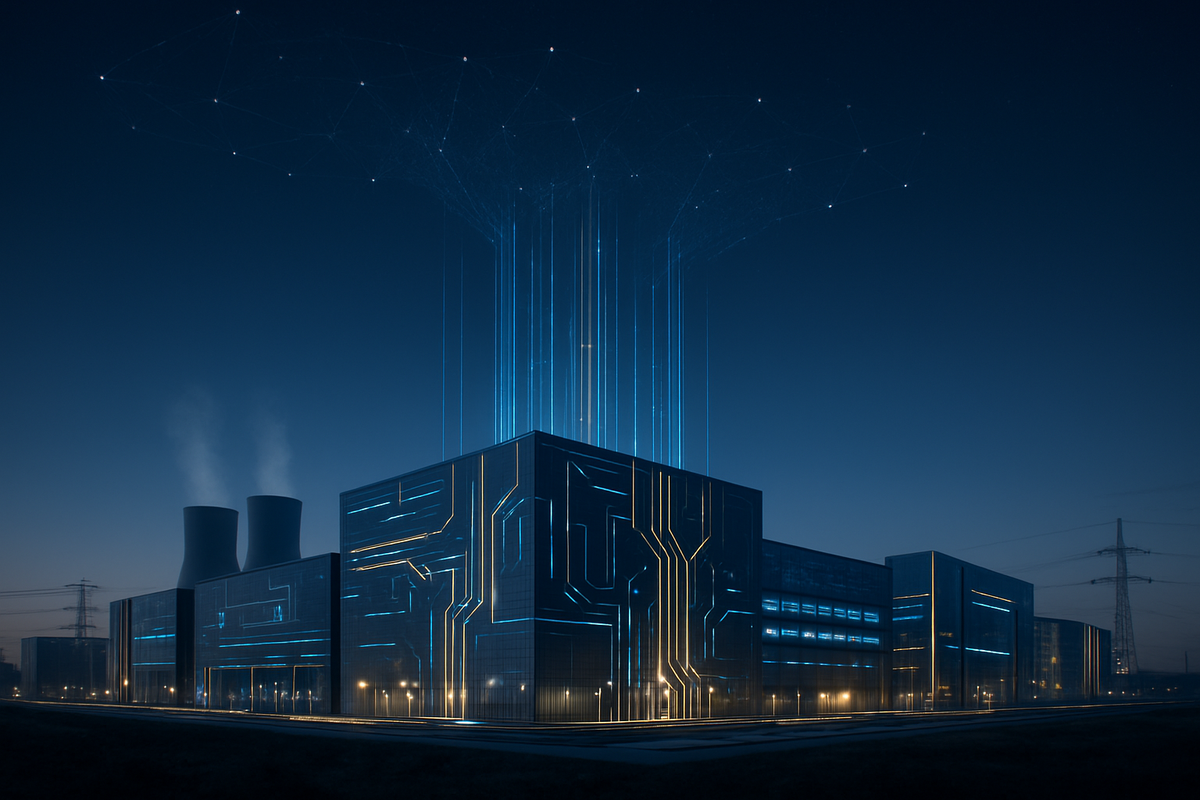
The $200 billion milestone was formally telegraphed during Amazon’s Q4 2025 earnings cycle and solidified in March 2026 as the company broke ground on several "mega-scale" data center campuses. According to CEO Andy Jassy, over 60% of this budget is earmarked for Amazon Web Services (AWS), with a laser focus on expanding the global footprint of specialized AI data centers. Unlike the general-purpose facilities of the previous decade, these new "AI factories" are vertically integrated powerhouses designed to handle the massive compute and liquid cooling requirements of trillion-parameter large language models (LLMs).
Key developments leading up to this moment include a string of high-profile domestic investments, such as an $11 billion AI campus in Indiana and a $12 billion facility in Louisiana. Furthermore, AWS has pledged $50 billion specifically toward secure infrastructure for U.S. government and national security workloads, ensuring its dominance in the burgeoning sovereign AI sector. The timeline of this expansion reflects a desperate need to meet demand; AWS reported a record $244 billion backlog in early 2026, with Jassy noting that new capacity is being "monetized as fast as we can install it."
The market's initial reaction was one of "sticker shock." In February 2026, Amazon's stock saw a 12% intraday decline as analysts voiced concerns over margin compression and the potential for a "bubble" in AI spending. However, as of March 24, 2026, the stock has staged a resilient recovery, currently trading between $210 and $215. Investors appear to be regaining confidence as the company demonstrates that its massive CapEx is backed by firm enterprise contracts and a surging demand for its proprietary AI chips.
The Winners and Losers of the AI Arms Race
Amazon’s spending spree creates a ripple effect across the entire semiconductor and cloud ecosystem. Perhaps the most significant "win" belongs to NVIDIA Corp. (NASDAQ: NVDA). Despite Amazon’s push into custom silicon, the two giants recently inked a deal for AWS to procure 1 million high-end GPUs through 2027, including the next-generation "Rubin" architecture. This ensures that NVIDIA remains the backbone of the AWS ecosystem for third-party developers who rely on the CUDA software platform.
However, the real story of 2026 is the success of Amazon’s own silicon. The company’s custom AI chips, Trainium3 and Inferentia2, have reportedly reached a $10 billion annual revenue run rate. By designing its own hardware, Amazon is significantly reducing its dependency on external vendors for its internal model training and Alexa services, which puts immense pressure on rivals like Alphabet Inc. (NASDAQ: GOOGL) and Microsoft Corp. (NASDAQ: MSFT). These competitors are now forced to match Amazon’s spending levels; Alphabet’s 2026 CapEx is projected at $180 billion, while Microsoft is keeping pace with an estimated $140 billion focused on its partnership with OpenAI.
In the semiconductor manufacturing space, Taiwan Semiconductor Manufacturing Company (NYSE: TSM) emerges as a central victor, as it produces both NVIDIA’s GPUs and Amazon’s Trainium chips. Conversely, traditional server hardware providers that have failed to adapt to specialized AI architectures may find themselves "losers" in this transition, as Amazon moves toward highly customized, in-house server designs that bypass standard commodity hardware.
A Broader Shift in Global Computing
The significance of Amazon’s $200 billion plan extends far beyond its balance sheet. This event fits into a broader industry trend of "Cloud Sovereignty" and the physicalization of the internet. By investing heavily in Project Kuiper—Amazon’s satellite internet constellation—a portion of this CapEx is effectively building a new global ISP. With the commercial launch of Kuiper in early 2026, Amazon is no longer just a retailer or a cloud provider; it is becoming the foundational utility of the 21st century.
Historically, this moment is being compared to the massive telecommunications build-out of the late 1990s, but with a critical difference: the utilization rates for AI compute are currently at all-time highs, whereas the 90s build-out suffered from "dark fiber" and overcapacity. Furthermore, the regulatory implications are profound. As Amazon, Microsoft, and Google consolidate their control over the physical infrastructure of AI, they face increasing scrutiny from global regulators regarding energy consumption and market dominance. Amazon’s shift toward regionalized, AI-driven logistics is also transforming the labor market, as robotics now handle nearly 75% of same-day delivery sorting.
The Road Ahead: Scenarios for 2027 and Beyond
Looking forward, the success of this $200 billion gamble hinges on the "monetization of intelligence." In the short term, Amazon will likely continue to face pressure on its free cash flow as the massive depreciation of these assets begins to hit the books. However, if the $244 billion AWS backlog converts into high-margin recurring revenue, the company could see a dramatic expansion in its operating income by late 2027.
One potential strategic pivot involves the energy sector. Given the immense power requirements of its "AI factories," rumors are swirling that Amazon may follow the lead of its peers and invest directly in small modular nuclear reactors (SMRs) to secure its own energy grid. The market will also be watching for the performance of Trainium3, scheduled for a late-2026 launch. If Amazon can prove that its custom silicon is not just cheaper, but faster than NVIDIA’s flagship offerings, it could fundamentally alter the economics of the entire AI industry.
Closing Thoughts: A New Era of Scale
As we close out the first quarter of 2026, Amazon’s $200 billion plan stands as a testament to the company’s "Day 1" philosophy—a willingness to endure short-term financial pain for long-term category dominance. The sheer scale of the investment reflects a belief that we are only in the "second inning" of the AI revolution, and that the winners will be determined by who owns the most efficient and expansive physical infrastructure.
For investors, the coming months will be defined by "margin watching." The key metrics will be the growth rate of AWS and the speed at which Project Kuiper can begin contributing to the top line. While the $200 billion price tag is high, the cost of falling behind in the AI arms race might have been even higher. Amazon has made its move; now, the rest of the world must figure out how to keep up.
This content is intended for informational purposes only and is not financial advice.