The global semiconductor landscape reached a fever pitch this week as Micron Technology (NASDAQ: MU) unveiled a "historic blowout" for its second quarter of fiscal 2026. Reporting results that shattered even the most bullish Wall Street forecasts, the Boise-based memory giant has solidified the narrative that high-performance memory is no longer a mere commodity but the critical bottleneck of the generative AI era. With revenue nearly tripling year-over-year and margins hitting unprecedented levels, Micron’s performance signals a structural shift in how the market values the building blocks of data center infrastructure.
The immediate implications of the report have sent ripples across global indices, reaffirming the durability of the AI infrastructure boom. Beyond the raw numbers, Micron’s revelation that its entire production capacity for High Bandwidth Memory (HBM) is 100% sold out through the remainder of the 2026 calendar year underscores a desperate scramble by tech titans to secure the silicon necessary for the next generation of large language models. For investors, the message is clear: the "memory supercycle" is not just arriving—it has taken command of the sector.
Record-Breaking Financials and the Rise of HBM4
For the quarter ending February 26, 2026, Micron reported staggering revenue of $23.86 billion, a 196% increase from the same period last year and far ahead of the $19.4 billion consensus. Earnings per share (EPS) came in at $12.20, obliterating expectations of roughly $9.00. Perhaps most shocking to analysts was the non-GAAP gross margin, which soared to a company-record 74.9%. This leap from 36.8% a year ago reflects the massive pricing power Micron now wields as it transitions its product mix toward high-margin AI components. The company also rewarded shareholders with a 30% increase in its quarterly dividend, signaling confidence in its long-term cash flow generation.
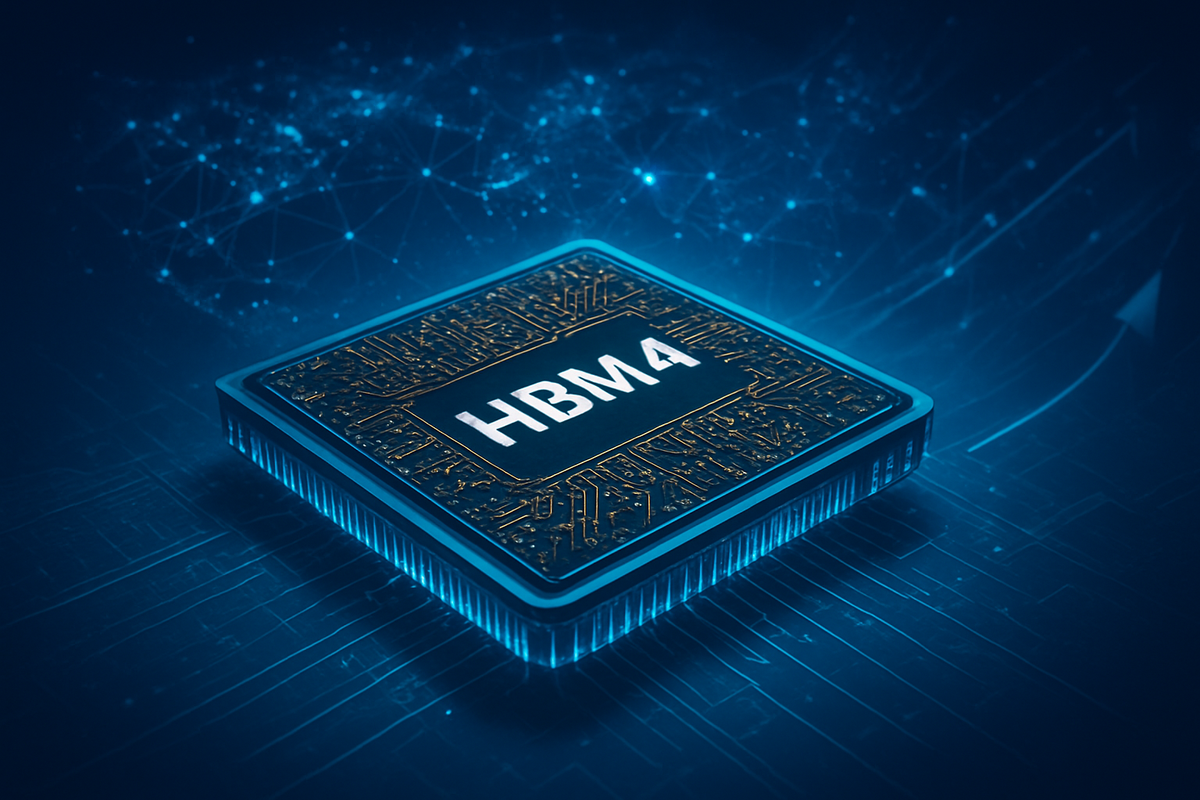
The timeline leading to this moment has been defined by a pivot toward HBM4, the latest iteration of memory designed to sit directly alongside AI accelerators. Micron confirmed it has moved into high-volume production of HBM4, which offers a 2.3x increase in bandwidth over its predecessor. This technology is essential for the latest chips from industry leaders like NVIDIA (NASDAQ: NVDA), whose Blackwell and Rubin architectures require massive throughput to process trillions of parameters. Management noted that the production of HBM is roughly three times as complex as standard DRAM, leading to a "wafer cannibalization" effect that has inadvertently constricted the supply of traditional memory, further driving up prices across the board.
Initial market reactions were a paradox of the modern trading era. While the numbers were flawless, Micron’s stock initially saw a slight 2-4% dip in after-hours trading—a "sell the news" reaction following a massive run-up in the months leading to the report. However, as the earnings call progressed and management issued guidance for Q3 revenue of $33.5 billion and gross margins exceeding 80%, the sentiment shifted. Analysts were quick to re-rate the stock, with several major banks raising price targets to reflect a company that is now earning in a single quarter what it used to earn in a full fiscal year during previous cycles.
Winners and Losers in the Chipflation Era
The primary beneficiary of this memory surge is, of course, Micron itself, but the "rising tide" is also lifting its South Korean rivals. SK Hynix (KRX:000660), which has long held a dominant position as NVIDIA’s preferred HBM supplier, remains a formidable winner, with its stock price having surged sixfold over the last eighteen months. Samsung Electronics (KRX:005930) is also staging a massive comeback; after initially lagging in the HBM race, Samsung has committed to a $73 billion capital expenditure "blitz" for 2026 to reclaim its title as the "memory king" and deepen its partnerships with Advanced Micro Devices (NASDAQ: AMD).
However, the "chipflation" resulting from this demand creates a challenging environment for other sectors. Companies focused on consumer electronics, such as PC manufacturers and smartphone makers, are facing a supply squeeze. As Micron and its peers divert wafer capacity toward high-margin HBM, the supply of standard DDR5 and NAND flash has tightened significantly. Western Digital (NASDAQ: WDC) has seen a boost in its enterprise SSD business, but companies that rely on cheap, abundant storage for lower-end consumer goods are seeing their margins compressed by rising component costs.
Cloud service providers (CSPs) like Amazon (NASDAQ: AMZN) and Google (NASDAQ: GOOGL) also find themselves in a complex position. While they are the primary purchasers of these high-end memory modules for their AI clusters, the sheer cost of building these data centers is ballooning. The report suggests that while these tech giants are winning the AI race, the capital required to stay in the game is reaching astronomical levels, potentially leading to a thinning of the field where only the most well-capitalized firms can compete at the frontier of AI development.
Broader Trends and the Geopolitics of Silicon
Micron’s Q2 results fit into a broader industry trend where memory is transitioning from a cyclical commodity to a specialized, high-value strategic asset. Historically, the memory market was defined by "boom and bust" cycles where oversupply would lead to price crashes. In 2026, the supply-demand balance has been fundamentally altered by the technical difficulty of manufacturing HBM. The complexity of stacking 12 and 16 layers of DRAM with precision means that even as companies spend tens of billions on new factories, the "yield" (the percentage of usable chips) remains low, keeping supply perpetually behind the demand curve.
This event also highlights a potential ripple effect on semiconductor equipment manufacturers. To meet its ambitious $25 billion capital expenditure goal for the year, Micron will need to significantly increase orders from firms like ASML (NASDAQ: ASML) and Applied Materials (NASDAQ: AMAT). The shift toward the "1-gamma" DRAM node, which utilizes extreme ultraviolet (EUV) lithography, means that the fortunes of these equipment makers are now inextricably linked to the success of the memory supercycle.
Furthermore, the semiconductor sector is navigating a complex geopolitical and macro environment. While the AI demand is insatiable, concerns over energy procurement are beginning to surface. The massive data centers required for 2026-era AI models consume vast amounts of electricity, and any instability in global energy markets—such as recent tensions in the Middle East affecting oil and gas prices—could pose a secondary risk to the continued expansion of AI infrastructure. Historically, this mirrors the early 2000s fiber-optic boom, though analysts argue the current "AI utility" is backed by actual revenue and enterprise adoption, unlike the speculative nature of the dot-com era.
The Road Ahead: CapEx Ramps and HBM5
In the short term, the market will be laser-focused on Micron’s ability to execute its massive $25 billion capital expenditure plan without diluting its record-breaking margins. The transition to HBM4 is already underway, but rumors of HBM5 specifications are already beginning to circulate in the industry. For Micron to maintain its newfound leadership, it must prove that it can stay on the leading edge of density and power efficiency, as the heat generated by these massive AI clusters becomes a primary engineering hurdle for its customers.
Long-term, the strategic pivot toward AI-centric memory may require a complete redesign of the traditional computing architecture. We are likely to see more "processing-in-memory" (PIM) solutions, where the memory itself handles some of the computational load to reduce data movement and save energy. This represents both a massive opportunity for Micron to move up the value chain and a challenge, as it will require even deeper integration with chip designers like NVIDIA and AMD. The risk remains that if AI demand eventually cools or if a major customer pivots to an alternative architecture, the massive capacity currently being built could lead to an eventual oversupply.
The most likely scenario for the remainder of 2026 is a continued "supply-constrained" environment. With contract prices for DRAM expected to rise another 90% in some segments and NAND pricing remaining robust, the financial outlook for the memory sector remains exceptionally bright. However, the market will be watching closely for any signs of "double-ordering"—where customers order more than they need to secure supply—which could signal a future correction. For now, the momentum is undeniably in the favor of the silicon producers.
Final Assessment: Memory as the New Oil
Micron’s Q2 fiscal 2026 results represent a watershed moment for the semiconductor industry. The transition of memory from a cyclical component to the bedrock of global AI infrastructure is complete. The key takeaway for investors is that the "AI trade" has moved beyond just the GPU designers and is now firmly rooted in the companies that provide the high-speed data access necessary for those GPUs to function. Micron’s record 74.9% gross margin is not just a number; it is a testament to the essential nature of its technology in the current economic era.
As we move forward into the middle of 2026, the market will likely remain volatile but biased toward growth. The critical factors to watch will be the progress of the "1-gamma" node ramp-up, the potential for any regulatory pushback regarding chip pricing, and the ability of the global energy grid to support the massive expansion of AI data centers. Investors should also keep a close eye on the capital expenditure announcements from Samsung and SK Hynix, as the "arms race" for HBM capacity will dictate the pricing environment for 2027 and beyond.
In the final analysis, Micron has proved that it is a primary gatekeeper of the AI revolution. While the capital requirements are enormous and the technical challenges are daunting, the rewards for those who can provide the "digital neurons" of the 21st century have never been higher. The memory supercycle is here, and by all accounts, it is only just beginning to accelerate.
This content is intended for informational purposes only and is not financial advice