As of late January 2026, the global automotive landscape stands at a historic crossroads. Tesla (NASDAQ: TSLA) has effectively completed a grueling two-year metamorphosis, shedding its identity as a high-volume hardware manufacturer to emerge as a lean, AI-centric robotics firm. This transition, which began in earnest with massive layoffs in early 2024, has culminated in the imminent production launch of the "Cybercab"—a vehicle that represents CEO Elon Musk’s ultimate bet on an autonomous future.
The implications of this pivot are profound. By prioritizing artificial intelligence over the production of a traditional low-cost electric vehicle (EV), Tesla has signaled a permanent departure from the "mass-market car company" playbook. While this strategy has revitalized its valuation among tech-focused investors, it has also left the company vulnerable in critical markets like Europe, where legacy manufacturers and aggressive Chinese rivals have moved to fill the void left by Tesla's delayed "Model 2" entry.
The Great Re-Alignment: From Production Lines to Neural Nets
The foundation for today’s AI-first Tesla was laid in April 2024, when the company executed its most drastic workforce reduction to date. Eliminating more than 10% of its global staff—approximately 15,000 employees—the cuts gutted critical divisions, including the vaunted Supercharger team and the New Programs department. This was not merely a cost-saving measure; it was a strategic execution of a "Master Plan" pivot. Musk aimed to eliminate the "duplication of roles" that had accumulated during a decade of rapid scaling, redirecting every spare dollar toward the Dojo supercomputer and the refinement of "End-to-End Neural Net" driving software.
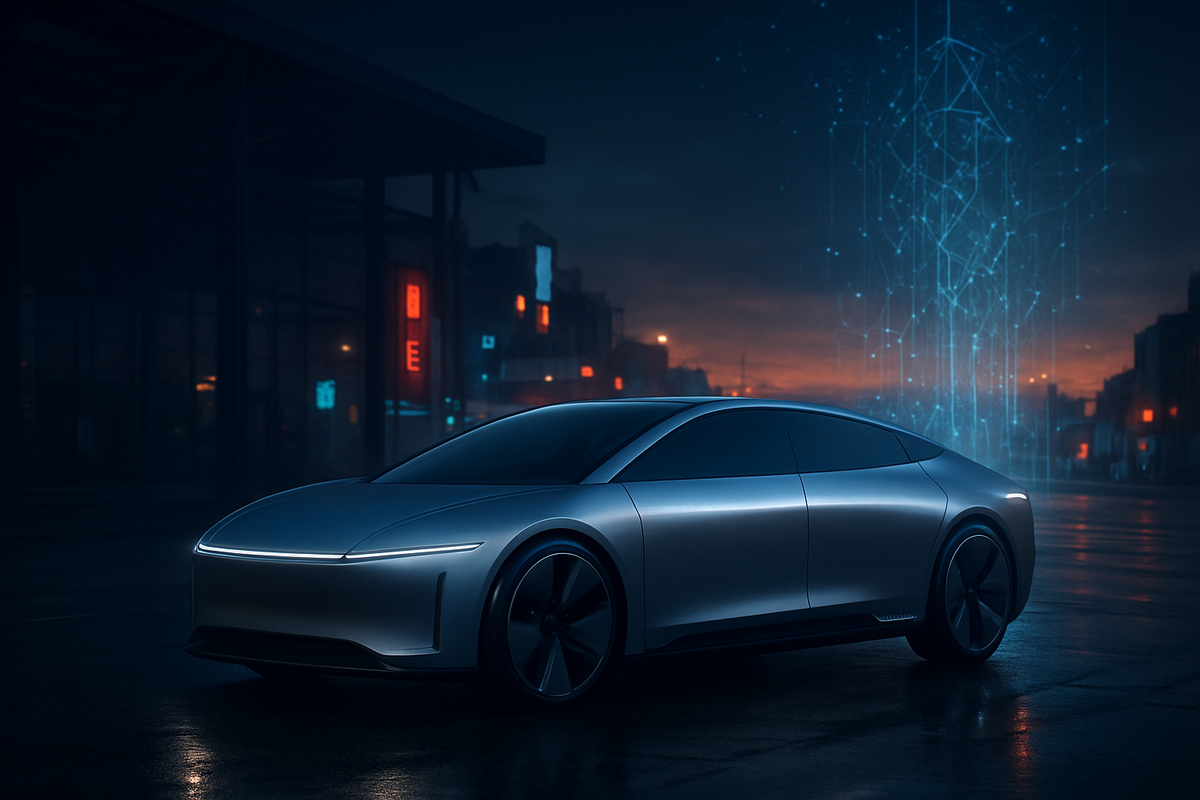
The timeline reached a fever pitch in October 2024 at the "We, Robot" event, where the Cybercab was first unveiled. The vehicle, famously designed without a steering wheel or pedals, was presented as the cornerstone of a global "unsupervised" transportation network. Throughout 2025, Tesla’s focus remained laser-sharp on achieving Full Self-Driving (FSD) milestones in Texas and California, attempting to prove to skeptical regulators that a vision-only system could outperform human drivers without the need for expensive Lidar sensors.
Initial market reactions were a mix of awe and anxiety. While bulls praised the potential for astronomical software margins, critics pointed to the immediate impact of the layoffs on customer service and the brand’s cooling sales in Europe. By mid-2025, Tesla had become a "show me" story, with its stock price fluctuating wildly based on incremental FSD software updates rather than quarterly delivery numbers.
Winners and Losers in the Autonomous Arms Race
As Tesla pivoted, the competitive landscape underwent a seismic shift. Alphabet (NASDAQ: GOOGL), the parent company of Waymo, emerged as a clear early winner in the reliability department. By early 2026, Waymo has scaled its operations to over one million weekly rides, maintaining its "gold standard" status with a sensor-fusion approach that contrasts sharply with Tesla’s "Vision-only" gamble. Waymo’s ability to operate in complex urban environments with Level 4 autonomy has set a high bar for Tesla's Cybercab to clear.
In the ride-hailing space, Uber (NYSE: UBER) has successfully navigated the threat of Tesla’s displacement by positioning itself as the universal "platform for all." Rather than being disrupted by robotaxis, Uber partnered with multiple AV developers, effectively becoming the interface through which consumers access autonomous fleets. Conversely, BYD (OTC:BYDDF) has capitalized on Tesla's retreat from the $25,000 price segment. By dominating the mass-market EV space in both China and Europe, BYD has secured a volume leadership position that Tesla appears to have ceded in favor of higher-margin AI services.
The "losers" in this transition have largely been the traditional European automakers who failed to adapt to the software-defined vehicle era. While firms like Volkswagen and BMW have regained some ground in the "affordable" EV market, they remain generations behind in the AI compute power required to compete with Tesla’s Dojo-backed fleet. However, Tesla itself has paid a price in market share, as its aging Model 3 and Model Y lineup faced stiff competition without a fresh, low-cost successor to drive volume.
Industry Trends and the Regulatory Wall
Tesla’s pivot reflects a broader industry trend: the "plateauing" of the traditional EV market. In 2024 and 2025, the enthusiasm for battery-electric vehicles cooled significantly in Europe after Germany and other nations abruptly ended purchase subsidies. This forced a realization that the next leg of growth would not come from hardware alone, but from the added utility of autonomous "transportation as a service."
However, the regulatory environment remains the most significant hurdle. In the European Union, current frameworks for fully autonomous vehicles are restricted to small-scale deployments. Although the EU is working toward a unified "unlimited series" approval by later this year, Tesla’s "no-controls" design is currently illegal for mass deployment in most member states. In the United States, the NHTSA continues to scrutinize Tesla’s FSD software following a series of investigations in late 2025. This regulatory friction mirrors historical precedents, such as the early days of commercial aviation, where technology often outpaced the legal frameworks required to ensure public safety.
The Road Ahead: 2026 and Beyond
Looking forward through the remainder of 2026, Tesla faces the monumental task of scaling Cybercab production. Musk’s target of a sub-$30,000 price point for the autonomous pod is ambitious, requiring unprecedented manufacturing efficiencies and a breakthrough in battery costs. If Tesla can successfully launch the Cybercab at scale this year, it could fundamentally alter the cost structure of global logistics and personal travel, effectively "solving" the problem of urban congestion and high-cost car ownership.
The short-term challenge remains the transition period. Tesla must find a way to sustain its cash flow through Model Y and Model 3 sales while its AI division continues to burn capital. We may see a strategic "FSD licensing" deal with a legacy automaker in the coming months, which would provide a massive non-dilutive capital infusion and validate Tesla’s software-first approach. Potential scenarios range from a triumphant global rollout of the Robotaxi network to a protracted legal battle that keeps the Cybercab limited to geofenced areas in "friendly" jurisdictions like Texas and Florida.
Closing Thoughts: A Binary Outcome for Investors
Tesla’s journey from 2024 to early 2026 has been nothing short of a corporate high-wire act. By gutting its workforce and abandoning the mass-market "Model 2" car, the company has staked its entire future on a single technology: unsupervised autonomy. This move has fundamentally changed the nature of Tesla as an investment. It is no longer a car company to be judged on unit sales, but a robotics firm to be judged on its AI's "mean miles between interventions."
Investors should keep a close eye on two key metrics in the coming months: the specific number of Cybercab units rolling off the lines in Giga Texas and the progress of the EU’s "unlimited series" autonomous regulations. The success of the "We, Robot" vision depends not just on Tesla’s neural nets, but on the willingness of governments to hand over the keys to the machines. The era of the driver-led Tesla is ending; the era of the autonomous grid has begun.
This content is intended for informational purposes only and is not financial advice.