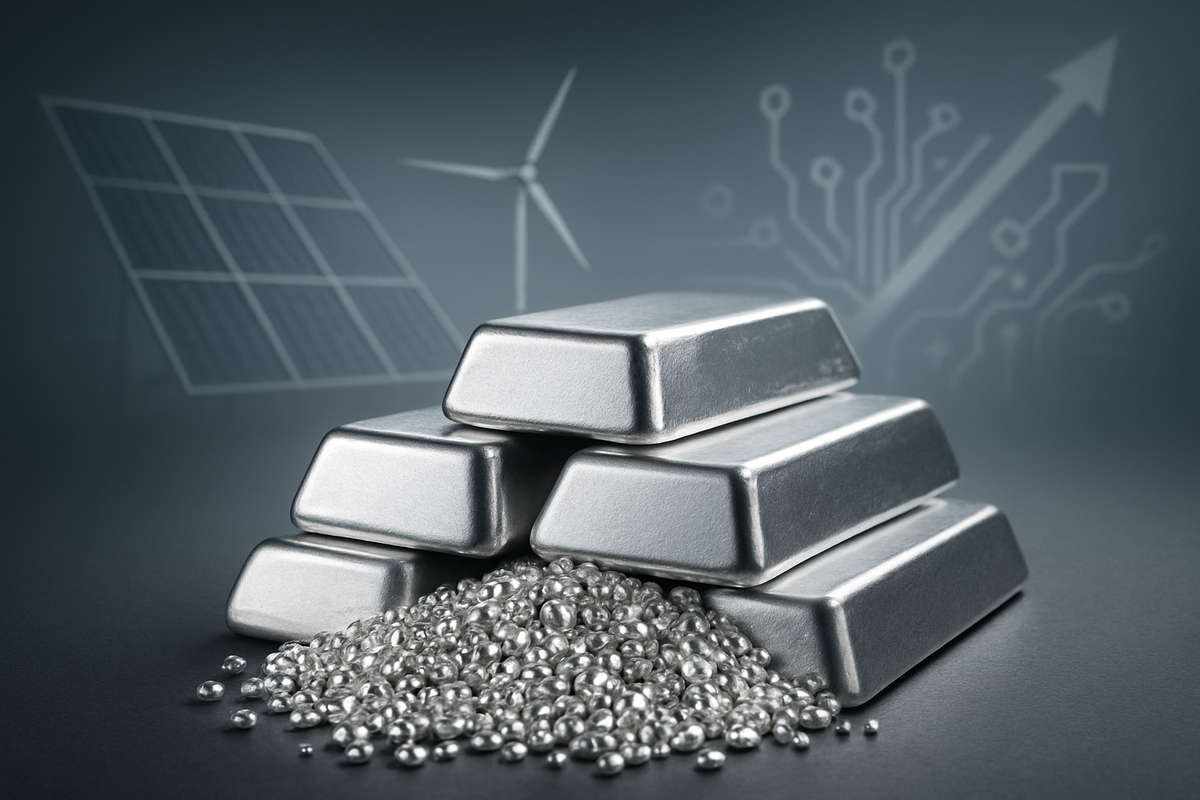
Silver has achieved an unprecedented milestone, breaking the historic $60 per ounce barrier for the first time ever as of December 9, 2025. This remarkable surge, with spot prices reaching as high as $60.82 per troy ounce on the New York Commodity Exchange, signifies a pivotal moment in the precious metals market, marking a more than doubling in value since the beginning of the year. This dramatic rally is not merely a fleeting spike but is increasingly being viewed by analysts as a structural shift, potentially ushering in a sustained secular breakout for the often-overlooked precious metal.
The immediate implications of this historic ascent are manifold, pointing towards a new era of heightened volatility and investor interest in silver. Driven by strong market expectations of an imminent interest rate cut by the U.S. Federal Reserve, a weakening U.S. dollar, and a persistent structural supply deficit, silver's dual role as both a safe-haven asset and a critical industrial metal has propelled its value to new heights. The surge is further underpinned by booming industrial demand from rapidly expanding green technologies and dwindling physical inventories, setting the stage for significant market repercussions across various sectors.
Silver's Unprecedented Ascent: A Detailed Look at the $60 Milestone
Silver's historic breach of the $60 per ounce mark on December 9, 2025, culminating in an intraday high of $61.44 per ounce, represents the apex of a remarkable year-long rally. Spot silver (XAG/USD) traded around $60.82 per troy ounce on New York's Commodity Exchange, while March 2026 futures gained 3.5% to $60.41 per ounce. This monumental achievement saw silver more than double its value in 2025 alone, significantly outperforming gold's impressive 60% gain over the same period.
The journey to $60 was paved with several critical developments throughout 2024 and 2025. After trading in the mid-$20s in early 2024, silver broke above $30 by March. Mid-2024 witnessed unprecedented physical delivery demands on the COMEX, signaling tightening physical supply. By October 2025, prices had reached $54.46 per ounce, bolstered by a weakening U.S. dollar and signals from the Federal Reserve regarding a pause in rate hikes. November 2025 saw a 17.2% month-over-month jump to a then-record $56.445, further supported by silver's inclusion on the U.S. Geological Survey's list of critical minerals. The current historic streak began around November 28, 2025, with silver steadily climbing past $55, then $58, and finally breaching $59 just days before its ultimate surge past $60.
This rally is not a singular event but rather the culmination of a persistent structural market deficit, estimated to have lasted five to seven consecutive years, with a cumulative shortfall from 2021-2025 projected at approximately 800 million ounces. Mine production has consistently lagged behind burgeoning demand, with global output in 2024 and 2025 remaining below 2016 levels. This supply crunch has been exacerbated by tightening physical inventories in major hubs like London and China, alongside significant withdrawals of metal from "registered" to "eligible" status on exchanges.
Key players and stakeholders are experiencing diverse impacts. Silver mining companies like Pan American Silver Corp. (NASDAQ: PAAS), First Majestic Silver (NYSE: AG), Hecla Mining Co. (NYSE: HL), and Fresnillo PLC (LSE: FRES) are among the primary beneficiaries, poised for unprecedented profitability. On the other hand, industrial users, including major solar panel manufacturers such as JinkoSolar (NYSE: JKS), Canadian Solar (NASDAQ: CSIQ), and LONGi Green Energy (SSE: 601012), face escalating raw material costs. Investors, from institutional funds to retail buyers, have poured into silver-backed Exchange-Traded Products (ETPs) like the iShares Silver Trust ETF (NYSEMKT: SLV), viewing it as both a safe haven and a hedge against inflation and geopolitical uncertainty. Initial market reactions are largely bullish, with analysts anticipating continued upward momentum, though some warn of potential near-term volatility as the market digests this historic surge.
Corporate Fortunes Shift: Winners and Losers in the $60 Silver Market
The unprecedented surge of silver past the $60 per ounce threshold is poised to dramatically reshape the financial landscape for a diverse array of public companies. This milestone creates a clear bifurcation, significantly bolstering the profitability of silver producers and streaming companies while simultaneously imposing considerable cost pressures on industries that rely on silver as a critical input material.
Primary silver miners and streaming companies are undoubtedly the biggest beneficiaries. Pan American Silver Corp. (NYSE: PAAS), one of the largest primary silver producers, will see a direct and substantial increase in revenue and profitability from its extensive operations across the Americas. Similarly, First Majestic Silver Corp. (NYSE: AG), with its exclusive focus on Mexican silver mines, stands to gain immensely, with its primary output now commanding significantly higher prices. Fresnillo Plc (LSE: FRES), the world's largest primary silver producer, despite also producing gold, will experience a considerable boost to its precious metals segment. Streaming companies like Wheaton Precious Metals Corp. (NYSE: WPM) are in an exceptionally advantageous position; they purchase a fixed percentage of future mine production at a low, fixed cost, meaning the soaring market price of silver directly translates into dramatically expanded profit margins with minimal operational risk. Other notable winners include Coeur Mining Inc. (NYSE: CDE) and Hecla Mining Company (NYSE: HL), both prominent North American silver producers whose financial health and shareholder returns will be significantly enhanced.
Conversely, industries heavily dependent on silver as a raw material face mounting challenges. Jewelry manufacturers, such as Signet Jewelers (NYSE: SIG), will contend with substantially higher costs of goods sold, potentially squeezing margins or necessitating price increases that could impact consumer demand. The booming solar panel manufacturing sector is also particularly vulnerable. Companies like Canadian Solar (NASDAQ: CSIQ) and JinkoSolar (NYSE: JKS), which utilize silver paste in their crystalline silicon solar cells, will face escalating input costs. If they cannot efficiently substitute silver or pass these costs onto consumers, their competitiveness and profitability could suffer.
Beyond solar, the vast electronics and semiconductor industries will also feel the pinch. Silver's unparalleled electrical conductivity makes it indispensable in countless components, from electrical contacts to conductive inks in devices produced by giants like Samsung Electronics (KRX: 005930) and Apple Inc. (NASDAQ: AAPL), and used by semiconductor manufacturers such as Intel (NASDAQ: INTC) and Qualcomm (NASDAQ: QCOM). While diversified, these companies could see increased component costs impacting product pricing or profit margins. Similarly, automotive industry suppliers, particularly those for electric vehicles (EVs) like Aptiv PLC (NYSE: APTV), which incorporate significant amounts of silver in their advanced electronic systems, will experience higher material costs, potentially leading to renegotiations with car manufacturers or adjustments in their own pricing strategies.
Beyond the Milestone: Silver's Wider Significance in a Shifting Global Economy
Silver's historic ascent above $60 per ounce on December 9, 2025, transcends a mere price milestone; it signals a profound recalibration of the metal's role within the global economy. This surge is intricately woven into several overarching industry trends, most notably the accelerating green energy revolution, persistent inflationary pressures, and evolving monetary policies, distinguishing it from past speculative bubbles due to its robust fundamental demand drivers.
At the heart of this sustained rally is silver's indispensable role in the green energy transition. As the world pivots towards decarbonization, demand for solar photovoltaic (PV) panels is skyrocketing, with silver paste being a critical, irreplaceable component for electrical conductivity. Projections indicate that demand from PV applications alone could exceed 300 million ounces annually by 2030. Furthermore, the burgeoning electric vehicle (EV) sector utilizes significantly more silver per unit than traditional cars, embedded in battery systems, charging infrastructure, and advanced electronics. Coupled with the expansion of 5G technology and AI data centers, this industrial demand creates a formidable structural floor for silver prices. Simultaneously, silver is reinforcing its traditional role as a hedge against inflation and monetary debasement. As inflation concerns persist and the U.S. Federal Reserve anticipates further interest rate cuts in late 2025, the opportunity cost of holding non-yielding assets like silver diminishes, making it increasingly attractive to investors seeking to preserve purchasing power.
The ripple effects of silver's surge are already evident across various markets. Notably, silver has significantly outperformed gold in 2025, with a year-to-date gain of approximately 102% compared to gold's 60%. The gold-to-silver ratio has dipped below 70 for the first time in 53 months, suggesting a rebalancing and potentially a sustained period where silver's growth outpaces its yellow counterpart, driven by its unique dual industrial and monetary demand. This outperformance could also spark broader investor interest in other industrial metals crucial for green technologies, potentially signaling the onset of a wider commodities supercycle. For silver mining companies, increased profitability incentivizes exploration and development, though with a considerable time lag before new supply can enter the market. Conversely, manufacturers in the solar, electronics, and medical device sectors face heightened input costs, which may accelerate innovation towards silver-efficient technologies, encourage strategic stockpiling, or lead to these costs being passed on to consumers, contributing to broader inflationary pressures.
Regulatory and policy implications are also coming into sharper focus. Discussions around restructuring tariff rates on imported precious metals, particularly silver used in electronic components, could significantly influence global supply chains and sourcing strategies. The U.S. designation of silver as a critical mineral underscores its strategic importance and could lead to policies aimed at securing domestic supply. Furthermore, the Federal Reserve's anticipated interest rate cuts are a major macroeconomic lever, while expanding state-level tax exemptions for precious metal bullion in the U.S. are stimulating retail investment. Historically, silver price spikes, such as the 1980 "Hunt Brothers" squeeze, were largely driven by speculation. However, the current rally, while reaching nominal highs, is fundamentally different. It is underpinned by a structural supply deficit—the largest sustained deficit in over a decade—and robust, tangible demand from critical growth sectors, positioning this event as a more sustainable, demand-driven phenomenon rather than a purely speculative bubble.
The Road Ahead: Navigating Silver's Future Beyond $60
Silver's historic breach of the $60 per ounce mark on December 9, 2025, marks not an endpoint, but a pivotal inflection point, setting the stage for a dynamic and potentially volatile future. The outlook for silver appears overwhelmingly bullish in both the short and long term, driven by an unyielding confluence of structural supply deficits, escalating industrial demand from critical green energy and technology sectors, and sustained investor interest in precious metals.
In the short term (3-12 months), the bullish momentum is widely expected to persist. Analysts are forecasting prices to consolidate above $60, with some even anticipating a "silver squeeze" if physical demand continues to outstrip already tight supplies. Key drivers include the strong market expectation of impending interest rate cuts by the U.S. Federal Reserve, which will diminish the opportunity cost of holding non-yielding assets. A weakened U.S. dollar, coupled with a pronounced squeeze in the physical market characterized by low exchange inventories and substantial inflows into silver-backed ETFs, will continue to amplify buying pressure. The $60 level is a significant psychological and technical threshold; sustained trading above it could confirm a new upside regime, pushing silver into "price-discovery territory" where technical models suggest targets of $62 and potentially higher. However, some caution about potential near-term volatility or a healthy consolidation as market dynamics normalize.
Looking further into the long term (1-5 years and beyond), the optimism for silver is even more pronounced, with aggressive predictions seeing prices potentially hitting $100 before 2028 and even $200 by 2030 or beyond. This long-term bullishness is underpinned by the chronic structural supply deficits that have plagued the market for five consecutive years, with mine production consistently failing to keep pace with demand and limited new projects coming online. The inelasticity of silver supply, often a byproduct of other metal mining, makes it challenging to ramp up production quickly. Critically, escalating industrial demand from high-growth sectors—particularly the global green energy transition (solar panels, electric vehicles, energy storage) and advanced electronics (5G, AI, IoT, data centers)—is projected to drive consumption past 700 million ounces in 2025, with largely inelastic demand. Furthermore, silver's role as a hedge against currency debasement and inflation, coupled with the historical tendency of the gold-silver ratio to revert to its long-term average, suggests significant catch-up potential relative to gold.
These market dynamics necessitate strategic pivots and adaptations from all participants. Investors are advised to consider diversification, strategically "buy on dips" during any temporary pullbacks, and potentially allocate a higher percentage to precious metals, with a slight overweight on silver despite its volatility. Monitoring the gold-silver ratio will be crucial for tactical allocation decisions. Miners will be incentivized to increase exploration and development, though the long lead times for new projects mean immediate supply relief is unlikely. They may also employ hedging strategies to lock in profitable prices. Industrial users will face significantly higher production costs, prompting efforts in "thrifting" (reducing silver content per unit) or exploring alternative materials, though silver's superior properties make substitution challenging in many applications. Securing stable supply chains will become paramount. Refiners and bullion dealers will likely see increased customer engagement and sales of physical silver products, but also face logistical challenges amidst potential physical market tightness.
Emerging market opportunities are also significant. The global push towards green energy ensures sustained demand from developing economies investing heavily in solar and EVs. Investment demand from countries like India, spurred by new central bank policies allowing silver-backed loans, could expand to other emerging economies, making silver a more accessible precious metal than gold. Conversely, nations heavily reliant on silver imports for industrial use will face rising costs, potentially straining trade balances. While scenarios range from an "orderly rally" to a "vertical squeeze" with parabolic price increases, or even temporary consolidations, the prevailing sentiment is that silver has entered a new regime. The confluence of industrial demand from the green energy transition and technology, coupled with structural supply constraints and ongoing safe-haven investment, positions silver for continued strength and a long-term upward trajectory well beyond $60 per ounce.
The Dawn of a New Era: Silver's Enduring Impact Beyond $60
Silver's historic surge above $60 per ounce on December 9, 2025, marks a watershed moment, not merely for its nominal value, but for its fundamental repositioning within the global financial and industrial landscape. This unprecedented rally, which saw the metal more than double in value within the year, signals a transformative phase for silver, solidifying its status as both a critical industrial commodity and a powerful investment asset.
The key takeaways from this explosive rally underscore a confluence of factors that have converged to propel silver to these historic highs. Foremost among them is the soaring industrial demand, particularly from the burgeoning green energy sector. Silver's indispensable role in solar photovoltaic (PV) panels, electric vehicles (EVs), 5G infrastructure, and advanced electronics has created an insatiable appetite, with PV demand alone projected to consume hundreds of millions of ounces annually. This demand surge has met with persistent supply deficits for the third consecutive year, exacerbated by declining ore grades, rising extraction costs, and limited new mining investments, as much of silver production is a byproduct of other metals. Adding to this fundamental strength are supportive macroeconomic tailwinds—chief among them, the pervasive fears of inflation and currency debasement, coupled with strong expectations of Federal Reserve interest rate cuts in 2026, which historically bolster precious metals. Finally, significant investment flows into silver-backed Exchange Traded Products (ETPs) and aggressive options positioning highlight growing conviction from both institutional and retail investors, driven by the metal's safe-haven appeal and potential for further upside.
Moving forward, the market consensus points to a sustained bullish outlook for silver in the coming months and years, although some short-term volatility is anticipated. Price projections for 2026 range from $60-$80 per ounce, with some aggressive scenarios envisioning $100-$150 per ounce between 2027 and 2028, particularly if industrial demand continues its accelerating trajectory and supply deficits widen. The continued strength of industrial demand, especially from the green energy transition, is expected to provide a foundational support for prices, largely inelastic to price increases. Simultaneously, supply constraints are likely to persist given the byproduct nature of much of silver mining, making rapid increases in output challenging. This structural limitation will maintain market tightness and upward price pressure. The gold-silver ratio, which remains historically elevated, suggests that silver still has considerable room to catch up to gold's long-term valuation, implying further upside potential as the ratio normalizes.
The lasting significance and impact of silver's surge above $60 cannot be overstated. It marks a pivotal moment where silver has shed its historical shadow cast by gold, emerging as a critical strategic asset in its own right. Its dual identity as a monetary metal and an indispensable industrial input—vital for the ongoing global energy transition and technological advancement—underscores its growing importance in a rapidly evolving world. This rally is not merely a speculative bubble but is fundamentally justified by deep-seated structural supply-demand imbalances, signaling a new era for the white metal.
For investors, vigilance will be key in the coming months. Closely monitoring Federal Reserve monetary policy regarding interest rate adjustments will be crucial, as lower real yields tend to bolster precious metals. Tracking global industrial output and green energy progress, especially in the solar and EV sectors, will provide insights into demand trends. The strength of the US dollar and global inventory levels in major exchanges will also be vital indicators of market tightness. Furthermore, keeping an eye on geopolitical developments, the gold-silver ratio dynamics, and continued ETF inflows and market sentiment will offer a comprehensive view of silver's trajectory. This historic rally is a testament to silver's enduring value and its critical role in shaping the future economy, making it an asset that demands careful attention from investors worldwide.
This content is intended for informational purposes only and is not financial advice