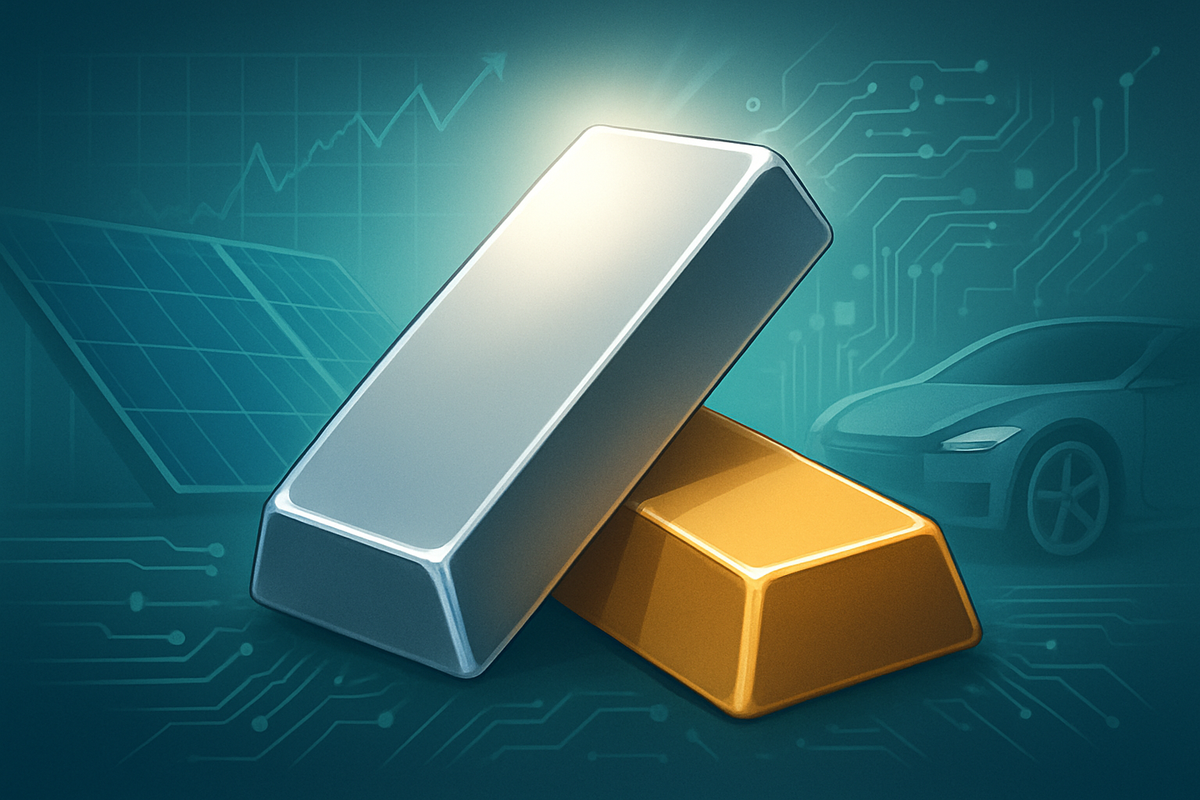
Silver Exchange-Traded Funds (ETFs) are currently experiencing a period of remarkable outperformance against their golden counterparts, signaling a significant shift in the precious metals market. This burgeoning trend is fueled by a powerful combination of surging industrial demand, persistent supply deficits, and supportive monetary policy adjustments. As silver solidifies its role as both a critical industrial metal and a store of value, its brighter shine is capturing the attention of investors worldwide, promising profound implications for the global economy and the public companies operating within the metals and technology sectors.
The year 2025 has seen silver emerge as a standout commodity, with some silver ETFs posting year-to-date returns exceeding 100%, significantly outpacing gold's robust, yet comparatively modest, 60% gains. With silver prices soaring to record highs, frequently hovering between $58 and $59 per ounce, and the gold-to-silver ratio plummeting, the market is clearly re-evaluating silver's intrinsic value and its potential for sustained growth in an increasingly electrified and technologically advanced world.
Silver's Ascendance: A Confluence of Demand and Monetary Tailwinds
The narrative of silver's current market dominance is intricately woven from several key threads, starting with its exceptional performance in 2025. While gold has also achieved new milestones, breaking above the $4,000 threshold and trading around $4,200-$4,222 per ounce, silver's ascent has been more pronounced. The gold-to-silver ratio, a critical indicator of their relative values, has dramatically fallen from over 100:1 at the beginning of the year to approximately 73:1-75:1 by early December 2025, underscoring silver's substantial value appreciation. This shift comes despite a recent period of profit-taking in both metals, which market experts largely view as a healthy technical correction within a broader bullish trend.
A primary catalyst for this exceptional performance is the unprecedented escalation in industrial demand for silver. In 2024, industrial applications consumed a record 680.5 million ounces, now accounting for 59% of total silver consumption, a notable increase from 50% a decade ago. This robust demand is predominantly driven by the global push for green energy, with the solar industry leading the charge. Solar panel manufacturing alone consumed 197.6 million ounces in 2024, representing 19% of total global demand, up from a mere 5% in 2014, and is projected to exceed 20% by 2030. Beyond solar, silver's unmatched electrical conductivity makes it indispensable in electronics—from smartphones and satellites to 5G infrastructure—and in the increasingly sophisticated automotive sector, particularly with the rise of electric vehicles. This accelerating industrial consumption, coupled with limited mine supply growth and challenges in recycling, has created a structural supply deficit in the silver market for five consecutive years, a trend expected to persist through 2025.
Complementing the industrial boom are significant monetary shifts. Expectations of imminent interest rate cuts by the U.S. Federal Reserve are providing substantial tailwinds for both gold and silver. The Fed has already initiated two rate cuts in 2025 and is widely expected to implement a further 25 basis point cut in December, with additional reductions anticipated in 2026. Lower interest rates decrease the opportunity cost of holding non-yielding assets like precious metals, making them more attractive. Furthermore, a lower interest rate environment typically leads to a weaker U.S. dollar, which makes dollar-denominated commodities more affordable for international buyers, thus boosting demand. Central banks globally, particularly in emerging markets, are also increasing their gold reserves, reflecting a strategic move away from dollar-denominated assets and a hedge against geopolitical uncertainties, a sentiment that indirectly supports silver.
Corporate Fortunes: Winners and Losers in the Silver Rush
The surging demand and prices for silver are creating a distinct set of winners and losers across various industries. Silver mining companies, naturally, stand to gain the most from this bullish market. Major players such as Fresnillo PLC (LSE: FRES), Pan American Silver Corp. (NASDAQ: PAAS), and Wheaton Precious Metals Corp. (NYSE: WPM) are seeing significant boosts to their revenue and profitability. These companies, with their extensive silver reserves and operational mines, are directly benefiting from higher per-ounce prices. Increased exploration and development activities are also likely as they seek to capitalize on the favorable market conditions. Investors in these companies are already witnessing substantial returns, and this trend is expected to continue as long as silver prices remain elevated and supply deficits persist.
Conversely, industries heavily reliant on silver as a raw material face increased input costs. Manufacturers of solar panels, such as First Solar, Inc. (NASDAQ: FSLR), and electronics companies, including giants like Apple Inc. (NASDAQ: AAPL) and Samsung Electronics Co., Ltd. (KRX: 005930), will experience higher production expenses. While these companies often have the ability to pass some of these costs onto consumers or innovate to reduce silver content, a prolonged period of high silver prices could squeeze profit margins or necessitate strategic adjustments in their supply chains. The automotive sector, particularly companies investing heavily in electric vehicles and advanced electronics like Tesla, Inc. (NASDAQ: TSLA), will also feel the pinch of more expensive silver components.
Gold mining companies, while still performing strongly, may experience a relative underperformance compared to their silver-focused counterparts. Companies like Barrick Gold Corporation (NYSE: GOLD) and Newmont Corporation (NYSE: NEM), primarily focused on gold extraction, will benefit from the overall precious metals rally, but their growth trajectory might not match the explosive gains seen in the silver sector. Furthermore, the shift in investor sentiment towards silver as a dual industrial and precious metal might divert investment flows that would traditionally go solely into gold, potentially impacting their valuation multiples.
Broader Implications: A Shifting Economic Landscape
Silver's current outperformance is more than just a commodity market anomaly; it reflects and contributes to broader industry trends and economic shifts. The escalating industrial demand for silver underscores the accelerating global transition towards green energy and advanced technology. Silver's critical role in solar panels, electric vehicles, and 5G infrastructure positions it at the heart of the future economy. This trend highlights the increasing strategic importance of critical raw materials and could prompt governments and industries to re-evaluate supply chain resilience and domestic production capabilities for such metals.
The potential ripple effects extend to competitors and partners across various sectors. For instance, the increased cost of silver could spur innovation in material science, leading to the development of alternative, less expensive conductive materials, although finding a substitute with silver's unique properties remains a significant challenge. Partnerships between mining companies, technology firms, and recycling industries could strengthen as stakeholders seek to optimize supply and manage costs. Regulatory and policy implications are also noteworthy; as silver becomes more critical, there might be increased governmental interest in securing supplies, potentially through trade agreements, strategic reserves, or environmental regulations impacting mining practices.
Historically, silver has often been referred to as "poor man's gold" or "gold on steroids" due to its higher volatility and tendency to amplify gold's price movements. The current scenario, where silver is leading the charge, echoes periods of significant industrial growth and monetary expansion. For example, during the industrial revolution or periods of high inflation, silver's dual nature has historically allowed it to outperform gold. This current trend serves as a reminder of silver's unique position in the commodity complex, offering both a safe-haven asset during economic uncertainty and a vital industrial input during periods of technological advancement.
The Road Ahead: Navigating Silver's Future
Looking ahead, the short-term and long-term possibilities for silver remain largely bullish. Analysts project continued upward momentum for both gold and silver into 2026, with some forecasts suggesting silver could reach $65-$95 per ounce. In the short term, investors should anticipate continued volatility, as seen with recent profit-taking. However, these pullbacks are generally viewed as healthy corrections within a broader bullish trend. The anticipated further interest rate cuts by the U.S. Federal Reserve in late 2025 and into 2026 are expected to keep the U.S. dollar under pressure, which will remain a supportive factor for precious metals.
From a strategic perspective, companies in the solar, electronics, and automotive sectors may need to adapt to persistently higher silver prices. This could involve exploring new manufacturing techniques that reduce silver content, increasing investment in recycling technologies to recover more silver, or securing long-term supply contracts with mining companies. Mining companies, in turn, may accelerate exploration efforts and invest in expanding existing operations to meet the burgeoning demand.
Market opportunities are likely to emerge for innovative companies offering silver-efficient technologies or advanced recycling solutions. For investors, the continued strength of silver presents opportunities for portfolio diversification. Monitoring the gold-to-silver ratio will be crucial, as a further decline could signal even greater bullish sentiment for silver. Potential challenges include unexpected shifts in monetary policy, a significant global economic slowdown impacting industrial demand, or a sudden increase in mine supply, though the latter appears less likely given current projections.
A New Era for the White Metal
In summary, silver's remarkable outperformance against gold in 2025 marks a pivotal moment in the precious metals market, driven by an unprecedented surge in industrial demand, particularly from the green energy sector, and supportive monetary policies. The structural supply deficits, coupled with silver's dual role as an industrial commodity and a precious metal, have propelled its price to record highs and significantly altered its valuation relative to gold. This event underscores the growing importance of critical raw materials in a rapidly evolving technological landscape.
Moving forward, the market is poised for continued bullish momentum for silver, with analysts anticipating new record highs into 2026. Investors should closely monitor Federal Reserve actions, the trajectory of industrial demand, and global geopolitical developments. While volatility is to be expected, the long-term outlook for silver remains robust, making it a compelling asset for diversification and growth. Its unique position at the intersection of industrial necessity and monetary appeal suggests a lasting impact on investment strategies and the broader economy. The "white metal" is no longer just a follower of gold but a leader charting its own course in the global commodity arena.
This content is intended for informational purposes only and is not financial advice