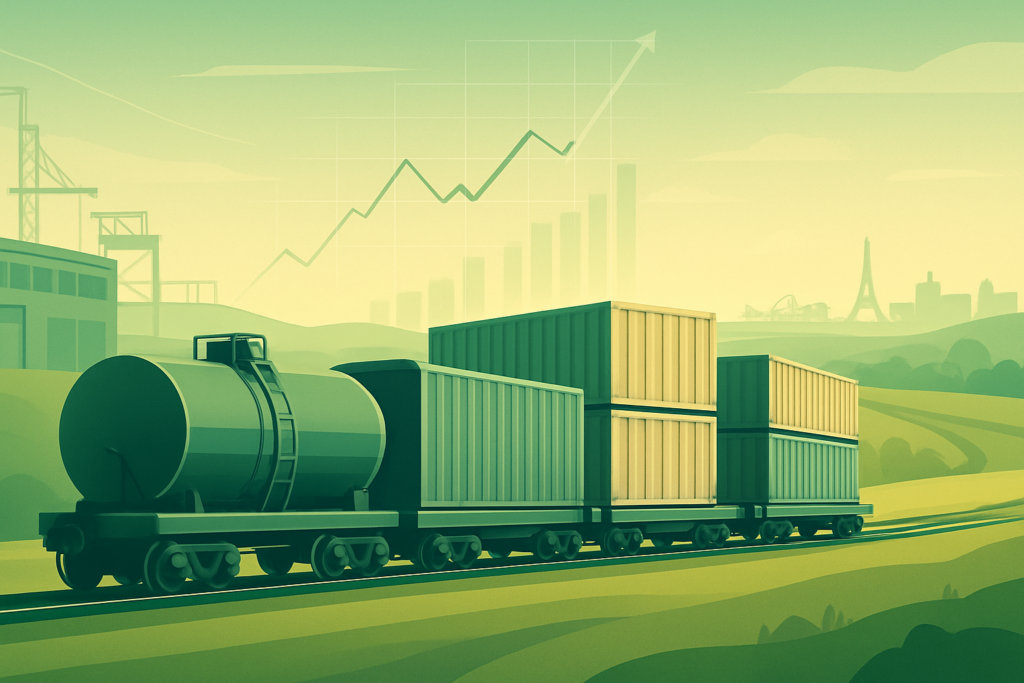
As of April 7, 2026, the global logistics landscape finds itself at a crossroads between post-pandemic stabilization and a renewed focus on environmental sustainability. At the heart of this industrial transition stands The Greenbrier Companies, Inc. (NYSE: GBX), a titan in the design, manufacture, and marketing of railroad freight car equipment. While the broader tech indices often capture the headlines, Greenbrier has quietly positioned itself as a mission-critical infrastructure play, essential to the movement of everything from grain and chemicals to automobiles and consumer electronics.
The company is currently in focus as it navigates a shifting economic cycle, buoyed by a record-breaking fiscal 2025 and a strategic pivot toward higher-margin, recurring revenue streams. In an era where "de-risking" supply chains and lowering carbon footprints are paramount, Greenbrier’s role in the highly fuel-efficient rail sector makes it a significant bellwether for the health of global trade.
Historical Background
The roots of The Greenbrier Companies stretch back to 1919 with the founding of Wire Wheel Sales and Service in Portland, Oregon. This entity eventually became Gunderson Bros., a name still synonymous with quality in the railcar industry today. However, the modern Greenbrier story began in earnest in 1981, when industry veterans Alan James and William A. Furman acquired the railcar leasing business of Commercial Metals Company.
In 1985, the company made a transformative move by acquiring the Marine and Rail Car Division of FMC Corporation, which included the Gunderson manufacturing facilities. This acquisition allowed Greenbrier to control both the manufacturing and leasing aspects of the business. After going public on the New York Stock Exchange in 1994, Greenbrier embarked on an aggressive international expansion, entering Poland in 1998 and later establishing a dominant manufacturing presence in Mexico through its GIMSA partnership. The 2019 acquisition of American Railcar Industries (ARI) solidified its position as one of the two dominant players in North American rail manufacturing.
Business Model
Greenbrier operates a vertically integrated, three-pillar business model designed to capture value across the entire lifecycle of a railcar:
- Manufacturing: This remains the primary revenue engine. Greenbrier builds a diverse array of railcars, including tank cars, intermodal double-stacks, covered hoppers, and automotive "Multi-Max" units. With facilities across North America, Europe, Brazil, and Turkey, they maintain a global production footprint that few can match.
- Maintenance Services (Greenbrier Rail Services): Beyond building new cars, the company operates an extensive network for repair, refurbishment, and component manufacturing (such as wheels and axles). This segment provides a steady flow of business as existing fleets age and require upgrades to meet new safety regulations.
- Leasing & Management: In recent years, Greenbrier has aggressively expanded GBX Leasing, its wholly-owned subsidiary. By owning and managing a fleet of over 400,000 cars (both owned and managed for third parties), Greenbrier generates high-margin, recurring lease income that acts as a stabilizer during periods of low manufacturing demand.
Stock Performance Overview
Over the past decade, GBX has been a classic cyclical stock, sensitive to the ebbs and flows of industrial production and interest rates.
- 1-Year Performance: The stock has seen a solid +7.73% return. This was driven by the momentum of a record fiscal 2025 and investor approval of a dividend increase in early 2026.
- 5-Year Performance: Investors have seen a +22.50% gain. This period was marked by a sharp recovery from 2020 lows, though performance was tempered in 2023 and 2024 by rising interest rates and fluctuating steel prices.
- 10-Year Performance: On a decade-long horizon, the stock has reflected the broader consolidation of the railcar industry. While it hit an all-time high of nearly $68.50 in early 2025, it currently trades around the $52.74 mark, reflecting a maturation of the business and a transition toward a more balanced "manufacturing plus leasing" valuation.
Financial Performance
Greenbrier’s financial standing as of early 2026 is robust, characterized by strong liquidity and a massive backlog.
In fiscal year 2025, the company reported record revenue of approximately $3.5 billion and record diluted earnings per share (EPS) of $6.35. While the first quarter of fiscal 2026 (ended November 30, 2025) saw a year-over-year revenue dip to $706.1 million, the company still managed an EPS beat at $1.14, showcasing improved operational efficiency.
Crucially, Greenbrier maintains a massive new railcar backlog of 16,300 units valued at $2.2 billion. This provides significant visibility into future earnings. For the full fiscal year 2026, management is targeting aggregate gross margins between 16.0% and 16.5%, a notable step up from historical norms, reflecting the company’s focus on high-value products.
Leadership and Management
The company is led by CEO Lorie Tekorius, who took the helm in 2022. A veteran of the company for nearly three decades, Tekorius has been credited with shifting the corporate culture from a "growth-at-all-costs" manufacturing mindset to a more disciplined, profitability-focused strategy.
Under her leadership, Greenbrier launched the 'Better Together' initiative. This strategy focuses on optimizing the company’s global industrial footprint—rationalizing underperforming facilities in Europe—while simultaneously doubling down on the leasing business to ensure a higher level of "through-cycle" earnings. The board's recent decision to raise the quarterly dividend to $0.34 per share in April 2026 is a testament to the management’s confidence in their cash flow generation.
Products, Services, and Innovations
Greenbrier’s competitive edge lies in its engineering prowess. Notable innovations include:
- Multi-Max: A versatile automotive railcar that allows railroads to switch between two and three decks, optimizing space for different vehicle heights (from low-profile sedans to high-roof SUVs).
- Tank Car of the Future: Greenbrier led the industry in developing DOT-117 compliant tank cars, which feature thicker steel and enhanced thermal protection to prevent leaks during derailments.
- Sustainability Initiatives: The company is now producing "Light Version" wagons in Europe, utilizing high-strength steel to reduce the weight of the car itself. This allows for higher payloads and reduced fuel consumption, directly contributing to the ESG goals of its customers.
Competitive Landscape
The North American railcar manufacturing market is essentially a duopoly. Greenbrier holds approximately 40% market share, locked in constant competition with Trinity Industries, Inc. (NYSE: TRN).
While Trinity has a larger owned leasing fleet, Greenbrier has a more significant international presence and a broader manufacturing footprint in Mexico, which provides a labor cost advantage. A smaller player, FreightCar America, Inc. (NASDAQ: RAIL), competes in niche segments like coal hoppers and gondolas but lacks the scale and leasing portfolio of the two giants. Greenbrier’s strength lies in its diversification; when one commodity sector (like grain) is down, another (like chemicals or intermodal) often compensates.
Industry and Market Trends
Three major trends are currently shaping the industry:
- Precision Scheduled Railroading (PSR): Major railroads have moved toward longer, heavier trains. This has increased the mechanical stress on railcars, leading to faster wear and tear and a higher demand for Greenbrier’s maintenance and refurbishment services.
- Fleet Renewal Cycle: Much of the North American fleet built during the 1970s and 80s is reaching its mandatory retirement age (usually 40-50 years). This creates a "replacement floor" for new car orders regardless of broader economic volatility.
- The Shift to Rail: As companies look to reduce Scope 3 emissions, freight rail—which is 3-4 times more fuel-efficient than trucking—is seeing renewed interest for long-haul logistics.
Risks and Challenges
Despite its strong position, Greenbrier faces several headwinds:
- Raw Material Volatility: Steel is the primary input for railcars. Sudden spikes in steel prices or new trade tariffs can squeeze margins, especially on long-term contracts where price escalation clauses might not fully cover costs.
- Interest Rate Sensitivity: As Greenbrier expands its leasing fleet, its debt levels naturally rise. Prolonged high interest rates increase the cost of capital, making it more expensive to finance the growth of GBX Leasing.
- Economic Sensitivity: A significant recession would reduce the volume of freight moved, leading railroads to defer new equipment purchases and park existing cars.
Opportunities and Catalysts
The primary catalyst for GBX over the next 18–24 months is the continued execution of the 'Better Together' strategy. If the company successfully doubles its recurring revenue from leasing, it could trigger a "multiple re-rating" by Wall Street—treating it more like a stable financial/service company rather than a volatile manufacturer.
Furthermore, international markets like Brazil, where Greenbrier operates via Greenbrier-Maxion, show high growth potential due to massive agricultural expansion and a government push for infrastructure modernization.
Investor Sentiment and Analyst Coverage
Analyst sentiment toward GBX remains cautiously optimistic. Most Wall Street analysts carry a "Hold" or "Buy" rating, with a median price target in the $55–$60 range. Institutional investors, including Vanguard and BlackRock, remain major holders, drawn to the company’s dividend yield and market-dominant position.
Retail sentiment has warmed recently as the company’s debt-to-equity ratio has stabilized following the aggressive ARI acquisition integration. The market is currently waiting to see if Greenbrier can maintain its 16%+ gross margin targets in a cooling industrial environment.
Regulatory, Policy, and Geopolitical Factors
The regulatory environment is a double-edged sword for Greenbrier. In the U.S., the 2027 deadline to phase out older tank cars for Toxic-by-Inhalation (TIH) materials is a major driver for new orders. However, proposed legislation like the Railway Safety Act could impose new costs on car owners and manufacturers regarding electronic braking systems and specialized inspections.
Geopolitically, Greenbrier’s operations in Poland and Romania are sensitive to the ongoing stability of Eastern Europe. While these facilities have been resilient, any escalation in regional conflict could disrupt supply chains for European railcar components.
Conclusion
The Greenbrier Companies, Inc. enters the mid-point of 2026 as a leaner, more strategically focused entity than it was five years ago. By shifting away from purely cyclical manufacturing and toward a more balanced leasing and service model, CEO Lorie Tekorius has built a company that can better weather economic storms.
For investors, GBX offers a unique combination of a "old economy" industrial backbone and a modern, high-margin leasing engine. While risks regarding steel prices and interest rates remain ever-present, the massive $2.2 billion backlog and the 2027 regulatory "cliff" for tank car safety provide a solid foundation for the years ahead. As long as global trade moves on rails, Greenbrier is likely to remain the engineer of the industry's future.
This content is intended for informational purposes only and is not financial advice.