Date: April 1, 2026
Introduction
In the rapidly evolving landscape of artificial intelligence, few companies have undergone a transformation as radical or as successful as Nebius Group (NASDAQ: NBIS). Once the international shell of a Russian tech giant, Nebius has emerged in 2026 as a premiere "pure-play" AI infrastructure provider. Positioned as a critical partner to NVIDIA and a cornerstone of European "sovereign AI," the company is currently at the center of investor attention. With a business model built on providing the massive computational power required for the next generation of autonomous agents and Large Language Models (LLMs), Nebius is no longer just a recovery play—it is a frontrunner in the global AI arms race.
Historical Background
The story of Nebius Group is one of corporate survival and strategic rebirth. The company was formerly known as Yandex N.V., the Dutch parent company of Russia’s leading search and technology firm. Following the geopolitical shifts of 2022, the company entered a protracted "corporate divorce" to decouple its international high-tech assets from its Russian operations.
The transformation was finalized in July 2024 with a $5.4 billion divestment of its Russian business. What remained was a lean, tech-heavy entity rebranded as Nebius Group, which retained roughly 1,300 world-class engineers, a fleet of proprietary AI intellectual property, and a state-of-the-art data center in Finland. Under the leadership of founder Arkady Volozh, the company spent 2025 aggressively pivoting its focus entirely toward AI infrastructure, eventually resuming full trading on the NASDAQ in October 2024.
Business Model
Nebius operates on what it calls an "AI Factory" model. Unlike traditional cloud providers (AWS or Google Cloud) that offer a broad suite of general-purpose services, Nebius is hyper-focused on the specific needs of AI developers:
- GPU-as-a-Service (GPUaaS): This is the company’s primary revenue engine. Nebius leases high-end NVIDIA chips (H200s, B200 Blackwells, and the newly released Rubin architecture) to developers and enterprises.
- Aether (AI Cloud 3.5): A proprietary software layer that allows for "serverless" AI computing. Developers can run massive workloads without managing the underlying hardware, optimizing performance and reducing costs.
- Token Factory: A managed inference service that enables companies to deploy high-performance models (like Llama 4) with lower latency and higher throughput than standard cloud setups.
- In-House Engineering: Unlike many of its rivals, Nebius designs its own server racks, cooling systems, and networking protocols, allowing it to extract maximum performance from its hardware.
Stock Performance Overview
Since its return to the public markets, the stock performance of NBIS has been nothing short of meteoric. After trading resumed in late 2024 in the $15–$25 range, the stock surged throughout 2025 as the market recognized its "pure-play" AI potential.
As of April 1, 2026, NBIS is trading at approximately $106.36. Over the trailing 12 months, the stock has gained over 240%. While it saw a peak of roughly $141 in late 2025 during the initial hype of the Blackwell chip rollout, it has since stabilized at a premium valuation, supported by robust revenue growth and institutional backing.
Financial Performance
The financial trajectory of Nebius in the 2025 fiscal year silenced many skeptics. The company reported full-year 2025 revenue of $529.8 million, representing a nearly 480% year-over-year increase from its post-divestiture baseline.
Key financial highlights include:
- 2026 Guidance: Management has provided ambitious guidance for 2026, targeting revenue between $3.0 billion and $3.4 billion.
- Profitability: The company reached a major milestone in Q4 2025 by turning Adjusted EBITDA positive.
- Backlog: Nebius boasts a massive $45 billion backlog, anchored by multi-year infrastructure agreements with major tech firms like Meta and Microsoft.
- Capital Position: While the company is cash-intensive, it recently successfully executed a $4.6 billion convertible bond issuance to fund its massive hardware acquisitions.
Leadership and Management
The leadership team is a blend of "old-guard" visionaries and new-world operators. Arkady Volozh, the CEO and founder, is widely credited with navigating the company through its complex restructuring. His return to the helm has provided a sense of continuity and long-term vision.
To support its global expansion, Nebius has recently poached top talent from the US hyperscalers. Dan Lawrence, formerly a high-ranking executive at AWS, joined as SVP of the Americas in early 2026. Additionally, Chief Revenue Officer Marc Boroditsky, a veteran of Cloudflare, has been instrumental in securing the company’s massive backlog of enterprise contracts.
Products, Services, and Innovations
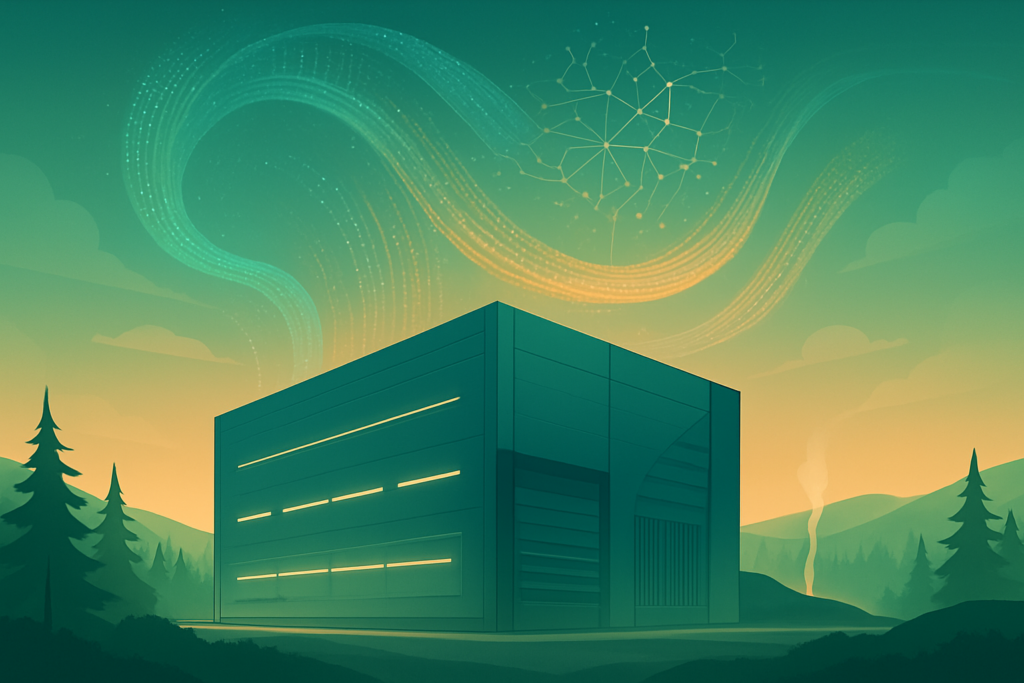
Nebius differentiates itself through engineering depth. Their flagship data center in Mäntsälä, Finland, is a marvel of efficiency, utilizing a proprietary heat-recovery system that heats local homes while keeping server temperatures stable.
In February 2026, Nebius acquired Tavily, an Israeli-based agentic search startup. This acquisition allowed Nebius to integrate a "real-time web search" layer directly into its cloud infrastructure. This is specifically designed for "autonomous agents"—AI systems that don't just generate text but perform tasks across the web in real-time.
Competitive Landscape
Nebius competes in the "Neocloud" space against other specialized providers like CoreWeave (Private) and Lambda Labs (Private). While CoreWeave currently has a larger total GPU footprint, Nebius maintains several advantages:
- Sovereign Data: For European clients, Nebius offers a clear regulatory path that avoids the data-residency complexities of US-based providers.
- Software Stack: Nebius’s legacy as a software/search company means its internal orchestration tools are often cited as more mature than those of pure hardware rental firms.
- Public Listing: As a public company, Nebius provides transparency and liquidity that its private rivals currently lack.
Industry and Market Trends
The "Agentic Era" of AI—where AI moves from chatbots to proactive digital workers—is driving a massive demand for low-latency, high-inference compute. Furthermore, the trend toward "Sovereign AI" is accelerating. Governments, particularly in the EU, are increasingly wary of relying solely on US-based hyperscalers for their critical AI infrastructure. Nebius, with its Finnish and French hubs, is perfectly positioned to capitalize on this desire for local, high-performance data centers.
Risks and Challenges
Despite the optimism, Nebius faces significant risks:
- Capital Intensity: The company plans to spend $16B–$20B on Capex in 2026 alone. This requires constant access to capital markets and risks diluting shareholders.
- Hardware Reliance: Its growth is entirely dependent on the supply of NVIDIA chips. Any disruption in NVIDIA’s supply chain or a shift in the market toward in-house silicon (like Amazon's Trainium) could hurt Nebius.
- Execution Risk: Scaling from a 75 MW footprint to over 1 GW in less than two years is an enormous operational undertaking.
Opportunities and Catalysts
The most significant near-term catalyst is the development of the Lappeenranta "AI Factory." This $10 billion investment in Finland is slated to be one of the largest AI campuses in the world, with a 310 MW capacity.
Furthermore, the $2 billion strategic investment by NVIDIA in March 2026 has served as a massive "seal of approval." This investment virtually guarantees that Nebius will remain at the front of the line for NVIDIA’s future "Rubin" and "Vera" architectures.
Investor Sentiment and Analyst Coverage
Wall Street sentiment has shifted from "cautious" to "aggressively bullish" over the last six months. Major brokerages have initiated coverage with "Outperform" ratings, citing the company’s massive backlog and unique European positioning. Retail chatter on platforms like X and Reddit frequently compares Nebius to a "leveraged play on NVIDIA," given its heavy concentration in GPU infrastructure.
Regulatory, Policy, and Geopolitical Factors
Nebius has successfully moved past its Russian legacy, receiving clean bills of health from both US and EU regulators. It is now leaning heavily into compliance with the EU AI Act, positioning its Finnish data centers as the safest "sovereign" choice for sensitive government and enterprise workloads. Its Dutch domicile provides a stable legal framework that appeals to global institutional investors.
Conclusion
Nebius Group (NBIS) represents one of the most compelling narratives in the 2026 tech market. It has successfully navigated a geopolitical minefield to emerge as a powerhouse in AI infrastructure. While the capital requirements are staggering and the competition is fierce, the company’s combination of proprietary engineering, deep-seated partnership with NVIDIA, and its role as Europe’s premier "AI Factory" make it a critical stock for any AI-focused portfolio. Investors should keep a close eye on the Lappeenranta expansion and the company's ability to maintain its EBITDA margins as it scales into the gigawatt era.
This content is intended for informational purposes only and is not financial advice.