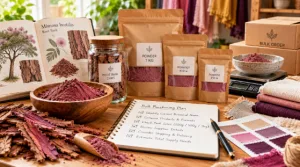
When textile makers research Mimosa tenuiflora root bark, understanding botanical names helps them compare bulk listings more accurately. From plant-based dye experiments to handmade fabric collections, textile makers often work with ingredients identified by scientific names, regional names, and commercial descriptions.
Understanding these names becomes especially important when purchasing materials in larger quantities.
A botanical product may appear under several different names, while suppliers may offer it in multiple formats, including fine powder, shredded bark, and larger plant pieces. Without careful comparison, buyers can misunderstand what a listing contains or purchase a format that does not match their workshop requirements.
Bulk purchasing introduces additional considerations. Larger orders require sufficient storage, predictable material consumption, accurate inventory records, and a clear understanding of supplier policies.
For textile artists and small craft businesses, combining botanical identification with practical purchasing strategies can help reduce unnecessary expenses and improve project organization.
This guide explains botanical naming conventions, material formats, supplier evaluation, and bulk purchasing considerations for textile makers working with plant-based craft supplies.
Understanding Botanical Names in Textile Material Sourcing
Botanical names provide a more precise way to identify plant species than common or regional names alone.
A plant may have different names depending on its geographic location, historical classification, or commercial use.
For textile makers, recognizing these naming differences helps reduce confusion when comparing product listings.
Scientific Names and Botanical Synonyms
Scientific names generally consist of a genus and species.
However, botanical classification can change as researchers revise their understanding of plant relationships.
As a result, some plants are known by more than one scientific name.
For example, Mimosa tenuiflora is also widely referenced by the botanical synonym Mimosa hostilis.
Both names may appear in botanical literature and commercial product descriptions.
Regional Names and Traditional Terminology
Common names often reflect local languages and traditional uses.
The name Jurema is associated with certain Mimosa species, including Mimosa tenuiflora, but regional terminology can sometimes refer to more than one plant.
Therefore, a common name should not replace scientific identification when accurate sourcing is important.
Why Abbreviations Require Additional Checking
Abbreviations are convenient but may provide limited information.
For example, MHRB commonly refers to Mimosa hostilis root bark.
However, this abbreviation alone does not confirm the botanical identity, processing format, or quality of a particular product.
Buyers should examine the complete listing before placing an order.
How Botanical Identification Supports Better Craft Planning
Accurate material identification helps workshops maintain organized purchasing records.
When the same botanical material appears under different names, inconsistent recordkeeping can make it difficult to compare previous orders.
A practical material record should include:
- Accepted scientific name.
- Commonly used botanical synonyms.
- Regional or commercial name.
- Plant part supplied.
- Processing format.
- Supplier name.
- Package weight.
- Batch identification, when available.
Maintaining this information can help textile makers recognize equivalent botanical names without assuming that every commercial product has identical characteristics.
Comparing Botanical Material Formats for Textile Applications
Plant-based craft materials are available in several physical forms.
Understanding these formats is essential when planning workshop purchases.
Fine-Milled Botanical Powder
Fine powder consists of dried botanical material ground into relatively small particles.
It can be convenient to weigh and divide into smaller portions for controlled craft experiments.
However, fine particles may become airborne during handling and may require careful filtration in certain liquid preparations.
Fine milling does not automatically guarantee greater purity or improved dye performance.
Coarse Botanical Powder
Coarse powder contains larger particles and may retain more visible plant texture.
Its handling and filtration requirements can differ from those of finely milled products.
Because milling standards vary, buyers should confirm processing details when particle size matters.
Shredded Root Bark
Shredded bark consists of dried plant fragments.
This format may be relevant to botanical demonstrations, craft research, and projects where recognizable plant material is preferred.
Root Bark Chips and Larger Pieces
Chips and larger botanical pieces may require additional preparation depending on the intended craft application.
The most appropriate format depends on project requirements, available equipment, and documented testing.
Evaluating Ten-Kilogram Botanical Material Listings
Larger package sizes may become relevant when a textile workshop has established material requirements and predictable production schedules.
For example, buyers researching Mimosa hostilis root bark in larger quantities can examine a bulk MHRB supplier for 10kg orders as part of their supplier comparison process.
The linked product page identifies a 10kg root bark offering and presents multiple processing formats.
Before ordering, buyers should confirm the selected format, package weight, current price, availability, and applicable delivery conditions.
Supplier descriptions concerning purity, sourcing, sustainability, or laboratory testing should be treated as seller-provided claims unless supported by independently reviewed documentation.
Questions to Ask Before Purchasing 10kg
Consider the following:
- Has the material already been evaluated for the intended textile application?
- Is the botanical species clearly identified?
- Which processing format is included?
- Are batch or sourcing records available?
- Does the workshop have sufficient storage space?
- What are the complete purchasing and shipping costs?
- Can the supplier clarify return or replacement conditions?
These questions can help businesses determine whether a larger purchase is appropriate.
Planning Bulk Purchases Around Actual Workshop Demand
A lower unit price does not automatically make bulk purchasing the best option.
Textile workshops should estimate future material needs using existing production records.
Review Completed Textile Projects
Examine the number of items produced, total fabric weight, botanical materials used, and remaining inventory.
Previous records provide a useful foundation for estimating future demand.
Identify Regularly Used Materials
Materials used consistently in established projects may justify larger orders.
Unfamiliar botanical ingredients are generally better evaluated in smaller quantities before becoming part of regular production.
Consider Available Storage
Bulk purchases require suitable containers, organized shelving, and appropriate environmental conditions.
Protect Working Capital
Purchasing a large quantity of one material can reduce the funds available for fabric, tools, labor, and other workshop expenses.
A practical purchasing strategy should support the entire production process.
Calculating Textile Production Requirements
Fabric weight is a useful starting point when estimating workshop activity.
Suppose a textile business plans to prepare 60 cotton scarves, each weighing 150 grams.
The total fabric weight would be:
60 × 150g = 9,000g
This equals 9kg of fabric.
However, fabric weight alone does not determine how much botanical material is required.
Natural botanical ingredients can vary in composition depending on species, origin, processing, and storage history.
Different textile fibers and preparation methods may also influence results.
For this reason, workshops should use controlled testing and documented material consumption to estimate purchasing quantities.
Researching Botanical Suppliers and Naming Information
Supplier research should involve reviewing both individual product listings and broader company information.
For example, buyers comparing Mimosa tenuiflora (Jurema) root bark can examine the supplier’s catalog, botanical descriptions, and published purchasing policies.
The scientific name and regional terminology can provide useful context, but buyers should still confirm the exact plant part and processing format offered in each listing.
A supplier’s use of a recognized botanical name does not independently verify product identity or quality.
Supplier Details Worth Recording
A useful comparison record includes:
- Company or seller name.
- Product page URL.
- Scientific botanical name.
- Plant part and processing format.
- Package weight.
- Listed price.
- Available batch documentation.
- Shipping eligibility.
- Return conditions.
- Date the information was checked.
These details help workshop owners compare suppliers consistently.
Comparing Bulk Prices With Smaller Package Options
Unit pricing can help businesses understand the financial difference between smaller and larger orders.
The basic formula is:
Cost per kilogram = Total package price ÷ Package weight in kilograms
Consider the following hypothetical example:
| Package Weight | Illustrative Total Price | Cost per Kilogram |
| 500g | $70 | $140 |
| 1kg | $125 | $125 |
| 2kg | $235 | $117.50 |
| 5kg | $550 | $110 |
| 10kg | $1,000 | $100 |
These figures are hypothetical and do not represent verified prices from the linked supplier.
Although the example shows decreasing unit costs, actual purchasing value depends on material usage, shipping charges, storage costs, and available funds.
Businesses should compare the total delivered cost rather than relying only on advertised package prices.
Creating a Botanical Inventory System for Larger Orders
Accurate inventory management becomes increasingly important as purchasing quantities grow.
A simple spreadsheet can help workshops track materials across multiple projects.
| Inventory Field | Information to Record |
| Scientific Name | Botanical species |
| Common Name | Regional or commercial terminology |
| Material Format | Powder, shredded, or chips |
| Supplier | Company or seller |
| Batch Number | Available traceability information |
| Starting Quantity | Original package weight |
| Quantity Used | Material consumed |
| Remaining Stock | Current inventory |
| Storage Location | Shelf or container |
| Reorder Point | Planned purchasing threshold |
Maintaining these records can help prevent duplicate purchases and support more accurate material forecasting.
Reviewing Shipping and Ordering Policies for Bulk Materials
Large botanical orders require careful attention to delivery conditions.
Shipping eligibility may vary depending on the destination, product variation, and current supplier policies.
Before purchasing, confirm:
- Supported delivery destinations.
- Shipping and handling charges.
- Estimated processing times.
- Tracking availability.
- Packaging arrangements.
- Return and replacement procedures.
- Customs or import restrictions.
- Applicable regional regulations.
Published delivery estimates should not be treated as guaranteed arrival dates.
International buyers should verify whether the selected botanical material is permitted at the destination before placing an order.
Safe Storage Practices for Botanical Workshop Supplies
Botanical materials should be stored in suitable containers that protect them from excessive moisture, contamination, and unsuitable environmental conditions.
Each container should be clearly labeled with the botanical name, processing format, purchase date, and batch number when available.
Fine powders can create airborne dust, so appropriate ventilation and protective equipment may be necessary.
Keep botanical craft supplies separate from food preparation areas.
If textile projects involve mordants or other processing chemicals, follow the relevant safety instructions and disposal requirements.
Natural origin does not automatically mean a material is harmless.
Common Purchasing Mistakes Textile Makers Should Avoid
Confusing Common Names With Scientific Identification
Regional names may be useful, but scientific names provide a more precise starting point for identifying botanical materials.
Assuming All Processing Formats Are Equivalent
Powdered, shredded, and chipped materials may have different handling requirements.
Buying Large Quantities Without Testing
Bulk purchases can create unnecessary inventory when material suitability has not been established.
Overlooking Total Purchasing Costs
Shipping, taxes, storage, and other expenses can influence the financial value of a larger order.
Expecting Identical Results From Every Botanical Batch
Natural materials may vary in composition.
Specific dye shades, color intensity, and colorfastness should not be assumed without appropriate testing.
Frequently Asked Questions About Botanical Naming and Bulk Orders
Why do some botanical materials have more than one scientific name?
Botanical classifications can change over time, resulting in accepted names and historical synonyms.
Are Mimosa tenuiflora and Mimosa hostilis the same plant?
Mimosa hostilis is commonly treated as a botanical synonym of Mimosa tenuiflora.
What does MHRB mean on a product listing?
MHRB generally stands for Mimosa hostilis root bark, although the abbreviation alone does not verify product identity or quality.
Is a 10kg botanical material order suitable for every textile workshop?
No. Larger quantities are generally more appropriate when material requirements are established and sufficient storage is available.
How can textile makers compare bulk purchasing costs?
Calculate the price per kilogram and include shipping, taxes, storage, and other relevant expenses.
What should buyers verify before ordering botanical materials internationally?
Confirm botanical identification, product specifications, shipping eligibility, customs requirements, and applicable import regulations.
Conclusion: Combining Botanical Knowledge With Practical Purchasing
Understanding botanical names and material formats is an important part of sourcing supplies for textile and craft projects.
Scientific identification helps buyers distinguish plant species, while clear processing descriptions explain how materials are supplied.
For workshops considering larger orders, accurate consumption records, realistic production forecasts, and appropriate storage arrangements are essential.
Bulk purchasing may become practical when material requirements are predictable, but larger quantities should not be selected solely because of a lower unit price.
By combining botanical research, supplier evaluation, documented testing, and organized inventory management, textile makers can make more informed purchasing decisions and prepare their workshops for sustainable operational growth.