Waukegan, IL - Students with low-incidence disabilities those who are blind, deaf, deaf-blind, or who experience multiple or significant cognitive disabilities comprise one of the smallest but most critically underserved student populations in U.S. education. Yet, despite clear federal mandates under the Individuals with Disabilities Education Act (IDEA), thousands of these students are denied consistent access to appropriately adapted curriculum, certified personnel, or assistive technology due to systemic shortages and structural fragmentation.
A bold new policy framework developed by seasoned educator and developmental education scholar Zenith G. Rosales offers a timely solution. Her model detailed in the newly released white paper, “Scaling Inclusive Instructional Systems for Low-Incidence Disabilities in Underserved U.S. Elementary Schools”—presents a practical infrastructure for how school districts, regional service agencies, and state departments can collaboratively implement consistent, equitable, and standards-aligned education for students with low-incidence needs.
Rosales’s proposed Scaled Inclusive Instructional System (SIIS) outlines a five-part framework built around curriculum alignment, IEP fidelity, data integration, regional service consortia, and structured literacy interventions. Each component is grounded in proven instructional methods, interoperable data systems, and legal compliance tools offering a comprehensive response to persistent gaps in IDEA service delivery.
“We’re not facing a lack of will—we’re facing a lack of systemic capacity,” Rosales said. “This framework is built to close that gap.”
Meeting a National Challenge
The white paper arrives at a time when multiple federal agencies, national advocacy groups, and local education authorities are calling for more rigorous and equitable implementation of IDEA mandates. Over 48 states have reported ongoing shortages in highly specialized personnel such as Teachers of the Visually Impaired (TVIs), Teachers of the Deaf (TODs), and related service providers, compounding access disparities for students in rural or underfunded districts.
At the same time, multiple Government Accountability Office (GAO) reports confirm that many schools do not track service delivery in a way that ensures timely or complete implementation of Individualized Education Programs (IEPs). These data limitations create barriers to accountability, transparency, and resource planning especially for students requiring low-incidence supports.
Rosales’s framework is uniquely suited to address these challenges. Her model proposes:
- Digital tools that track IEP fidelity in real time
- Regionally coordinated staffing through cross-district consortia
- Assistive technology systems that accelerate access to braille, AAC, and alternate materials
- Structured literacy using Orton-Gillingham (OG) principles has proven effective for students with complex learning needs
The model also calls for improved data sharing across agencies, leveraging secure platforms to track caseloads, service hours, and student outcomes an approach aligned with ongoing efforts at the U.S. Department of Education to modernize special education data infrastructures.
Experience that Drives Systems Change
The impact of the white paper is not rooted solely in theory. Rosales brings over 12 years of instructional and leadership experience in both Philippine and U.S. public schools. She currently teaches in the Low-Incidence STEP Inclusion Program at Whittier Elementary School in Waukegan, Illinois a setting that integrates students with significant disabilities in a Title I environment. Her classroom implements many of the tools featured in the SIIS model, from OG-based reading interventions to assistive tech integration and multi-tiered data use.
Rosales holds a Master’s in Special Education and is completing her doctorate in Developmental Education. She is also a certified OG interventionist and a former regional trainer in inclusive practices in the Visayas Region of the Philippines. Her career includes national coaching awards, district-level curriculum development, and cross-agency collaboration on inclusive teaching models.
In 2025, she launched Zenith IDEA & Inclusion Consulting, a platform through which she advises school districts and regional education cooperatives on implementing systems that ensure compliance, sustainability, and measurable instructional outcomes. Her work is grounded in professional development, data-use coaching, and fidelity auditing, all of which support the readiness of institutions to scale inclusive services.
Responding to Urgency with Readiness
Rosales’s policy and implementation work come at a critical inflection point for U.S. education:
- Congressional proposals to increase IDEA funding have gained bipartisan support
- The Department of Education has issued new guidance encouraging inclusive, standards-aligned practices for students with significant cognitive disabilities
- State education agencies are seeking tools to address compliance risk and increase service equity
Her framework is responsive to each of these developments. It is designed to operate at both the school and system level, incorporating scalable training, digital infrastructure, and cross-sector coordination. The model does not depend on federal legislative reform it offers a path for immediate action using existing mandates and funding streams.
“We’re at a moment where states and districts are asking not just ‘what must we do?’ but ‘how can we do it well and equitably?’ That’s the question this framework answers.”
Looking Forward
As a consultant and educator, Rosales continues to pilot the SIIS framework with schools in the Midwest and is preparing a series of implementation guides for district leadership teams. Her white paper has already circulated among special education advocacy networks, academic policy centers, and regional service agencies.
Future phases of the work include:
- Collaborations with higher education institutions to evaluate implementation fidelity
- Training partnerships with state special education divisions
- Toolkits for regional consortia formation, including staffing blueprints and fiscal models
The framework’s core strength lies in its dual orientation: it speaks to policymakers seeking systems-level guidance and to educators navigating daily instruction for complex learners.
A Framework Grounded in Practice and Purpose
Rosales’s work builds on the belief that educational equity for students with disabilities cannot be achieved through goodwill alone it requires infrastructure, leadership, and a clear operational roadmap. Her model reflects a deep understanding of the legal, instructional, and human dimensions of special education. It is built not just for compliance, but for quality and sustainability.
As school systems across the country seek implementable, research-grounded responses to long-standing service gaps for students with low-incidence disabilities, Rosales’s contribution stands as both timely and forward-looking.
“This isn’t just a framework for better services,” she said. “It’s a roadmap for honoring the full educational rights of every student—regardless of disability, district, or ZIP code.”
About Zenith G. Rosales
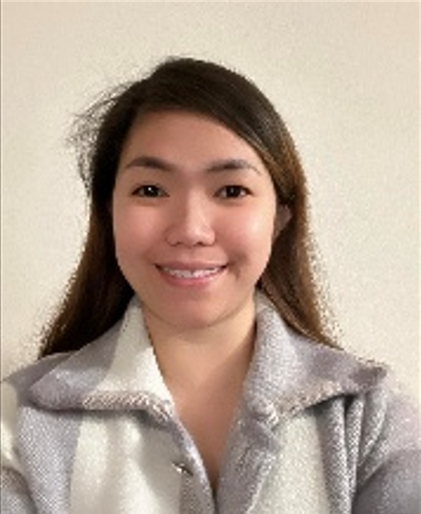
Zenith G. Rosales is a licensed special education teacher, literacy interventionist, and doctoral scholar with more than 12 years of classroom, curriculum, and policy experience. She is the founder of Zenith IDEA & Inclusion Consulting, dedicated to helping U.S. schools implement research-driven systems for inclusive education, with a focus on low-incidence disabilities. She lives in Waukegan, Illinois, and currently teaches in the STEP Low-Incidence Inclusion Program at Whittier Elementary School.
Media Contact
Zenith G. Rosales welcomes opportunities to collaborate with school districts, educational leaders, professional associations, and academic institutions committed to advancing equity in special education, inclusive instructional systems, and developmental education leadership. She offers customized training, keynote speaking, and capacity-building workshops through her consultancy, focusing on inclusive curriculum design, low-incidence disability interventions, and IEP fidelity and compliance.
For inquiries related to partnerships, speaking engagements, or media features, please contact:
Daniel Thompson
Public Relations Specialist, Innovators & Professionals

Media Contact
Company Name: Innovators & Professionals
Contact Person: Daniel Thompson
Email: Send Email
Country: United States
Website: http://www.innovatorsprofessionals.com/