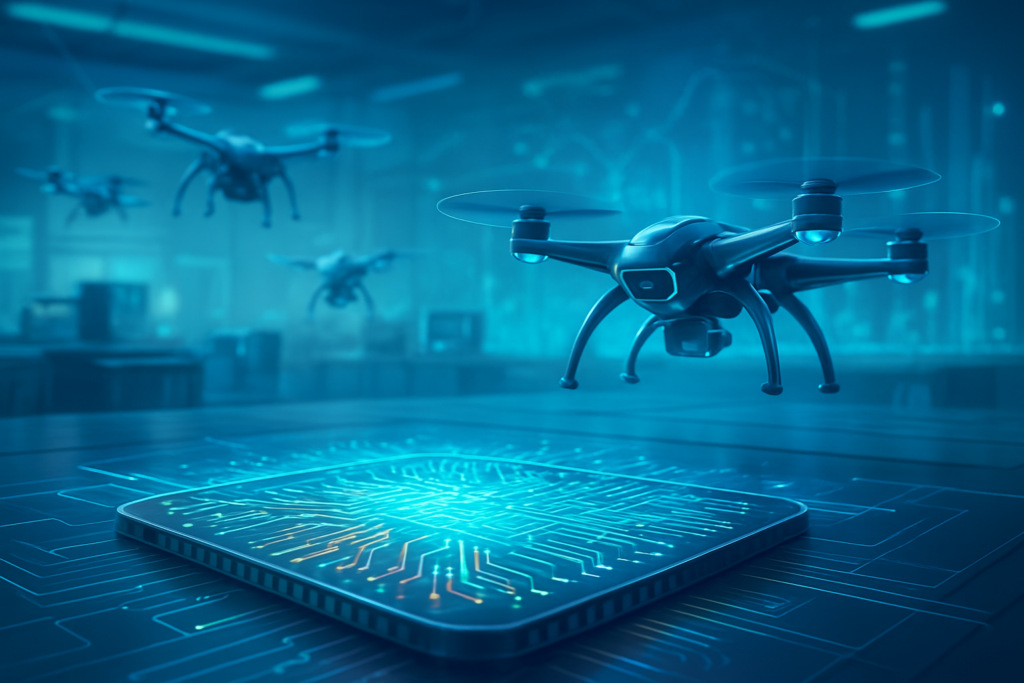
GREATER NOIDA, UTTAR PRADESH – December 16, 2025 – In a landmark move poised to reshape engineering education and bolster India's technological self-reliance, Galgotias University today officially inaugurated its advanced Semiconductor and Drone Technology Labs, integrated with a sophisticated Experiential Simulation Learning ecosystem. This strategic initiative marks a significant step towards bridging the persistent gap between academic instruction and industry demands, equipping students with hands-on expertise in two of the most critical and rapidly evolving sectors globally.
The comprehensive launch follows a phased development, including an earlier inauguration of a Drone Innovation Lab and Semiconductor & AI Research Lab in October, and a crucial Memorandum of Understanding (MoU) with DroneAcharya Aerial Innovations (NSE: DRONEACHARYA) in July and August to establish a DGCA-approved Remote Pilot Training Organization (RPTO) on campus. The university's commitment is clear: to foster a new generation of engineers and innovators who are not only theoretically sound but also practically proficient, ready to drive innovation and contribute meaningfully to national initiatives like Skill India and Atmanirbhar Bharat.
Pioneering Experiential Learning in High-Tech Domains
The newly established Semiconductor and Drone Technology Labs at Galgotias University represent a paradigm shift in engineering pedagogy, moving beyond traditional classroom-based learning to immersive, hands-on experiences. The Semiconductor Lab is meticulously designed to provide students with exposure to the entire chip development lifecycle, encompassing design, simulation, fabrication processes, testing, and their diverse applications in cutting-edge fields such as AI, automotive electronics, and consumer devices. This includes access to industry-standard Electronic Design Automation (EDA) tools and equipment, allowing students to work on real-world chip design challenges.
Complementing this, the Drone Technology Lab offers an unparalleled environment for immersive training in Unmanned Aerial Vehicle (UAV) design, assembly, flight control systems, payload integration, and data analytics. It features state-of-the-art drones, simulation software, and an Advanced Drone Soccer Arena, which not only hones technical skills in precision engineering and real-time problem-solving but also fosters teamwork and strategic thinking. This integrated approach ensures that students gain practical proficiency in operating and maintaining drones for a myriad of applications, from precision agriculture and infrastructure inspection to disaster management and defense. Unlike conventional programs that might focus solely on theoretical aspects or basic drone operation, Galgotias University's initiative provides a holistic, industry-grade experience, recreating industrial workflows within an academic setting. Initial reactions from the academic community and industry experts highlight the forward-thinking nature of this initiative, praising its potential to produce a highly skilled workforce ready to meet the demands of a rapidly evolving technological landscape.
Catalyzing Growth and Reshaping the Tech Industry Landscape
The introduction of Galgotias University's Semiconductor and Drone Labs carries profound implications for AI companies, tech giants, and startups alike, particularly those operating within India's burgeoning technology ecosystem. Companies specializing in semiconductor design, manufacturing, and AI hardware, such as Tata Electronics (NSE: TATAELXSI), Vedanta (NSE: VEDL), and global players with Indian operations, stand to significantly benefit from a pipeline of highly skilled graduates. These labs will cultivate talent proficient in VLSI design, embedded systems, and chip fabrication processes—skills that are currently in high demand as India pushes for self-reliance in semiconductor manufacturing.
Furthermore, the drone technology specialization will directly feed into the needs of companies like DroneAcharya Aerial Innovations (NSE: DRONEACHARYA), ideaForge Technology (NSE: IDEAFORGE), and other drone service providers and manufacturers. As the commercial and defense applications of drones expand rapidly, a workforce trained in UAV design, maintenance, and data analytics becomes invaluable. This development could lead to a competitive advantage for Indian tech firms, reducing their reliance on foreign talent and fostering local innovation. For startups, these labs could serve as incubators, providing access to essential infrastructure and expertise, thereby lowering barriers to entry for new ventures in semiconductor and drone technologies. The initiative also presents a potential disruption to existing training models, as universities like Galgotias take a more proactive role in workforce development, potentially influencing how other educational institutions approach specialized tech education.
Broader Significance in India's Technological Ascent
Galgotias University's strategic investment in Semiconductor and Drone Labs is more than just an academic enhancement; it's a critical alignment with India's broader technological aspirations and global trends. These labs are positioned at the nexus of several national priorities, including the "Make in India" and "Atmanirbhar Bharat" initiatives, which emphasize indigenous manufacturing and self-reliance. By fostering expertise in semiconductor design and manufacturing, the university directly contributes to India's ambition to become a global hub for electronics and chip production, reducing dependence on international supply chains, a vulnerability highlighted by recent global events.
The focus on drone technology is equally significant. India's drone sector is experiencing exponential growth, driven by government policies, increasing applications in agriculture, logistics, defense, and surveillance. The labs will cultivate a workforce capable of innovating within this space, potentially leading to breakthroughs in autonomous systems, AI-powered drone analytics, and specialized UAV applications. This initiative draws parallels with past milestones where academic institutions played a pivotal role in national technological development, such as the early days of software engineering education that propelled India's IT services boom. The potential concerns, however, include ensuring continuous updates to curriculum and equipment to keep pace with rapid technological advancements, and the need for sustained industry collaboration to maintain relevance.
Charting the Course for Future Innovation and Development
The establishment of the Semiconductor and Drone Labs at Galgotias University heralds a future ripe with innovation and practical applications. In the near term, we can expect to see a surge in student-led projects and research initiatives focusing on niche areas within semiconductor design, such as low-power AI chips, specialized sensors, and advanced packaging techniques. Similarly, the drone lab is likely to churn out innovations in autonomous navigation, swarm intelligence, AI-driven image processing for various industrial applications, and drone-based delivery systems.
Longer term, these labs could evolve into significant research and development hubs, attracting external funding and fostering industry partnerships to tackle complex challenges. Potential applications on the horizon include the development of indigenous microchips for critical infrastructure, advanced drone solutions for smart cities, environmental monitoring, and enhanced defense capabilities. Challenges that need to be addressed include attracting and retaining top-tier faculty with industry experience, securing continuous funding for equipment upgrades, and fostering a strong entrepreneurial ecosystem around the labs. Experts predict that such initiatives will not only elevate India's position in the global tech landscape but also inspire other universities to adopt similar experiential learning models, creating a virtuous cycle of innovation and talent development.
A New Epoch in Indian Technical Education
The inauguration of Galgotias University's Semiconductor and Drone Technology Labs marks a momentous occasion, signaling a new epoch in Indian technical education. The key takeaway is the university's proactive and visionary approach to addressing critical skill gaps and aligning academic offerings with national strategic imperatives. By investing heavily in state-of-the-art facilities and an experiential learning framework, Galgotias University is not merely educating students; it is cultivating a future workforce equipped with the practical skills and innovative mindset required to drive India's technological advancement.
This development holds immense significance in the annals of AI and technology history, serving as a powerful testament to the transformative potential of academic institutions when they commit to industry-aligned, hands-on education. The long-term impact is expected to be profound, contributing significantly to India's self-reliance in high-tech sectors and fostering a robust ecosystem for innovation and entrepreneurship. In the coming weeks and months, the tech community will be keenly watching for the initial outcomes from these labs, including student project successes, research publications, and the rate at which graduates are absorbed into leading tech companies, further solidifying Galgotias University's role as a vanguard of technological education in India.
This content is intended for informational purposes only and represents analysis of current AI developments.
TokenRing AI delivers enterprise-grade solutions for multi-agent AI workflow orchestration, AI-powered development tools, and seamless remote collaboration platforms.
For more information, visit https://www.tokenring.ai/.