Human capital management provider Alight (NYSE: ALIT) reported revenue ahead of Wall Street’s expectations in Q2 CY2026, but sales fell by 3.2% year on year to $511 million. On the other hand, next quarter’s revenue guidance of $474 million was less impressive, coming in 5.5% below analysts’ estimates. Its non-GAAP profit of $0.91 per share was 20% above analysts’ consensus estimates.
Is now the time to buy Alight? Find out by accessing our full research report, it’s free.
Alight (ALIT) Q2 CY2026 Highlights:
- Revenue: $511 million vs analyst estimates of $497 million (3.2% year-on-year decline, 2.8% beat)
- Adjusted EPS: $0.91 vs analyst estimates of $0.76 (20% beat)
- Adjusted EBITDA: $92 million vs analyst estimates of $84.82 million (18% margin, 8.5% beat)
- Revenue Guidance for the full year is $2.09 billion at the midpoint, below analyst estimates of $2.15 billion
- EBITDA guidance for the full year is $407.5 million at the midpoint, below analyst estimates of $431.6 million
- Operating Margin: -7.8%, up from -191% in the same quarter last year
- Free Cash Flow Margin: 9.4%, down from 11% in the same quarter last year
- Market Capitalization: $517.1 million
Company Overview
Born from a corporate spinoff in 2017 to focus on employee experience technology, Alight (NYSE: ALIT) provides human capital management solutions that help companies administer employee benefits, payroll, and workforce management systems.
Revenue Growth
A company’s long-term sales performance is one signal of its overall quality. Any business can experience short-term success, but top-performing ones enjoy sustained growth for years.
With $2.23 billion in revenue over the past 12 months, Alight is a mid-sized business services company, which sometimes brings disadvantages compared to larger competitors benefiting from better economies of scale.
As you can see below, Alight’s demand was weak over the last five years. Its sales fell by 4.1% annually, a poor baseline for our analysis.
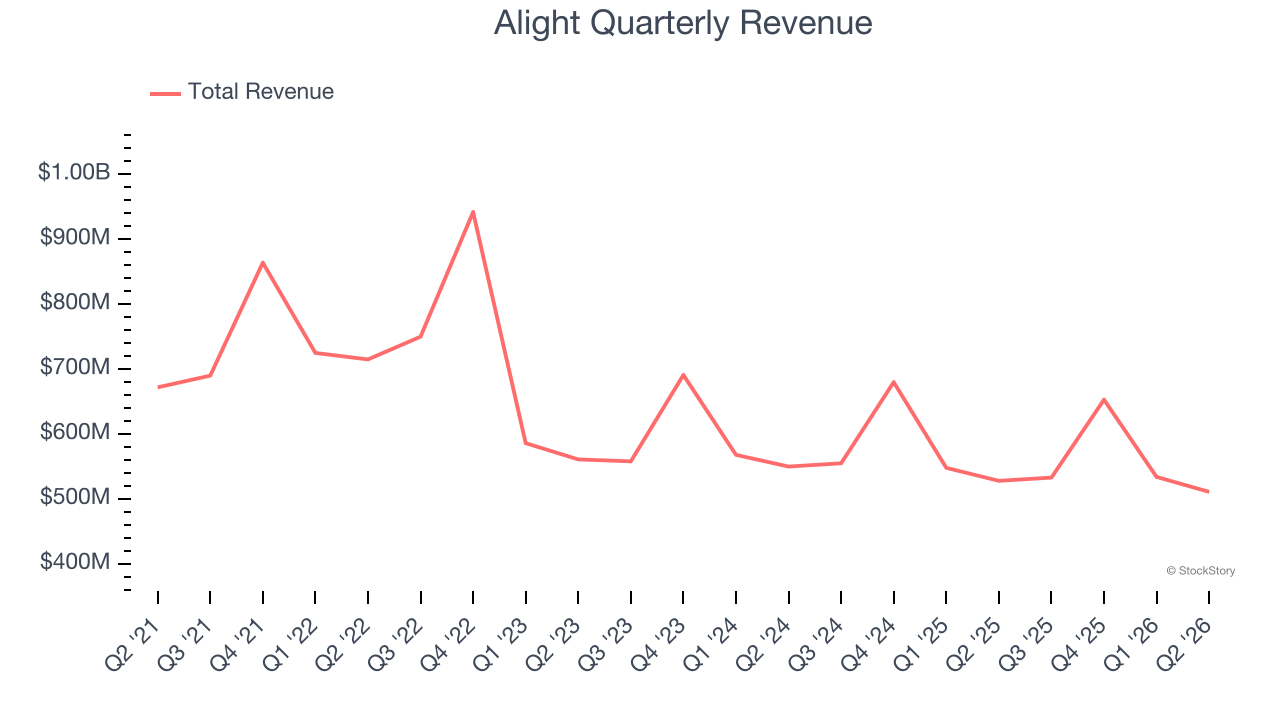
We at StockStory place the most emphasis on long-term growth, but within business services, a half-decade historical view may miss recent innovations or disruptive industry trends. Alight’s annualized revenue declines of 2.9% over the last two years suggest its demand continued shrinking. 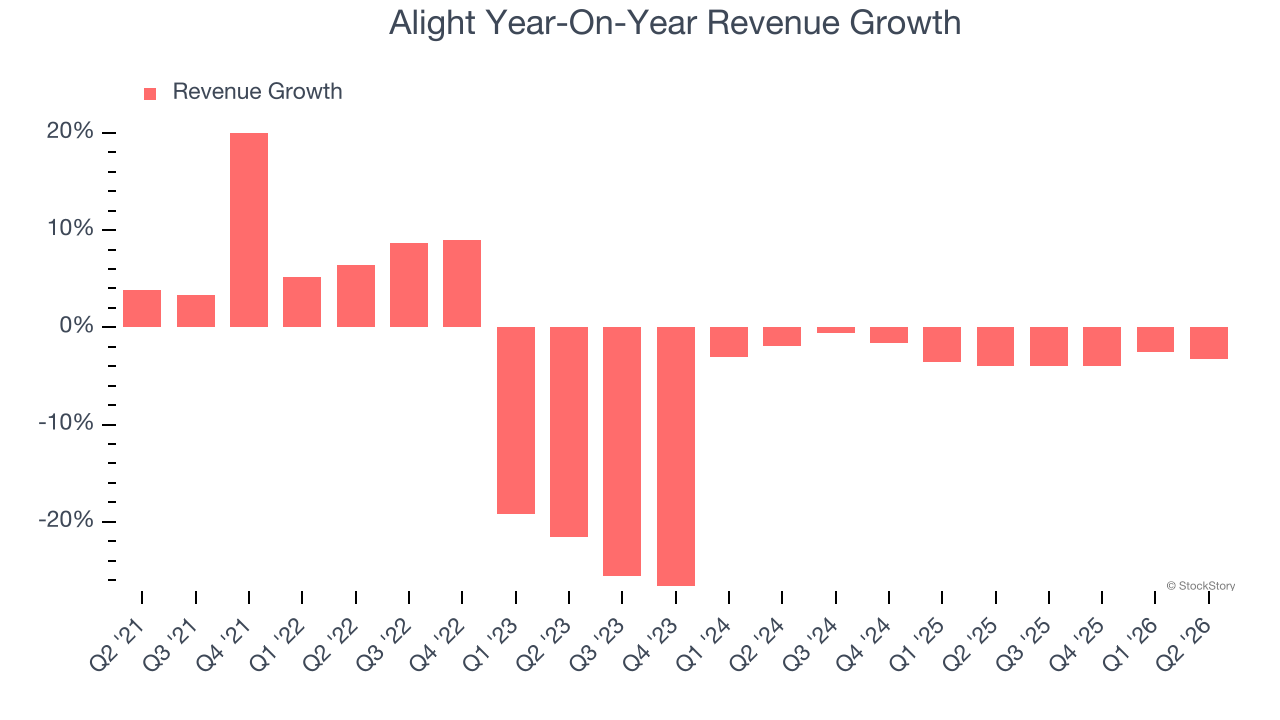
This quarter, Alight’s revenue fell by 3.2% year on year to $511 million but beat Wall Street’s estimates by 2.8%. Company management is currently guiding for a 11.1% year-on-year decline in sales next quarter.
Looking further ahead, sell-side analysts expect revenue to decline by 4% over the next 12 months, similar to its two-year rate. This projection is underwhelming and indicates its products and services will see some demand headwinds.
WHILE YOU’RE HERE: The Next Palantir? One satellite company captures images of every point on Earth. Every single day. The Pentagon wants it. Hedge funds are using it to beat earnings. You’ve probably never heard of it.
This is what the early days of Palantir looked like before it became a giant. Same playbook. Different technology. If you missed Palantir, you need to see this. Claim The Stock Ticker for Free HERE.
Adjusted Operating Margin
Alight has been an efficient company over the last five years. It was one of the more profitable businesses in the business services sector, boasting an average adjusted operating margin of 16.5%.
Looking at the trend in its profitability, Alight’s adjusted operating margin decreased by 3.8 percentage points over the last five years. Even though its historical margin was healthy, shareholders will want to see Alight become more profitable in the future.
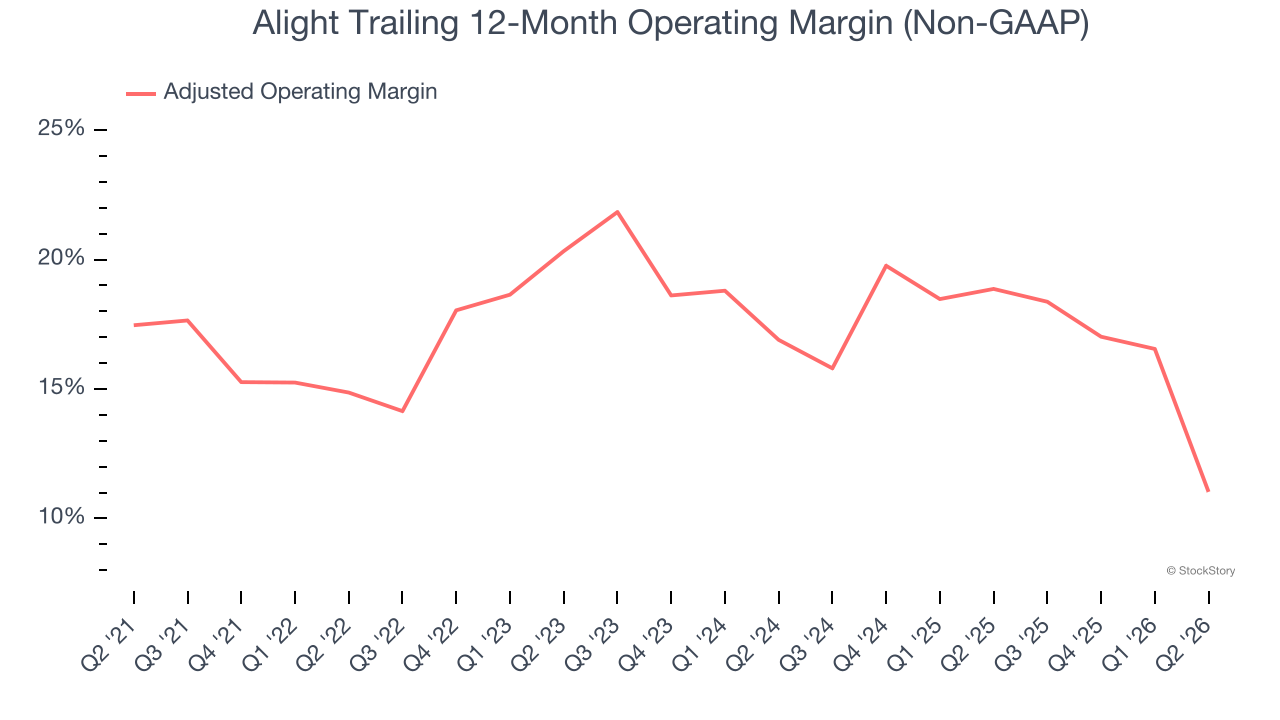
In Q2, Alight generated an adjusted operating margin profit margin of negative 6.5%, down 24.1 percentage points year on year. This contraction shows it was less efficient because its expenses increased relative to its revenue.
Earnings Per Share
Revenue trends explain a company’s historical growth, but the long-term change in earnings per share (EPS) points to the profitability of that growth — for example, a company could inflate its sales through excessive spending on advertising and promotions.
Alight’s full-year EPS dropped 32.7%, or 7.3% annually, over the last four years. We tend to steer our readers away from companies with falling revenue and EPS, where diminishing earnings could imply changing secular trends and preferences. If the tide turns unexpectedly, Alight’s low margin of safety could leave its stock price susceptible to large downswings.
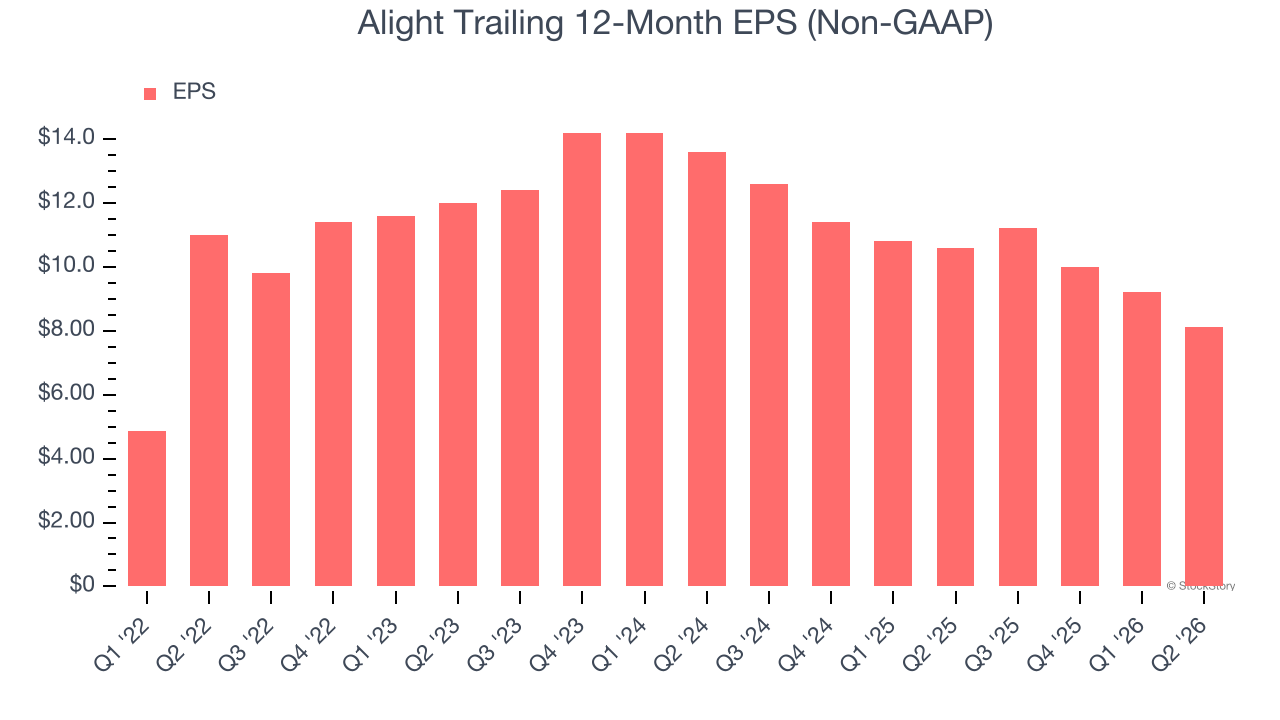
Like with revenue, we analyze EPS over a shorter period to see if we are missing a change in the business.
Sadly for Alight, its EPS declined by more than its revenue over the last two years, dropping 22.8%. This tells us the company struggled to adjust to shrinking demand.
Diving into the nuances of Alight’s earnings can give us a better understanding of its performance. Alight’s adjusted operating margin has declined over the last two years. This was the most relevant factor (aside from the revenue impact) behind its lower earnings; interest expenses and taxes can also affect EPS but don’t tell us as much about a company’s fundamentals.
In Q2, Alight reported adjusted EPS of $0.91, down from $2 in the same quarter last year. Despite falling year on year, this print easily cleared analysts’ estimates. Over the next 12 months, Wall Street expects Alight’s full-year EPS to shrink by 30.4% from $8.11 to $5.65.
Key Takeaways from Alight’s Q2 Results
It was good to see Alight beat analysts’ EPS expectations this quarter. We were also glad its revenue outperformed Wall Street’s estimates. On the other hand, its full-year revenue guidance missed and its revenue guidance for next quarter fell short of Wall Street’s estimates. Overall, this was a softer quarter. The stock traded down 9.1% to $15.58 immediately following the results.
Alight didn’t show its best hand this quarter, but does that create an opportunity to buy the stock right now? If you’re making that decision, you should consider the bigger picture of valuation, business qualities, as well as the latest earnings. We cover that in our actionable full research report which you can read here (it’s free).