What a time it’s been for W.W. Grainger. In the past six months alone, the company’s stock price has increased by a massive 40.7%, setting a new 52-week high of $1,456 per share. This was partly thanks to its solid quarterly results, and the performance may have investors wondering how to approach the situation.
Is now the time to buy W.W. Grainger, or should you be careful about including it in your portfolio? Get the full stock story straight from our expert analysts, it’s free.
Why Is W.W. Grainger Not Exciting?
We’re glad investors have benefited from the price increase, but we’re swiping left on W.W. Grainger for now. Here are three reasons why GWW doesn’t excite us, plus one stock we’d rather own.
1. Lackluster Revenue Growth
We at StockStory place the most emphasis on long-term growth, but within industrials, a stretched historical view may miss cycles, industry trends, or a company capitalizing on catalysts such as a new contract win or a successful product line. W.W. Grainger’s recent performance shows its demand has slowed as its annualized revenue growth of 5.1% over the last two years was below its five-year trend. We’re wary when companies in the sector see decelerations in revenue growth, as it could signal changing consumer tastes aided by low switching costs. 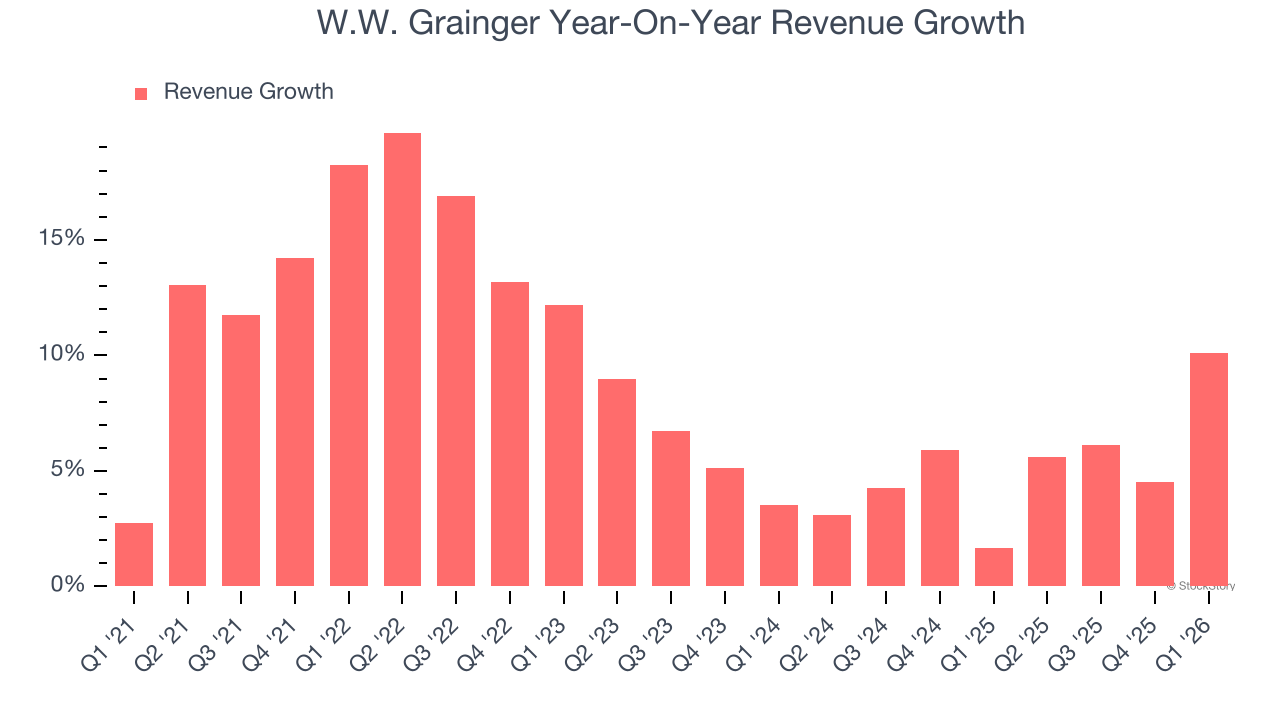
2. Slow Organic Growth Suggests Waning Demand In Core Business
We can better understand Maintenance and Repair Distributors companies by analyzing their organic revenue. This metric gives visibility into W.W. Grainger’s core business because it excludes one-time events such as mergers, acquisitions, and divestitures along with foreign currency fluctuations - non-fundamental factors that can manipulate the income statement.
Over the last two years, W.W. Grainger’s organic revenue averaged 5.7% year-on-year growth. This performance was underwhelming and suggests it may need to improve its products, pricing, or go-to-market strategy, which can add an extra layer of complexity to its operations. 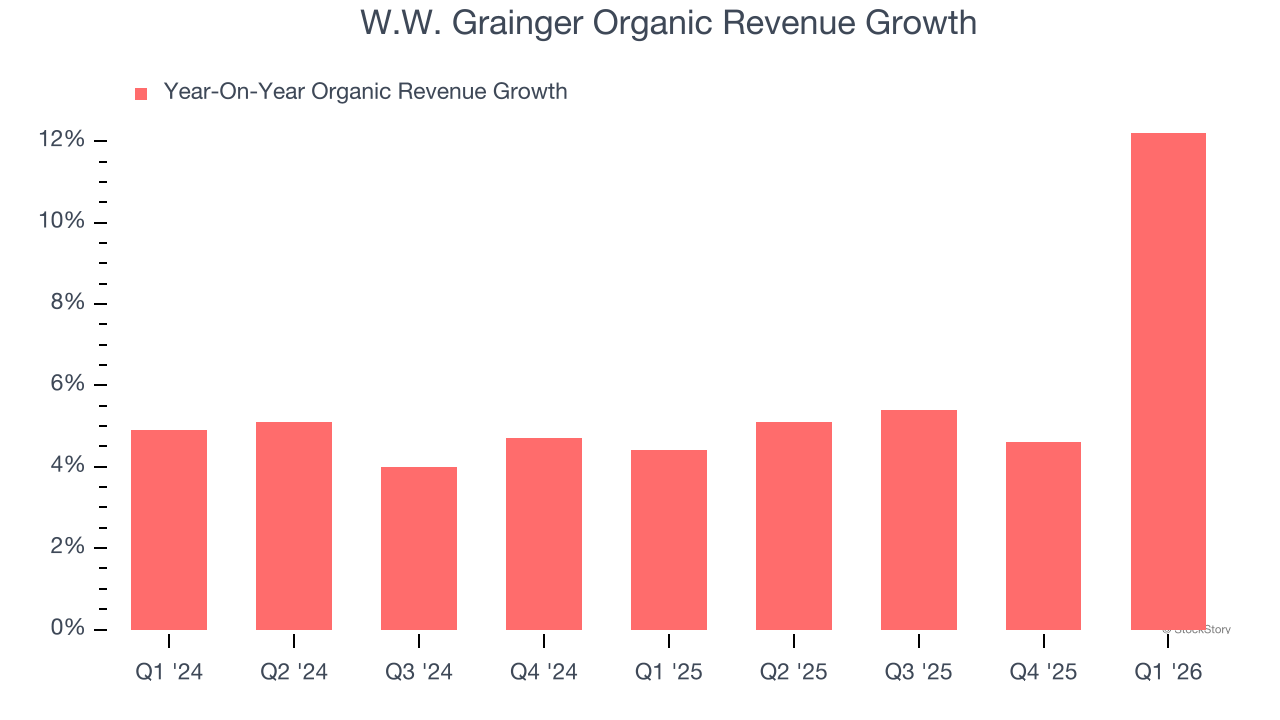
3. Recent EPS Growth Below Our Standards
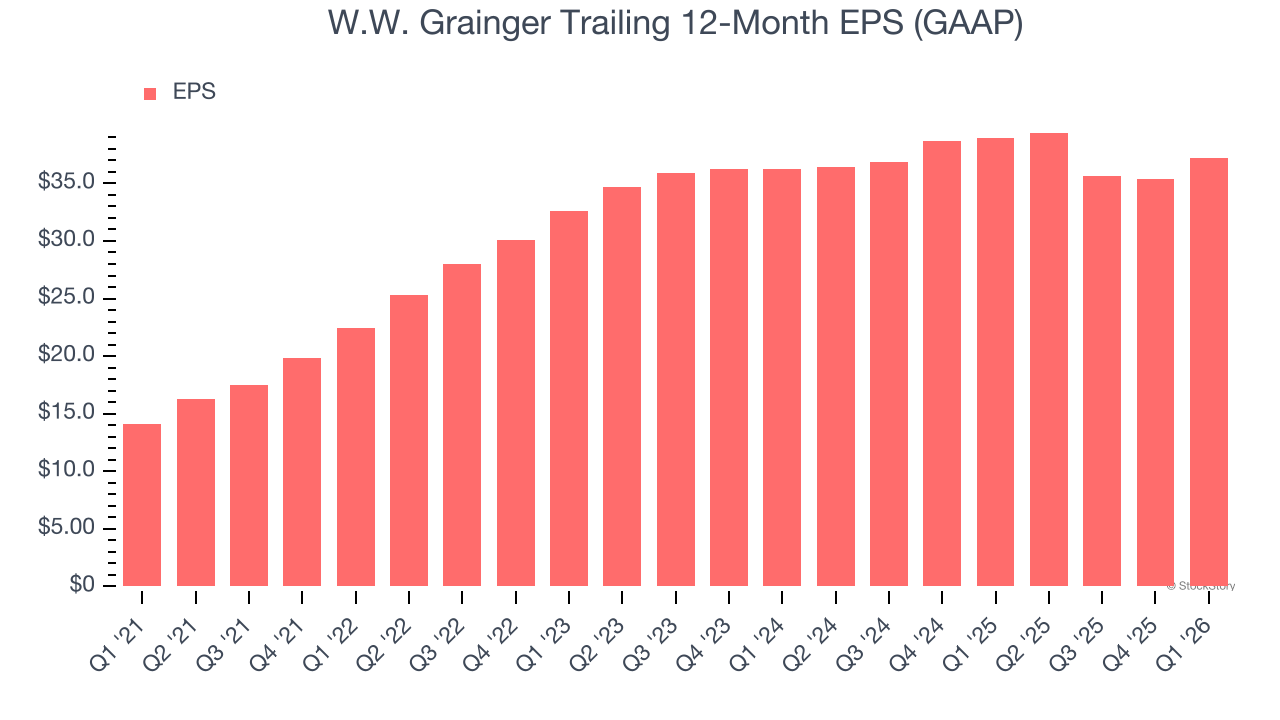
While long-term earnings trends give us the big picture, we also track EPS over a shorter period because it can provide insight into an emerging theme or development for the business.
W.W. Grainger’s EPS grew at a weak 1.3% compounded annual growth rate over the last two years, lower than its 5.1% annualized revenue growth. This tells us the company became less profitable on a per-share basis as it expanded.
Final Judgment
W.W. Grainger isn’t a terrible business, but it isn’t one of our picks. After the recent surge, the stock trades at 29.4× forward P/E (or $1,456 per share). Beauty is in the eye of the beholder, but our analysis shows the upside isn’t great compared to the potential downside. We’re fairly confident there are better investments elsewhere. Let us point you toward one of our top digital advertising picks.
High-Quality Stocks for All Market Conditions
ONE MORE THING: Top 6 Stocks for This Week. This market is separating quality stocks from expensive ones fast. AI is taking down whole sectors with no warning. In a rotation this fast, you need more than a list of good companies.
Our AI system flagged Palantir before it ran 1,662% between October 2022 and February 2026. AppLovin before it ran 753% between February 2024 and February 2026. Nvidia before it ran 1,178% between January 2023 and February 2026. Each week it produces 6 new names that pass the same tests. Get Our Top 6 Stocks for Free HERE.
Stocks that have made our list include now familiar names such as Nvidia (+1,460% between June 2020 and June 2025) as well as under-the-radar businesses like the once-small-cap company Comfort Systems (+1,154% between June 2020 and June 2025). Find your next big winner with StockStory today.