Even during a down period for the markets, TFS Financial has gone against the grain, climbing to $14.33. Its shares have yielded a 6.5% return over the last six months, beating the S&P 500 by 8.6%. This was partly thanks to its solid quarterly results, and the run-up might have investors contemplating their next move.
Is now the time to buy TFS Financial, or should you be careful about including it in your portfolio? See what our analysts have to say in our full research report, it’s free.
Why Do We Think TFS Financial Will Underperform?
We’re happy investors have made money, but we don't have much confidence in TFS Financial. Here are three reasons why TFSL doesn't excite us and a stock we'd rather own.
1. Net Interest Income Points to Soft Demand
Markets consistently prioritize net interest income over non-recurring fees, recognizing its superior quality compared to the more unpredictable revenue streams.
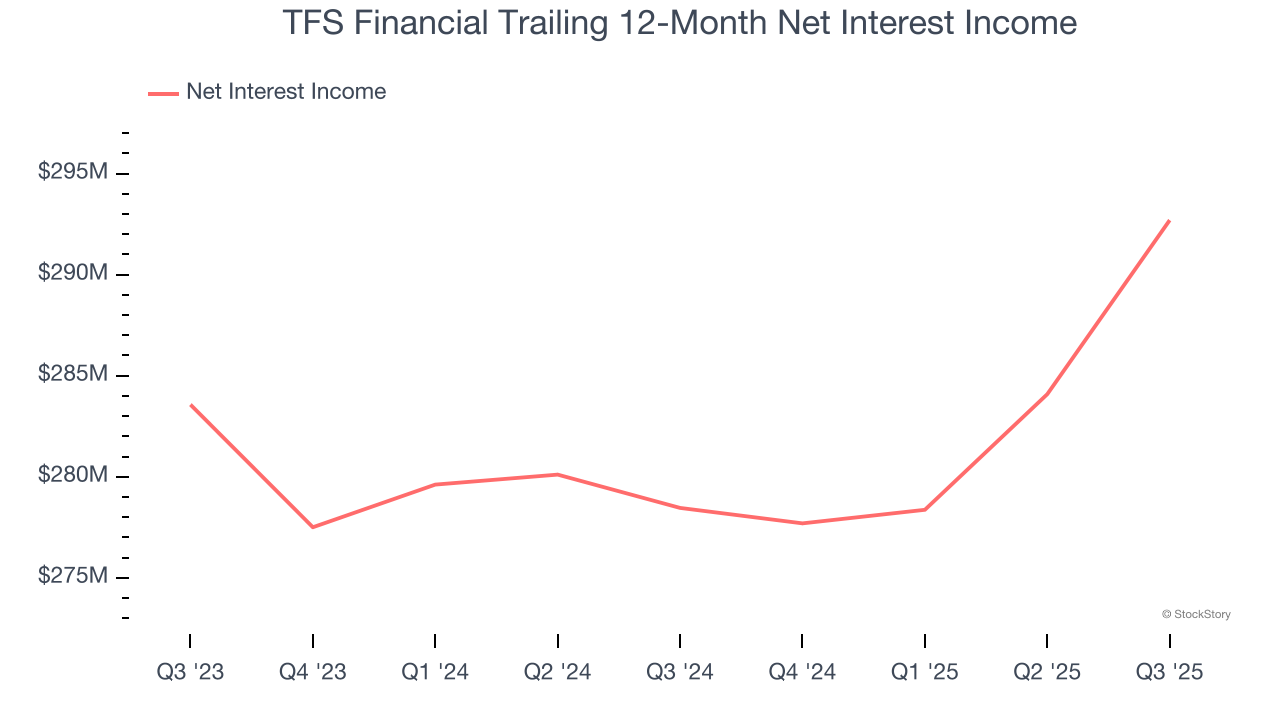
TFS Financial’s net interest income has grown at a 3.9% annualized rate over the last five years, much worse than the broader banking industry. This was driven by its loan growth as its net interest margin, which represents how much a bank earns in relation to its outstanding loan book, declined throughout that period.
2. Low Net Interest Margin Reveals Weak Loan Book Profitability
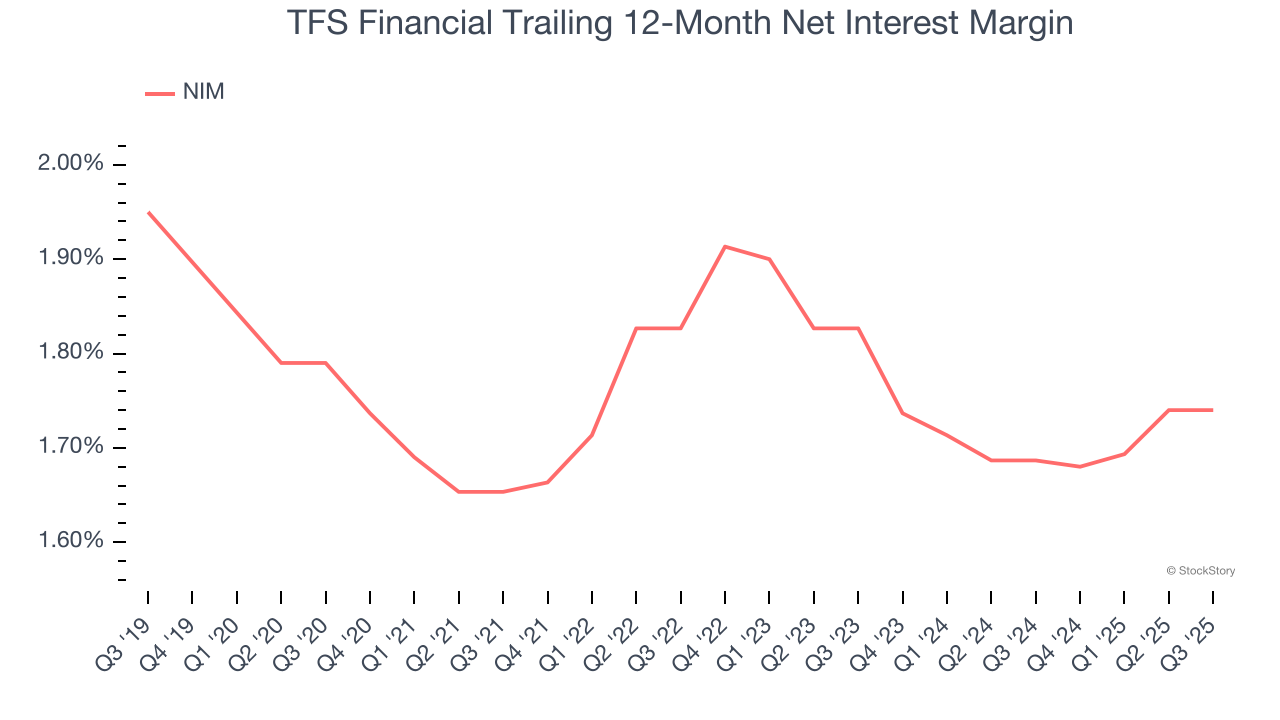
Net interest margin (NIM) represents how much a bank earns in relation to its outstanding loans. It's one of the most important metrics to track because it shows how a bank's loans are performing and whether it has the ability to command higher premiums for its services.
Over the past two years, we can see that TFS Financial’s net interest margin averaged a poor 1.7%, indicating the company has weak loan book economics.
3. EPS Barely Growing
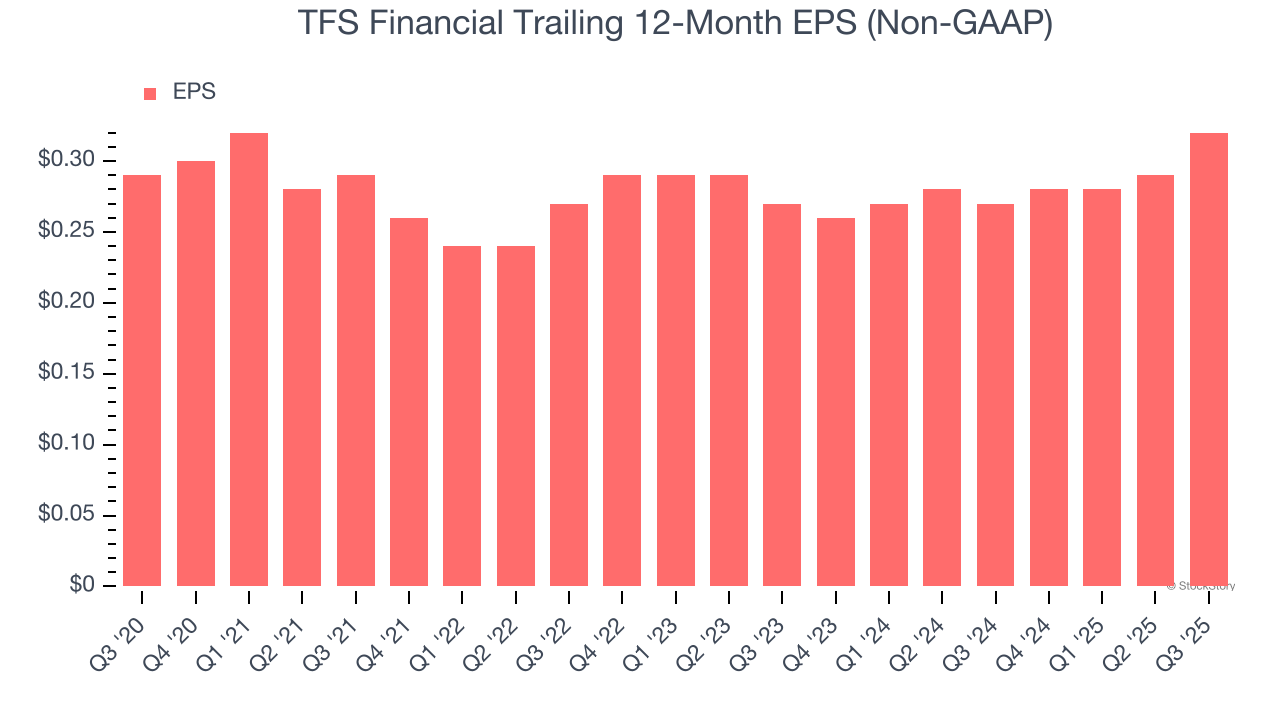
Analyzing the long-term change in earnings per share (EPS) shows whether a company's incremental sales were profitable – for example, revenue could be inflated through excessive spending on advertising and promotions.
TFS Financial’s weak 2% annual EPS growth over the last five years aligns with its revenue performance. This tells us it maintained its per-share profitability as it expanded.
Final Judgment
TFS Financial doesn’t pass our quality test. With its shares outperforming the market lately, the stock trades at 2.1× forward P/B (or $14.33 per share). This valuation tells us a lot of optimism is priced in - we think there are better opportunities elsewhere. We’d suggest looking at one of our top digital advertising picks.
High-Quality Stocks for All Market Conditions
ONE MORE THING: Top 5 Growth Stocks. The biggest stock winners almost always had one thing in common before they ran. Revenue growing like crazy. Meta. CrowdStrike. Broadcom. Our AI flagged all three. They returned 315%, 314%, and 455%, respectively.
Find out which 5 stocks it's flagging for this month — FREE. Get Our Top 5 Growth Stocks for Free HERE.
Stocks that have made our list include now familiar names such as Nvidia (+1,326% between June 2020 and June 2025) as well as under-the-radar businesses like the once-micro-cap company Kadant (+351% five-year return). Find your next big winner with StockStory today.