Quarterly earnings results are a good time to check in on a company’s progress, especially compared to its peers in the same sector. Today we are looking at Doximity (NYSE: DOCS) and the best and worst performers in the vertical software industry.
Software is eating the world, and while a large number of solutions such as project management or video conferencing software can be useful to a wide array of industries, some have very specific needs. As a result, vertical software, which addresses industry-specific workflows, is growing and fueled by the pressures to improve productivity, whether it be for a life sciences, education, or banking company.
The 14 vertical software stocks we track reported a strong Q4. As a group, revenues beat analysts’ consensus estimates by 2.5% while next quarter’s revenue guidance was in line.
Amidst this news, share prices of the companies have had a rough stretch. On average, they are down 7.4% since the latest earnings results.
Weakest Q4: Doximity (NYSE: DOCS)
With over 80% of U.S. physicians as members of its digital community, Doximity (NYSE: DOCS) operates a digital platform that enables physicians and other healthcare professionals to collaborate, stay current with medical news, manage their careers, and conduct virtual patient visits.
Doximity reported revenues of $185.1 million, up 9.8% year on year. This print exceeded analysts’ expectations by 2%. Despite the top-line beat, it was still a slower quarter for the company with revenue and EBITDA guidance for next quarter missing analysts’ expectations.
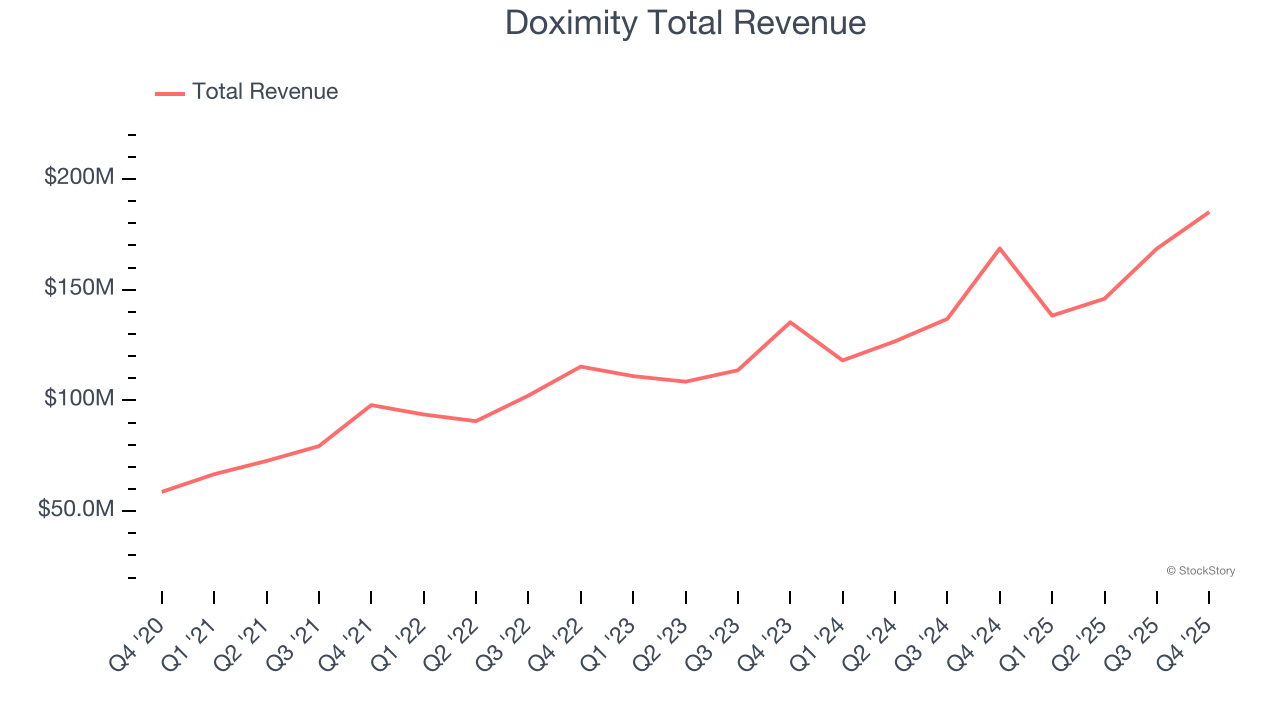
Unsurprisingly, the stock is down 31.2% since reporting and currently trades at $22.93.
Is now the time to buy Doximity? Access our full analysis of the earnings results here, it’s free.
Best Q4: Autodesk (NASDAQ: ADSK)
Starting with AutoCAD in the 1980s and evolving into a comprehensive design ecosystem, Autodesk (NASDAQ: ADSK) provides software solutions for architecture, engineering, construction, manufacturing, and entertainment industries to design, simulate, and visualize projects.
Autodesk reported revenues of $1.96 billion, up 19.4% year on year, outperforming analysts’ expectations by 2.1%. The business had an exceptional quarter with an impressive beat of analysts’ billings estimates and EPS guidance for next quarter exceeding analysts’ expectations.
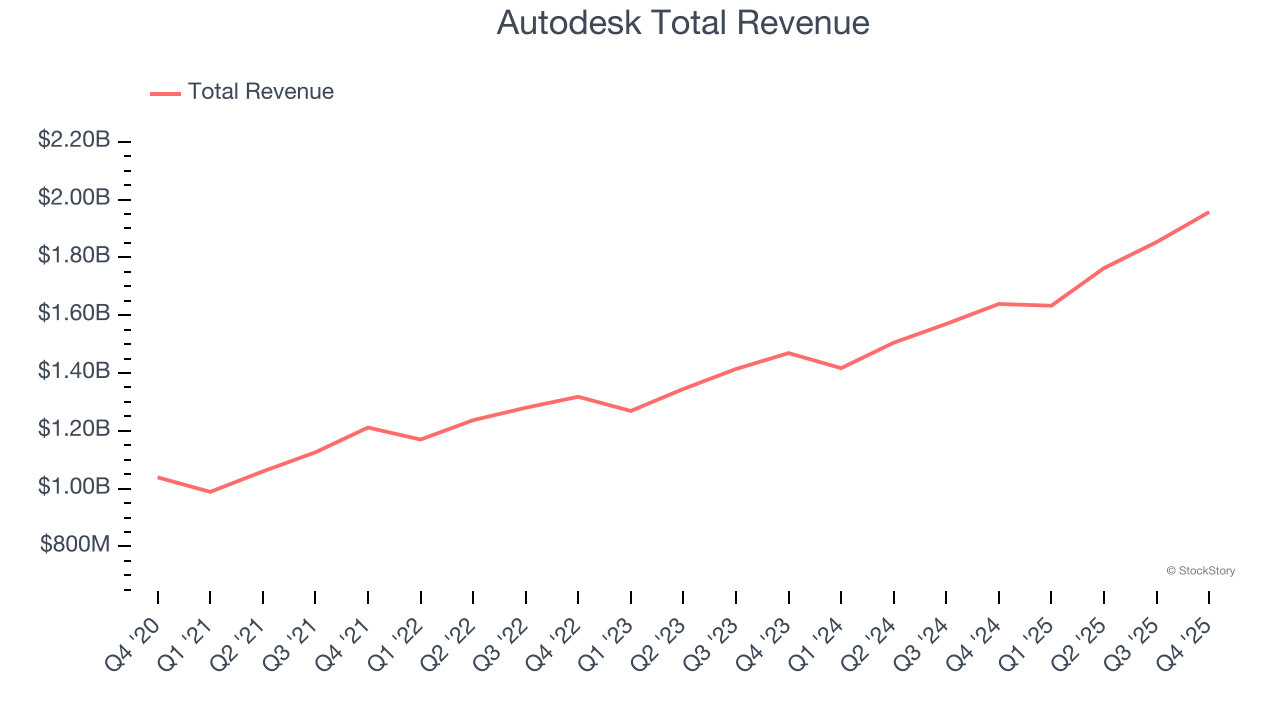
The market seems content with the results as the stock is up 2.8% since reporting. It currently trades at $239.89.
Is now the time to buy Autodesk? Access our full analysis of the earnings results here, it’s free.
Unity (NYSE: U)
Powering over half of the world's mobile games and expanding into industries from automotive to architecture, Unity (NYSE: U) provides software tools and services that allow developers to create, run, and monetize interactive 2D and 3D content across multiple platforms.
Unity reported revenues of $503.1 million, up 10.1% year on year, exceeding analysts’ expectations by 2.1%. Still, it was a mixed quarter as it posted EBITDA guidance for next quarter missing analysts’ expectations.
As expected, the stock is down 21.3% since the results and currently trades at $22.87.
Read our full analysis of Unity’s results here.
Toast (NYSE: TOST)
Born from the frustrations of three friends waiting too long for their restaurant bill, Toast (NYSE: TOST) provides a cloud-based digital technology platform with software, payment processing, and hardware solutions built specifically for restaurants.
Toast reported revenues of $1.63 billion, up 22% year on year. This print beat analysts’ expectations by 0.5%. It was a strong quarter as it also produced an impressive beat of analysts’ EBITDA estimates.
Toast had the weakest performance against analyst estimates among its peers. The stock is up 1.6% since reporting and currently trades at $26.56.
Read our full, actionable report on Toast here, it’s free.
Q2 Holdings (NYSE: QTWO)
With a platform powering digital services for approximately 25 million account holders across America, Q2 Holdings (NYSE: QTWO) provides cloud-based digital solutions that help financial institutions, fintechs, and alternative finance companies deliver modern banking experiences to their customers.
Q2 Holdings reported revenues of $208.2 million, up 13.8% year on year. This number topped analysts’ expectations by 1.5%. Zooming out, it was a satisfactory quarter as it also produced EBITDA guidance for next quarter exceeding analysts’ expectations but a significant miss of analysts’ billings estimates.
The stock is down 10.7% since reporting and currently trades at $50.56.
Read our full, actionable report on Q2 Holdings here, it’s free.
Market Update
Late in 2025 into early 2026, there was hand wringing around artificial intelligence. For software companies, the fear was that AI would erode pricing power and compress margins as new tools made it easier to replicate what once required expensive enterprise platforms. Crypto investors had their own version of the same anxiety: if AI agents could trade, allocate capital, and manage wallets autonomously, what exactly was the long-term value of today’s crypto infrastructure?
These concerns triggered a noticeable rotation away from these sectors and into safer havens. But markets rarely dwell on one narrative for long. Spring 2026 came, and the focus shifted abruptly from technological disruption to geopolitical risk. The US’ conflict with Iran became the dominant driver of market psychology, and when geopolitics takes center stage, the script changes quickly. Investors stop debating growth rates and start worrying about oil supply, inflation, and global stability.
Want to invest in winners with rock-solid fundamentals? Check out our Top 5 Growth Stocks and add them to your watchlist. These companies are poised for growth regardless of the political or macroeconomic climate.
StockStory’s analyst team — all seasoned professional investors — uses quantitative analysis and automation to deliver market-beating insights faster and with higher quality.