
As the Q4 earnings season comes to a close, it’s time to take stock of this quarter’s best and worst performers in the it services & other tech industry, including Amdocs (NASDAQ: DOX) and its peers.
The IT and tech services subsector is poised for growth as businesses accelerate cloud adoption, AI-driven network automation, and edge computing deployments. While these seem like big, nebulous trends, they require very real products like switches and firewalls as well as implementation services. On the other hand, challenges on the horizon include intensifying competition from cloud-native networking providers, regulatory scrutiny over data privacy and cybersecurity, and potential supply chain constraints for networking hardware. While AI and automation will enhance network efficiency and security, they also introduce risks related to algorithmic bias, compliance complexity, and increased energy consumption.
The 20 it services & other tech stocks we track reported a strong Q4. As a group, revenues beat analysts’ consensus estimates by 5.3% while next quarter’s revenue guidance was in line.
Amidst this news, share prices of the companies have had a rough stretch. On average, they are down 10.6% since the latest earnings results.
Amdocs (NASDAQ: DOX)
Powering the digital experiences of approximately 400 communications companies worldwide, Amdocs (NASDAQ: DOX) provides software and services that help telecommunications and media companies manage customer relationships, monetize services, and automate network operations.
Amdocs reported revenues of $1.16 billion, up 4.1% year on year. This print was in line with analysts’ expectations, and overall, it was a satisfactory quarter for the company with a beat of analysts’ EPS estimates.
"First quarter financial results were consistent with our guidance as we continue to focus on our primary goal of reaccelerating Amdocs' long-term growth and extending our position as a market leader for the generative AI era. I am proud to announce that Amdocs has extended our long-term relationship with T-Mobile under a new multi-year agreement which includes managed services, software development, and AI innovation. In addition, we signed an expanded multi-year engagement at Vodafone Germany, added two new western European logos, and closed the acquisition of Matrixx Software as a strategic consolidation move which complements and expands our activities at Verizon, Telus, Telefonica, Swisscom, Three, Virgin Media O2, Telstra and other customers. As to generative AI, our accelerated development roadmap is progressing as planned with today's announcement of aOS, an agentic operating system purpose-built for telecommunications which we expect can provide a new long-term growth engine for Amdocs," said Shuky Sheffer, president and chief executive officer of Amdocs Management Limited.
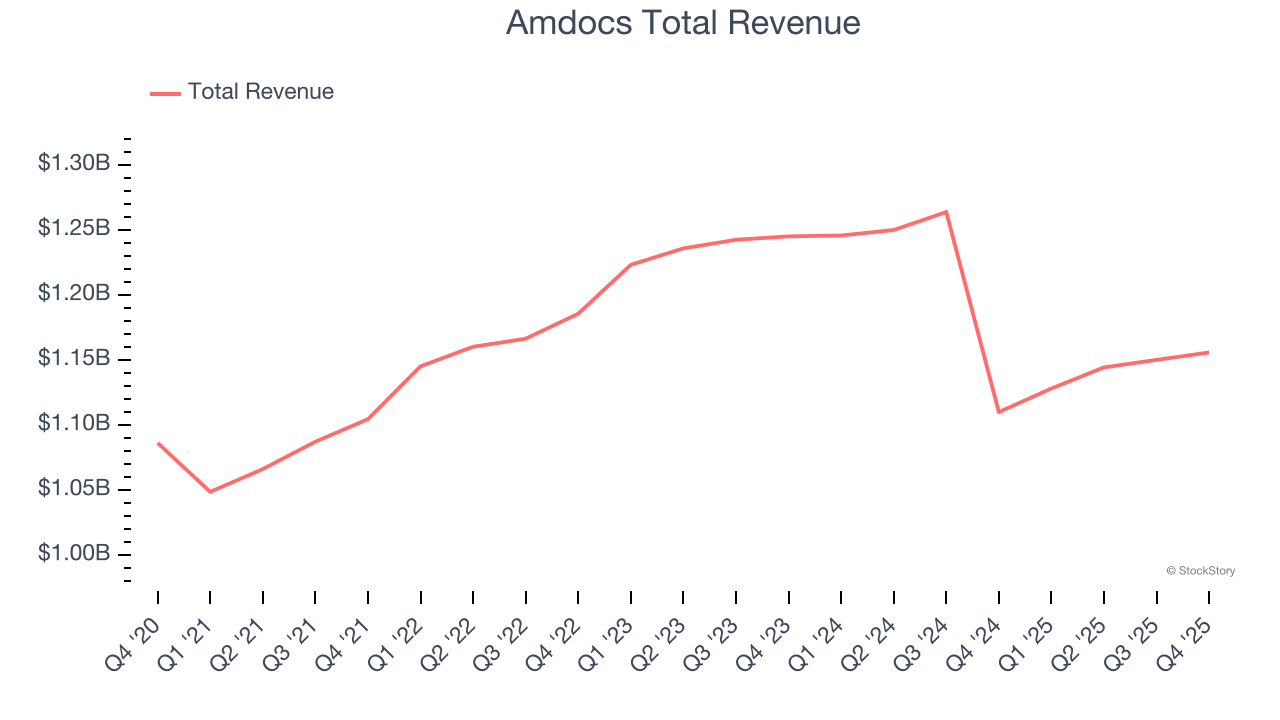
The stock is down 10.2% since reporting and currently trades at $66.44.
Is now the time to buy Amdocs? Access our full analysis of the earnings results here, it’s free.
Best Q4: Applied Digital (NASDAQ: APLD)
Pivoting from its origins in cryptocurrency mining to become a key player in the AI infrastructure boom, Applied Digital (NASDAQ: APLD) designs and operates specialized data centers that provide high-performance computing infrastructure for artificial intelligence and blockchain applications.
Applied Digital reported revenues of $126.6 million, up 98.2% year on year, outperforming analysts’ expectations by 14.8%. The business had an incredible quarter with a beat of analysts’ EPS and revenue estimates.
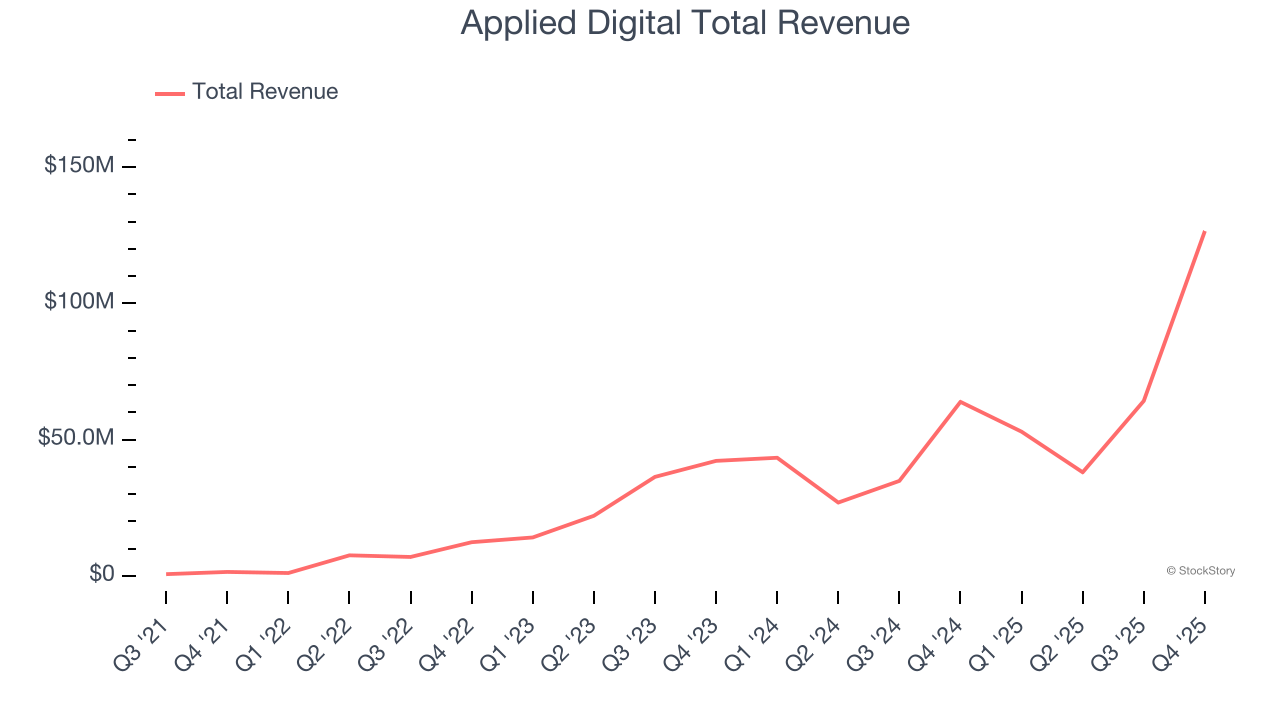
Although it had a fine quarter compared to its peers, the market seems unhappy with the results as the stock is down 16.8% since reporting. It currently trades at $24.60.
Is now the time to buy Applied Digital? Access our full analysis of the earnings results here, it’s free.
Weakest Q4: Xerox (NASDAQ: XRX)
Pioneering the modern office copier and inventing technologies like Ethernet and the laser printer, Xerox (NASDAQ: XRX) provides document management systems, printing technology, and workplace solutions to businesses of all sizes across the globe.
Xerox reported revenues of $2.03 billion, up 25.7% year on year, falling short of analysts’ expectations by 0.9%. It was a disappointing quarter as it posted full-year revenue guidance missing analysts’ expectations significantly and a significant miss of analysts’ EPS estimates.
As expected, the stock is down 45.9% since the results and currently trades at $1.26.
Read our full analysis of Xerox’s results here.
Gartner (NYSE: IT)
With over 2,500 research experts guiding organizations through complex technology landscapes, Gartner (NYSE: IT) provides research, advisory services, and conferences that help executives make better decisions about technology and other business priorities.
Gartner reported revenues of $1.75 billion, up 2.2% year on year. This print met analysts’ expectations. It was a very strong quarter as it also logged a beat of analysts’ EPS estimates and revenue in line with analysts’ estimates.
The stock is down 22% since reporting and currently trades at $157.85.
Read our full, actionable report on Gartner here, it’s free.
DXC (NYSE: DXC)
Born from the 2017 merger of Computer Sciences Corporation and HP Enterprise's services business, DXC Technology (NYSE: DXC) is a global IT services company that helps businesses transform their technology infrastructure, applications, and operations.
DXC reported revenues of $3.19 billion, flat year on year. This number was in line with analysts’ expectations. More broadly, it was a mixed quarter as it also recorded a beat of analysts’ EPS estimates but a significant miss of analysts’ EPS guidance for next quarter estimates.
DXC had the slowest revenue growth among its peers. The stock is down 12.1% since reporting and currently trades at $12.67.
Read our full, actionable report on DXC here, it’s free.
Market Update
Late in 2025 into early 2026, there was hand wringing around artificial intelligence. For software companies, the fear was that AI would erode pricing power and compress margins as new tools made it easier to replicate what once required expensive enterprise platforms. Crypto investors had their own version of the same anxiety: if AI agents could trade, allocate capital, and manage wallets autonomously, what exactly was the long-term value of today’s crypto infrastructure?
These concerns triggered a noticeable rotation away from these sectors and into safer havens. But markets rarely dwell on one narrative for long. Spring 2026 came, and the focus shifted abruptly from technological disruption to geopolitical risk. The US’ conflict with Iran became the dominant driver of market psychology, and when geopolitics takes center stage, the script changes quickly. Investors stop debating growth rates and start worrying about oil supply, inflation, and global stability.
Want to invest in winners with rock-solid fundamentals? Check out our Top 5 Quality Compounder Stocks and add them to your watchlist. These companies are poised for growth regardless of the political or macroeconomic climate.
StockStory’s analyst team — all seasoned professional investors — uses quantitative analysis and automation to deliver market-beating insights faster and with higher quality.