IT solutions provider Connection (NASDAQ: CNXN) reported Q3 2026 results exceeding the market’s revenue expectations, with revenue up 23.3% year on year to $874.3 million. Its non-GAAP profit of $1.24 per share was 19.2% above analysts’ consensus estimates.
For more on Connection, read our free full research report.
Connection (CNXN) Q3 2026 highlights:
- Revenue $874.3 million vs S&P analysts’ consensus estimates of $773.7 million (23.3% year-on-year growth, 13% beat)
- Adjusted EPS $1.24 vs S&P analysts’ consensus estimates of $1.04 (19.2% beat)
- Adjusted EBITDA $46.28 million vs analysts’ consensus estimates of $40.55 million (5.3% margin, 14.1% beat)
- Operating margin 4.7%, in line with the same quarter last year
- Free cash flow margin 0.9%, down from 8.8% in the same quarter last year
- Market capitalization $2.24 billion
“Connection delivered record net sales, gross billings, and gross profit in the third quarter, translating strong customer demand and disciplined execution into earnings growth,” said Timothy McGrath, Chief Executive Officer. McGrath continued, “AI is expanding the opportunities across the technology lifecycle, and our expertise brings the right solutions together to help customers realize the value. We believe our integrated capabilities position us well to deepen customer relationships, deliver sustained profitable growth and long-term shareholder value.”
Revenue growth
A company’s long-term performance is an indicator of its overall quality. Any business can have short-term success, but a top-tier one grows for years.
With $3.15 billion in revenue over the past 12 months, Connection is a mid-sized business services company, which sometimes brings disadvantages compared to larger competitors benefiting from better economies of scale.
Connection’s 2.6% annualized revenue growth over the last five years was sluggish. This shows it failed to generate meaningful demand.
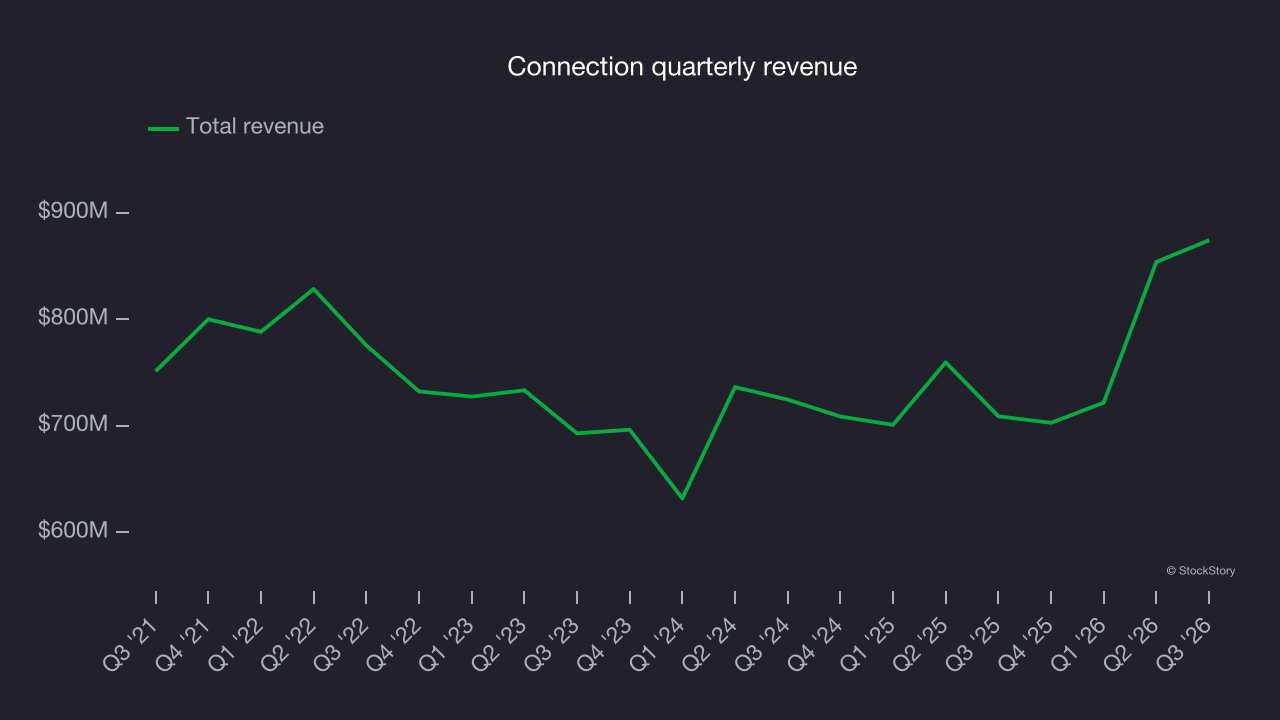
Long-term growth is the most important, but within business services, a half-decade historical view may miss new innovations or demand cycles. Connection’s annualized revenue growth of 6.3% over the last two years is above its five-year trend, suggesting some bright spots. 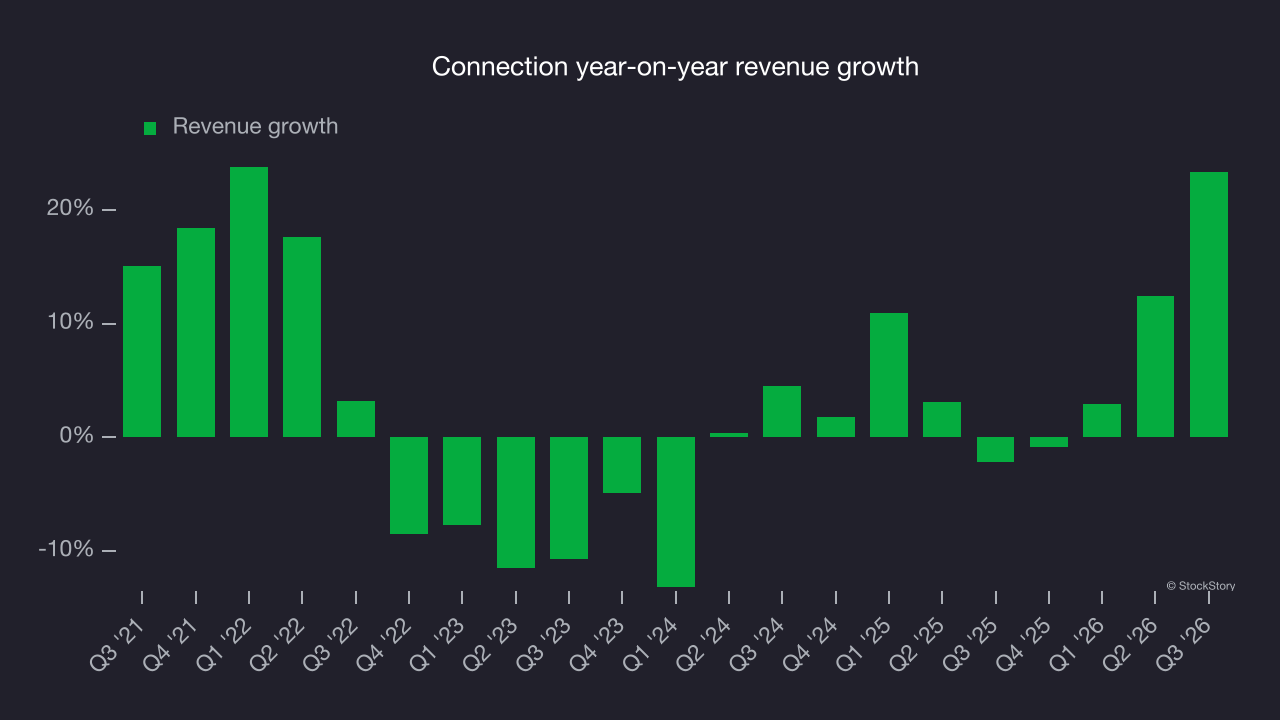
This quarter, Connection reported strong year-on-year revenue growth of 23.3%, and its $874.3 million of revenue topped Wall Street’s consensus estimates by 13%.
Looking ahead, sell-side analysts expect revenue to remain flat over the next 12 months, according to S&P, a deceleration versus the last two years. This uninspiring projection implies its products and services will face some demand headwinds.
Adjusted operating margin
Adjusted operating margin is an important measure of profitability as it shows the portion of revenue left after accounting for all core expenses, from the cost of goods sold to advertising and wages. It’s also useful for comparing profitability across companies because it excludes non-recurring expenses, interest on debt and taxes.
Connection’s adjusted operating margin has more or less stayed the same over the last 12 months, averaging 4% over the last five years. This poor profitability for a business services company reflected its suboptimal cost structure.
Looking at the trend in its profitability, Connection’s adjusted operating margin might have fluctuated slightly but has generally stayed the same over the last five years. This raises questions about the company’s expense base because its revenue growth should have given it leverage on its fixed costs, resulting in better economies of scale and profitability.
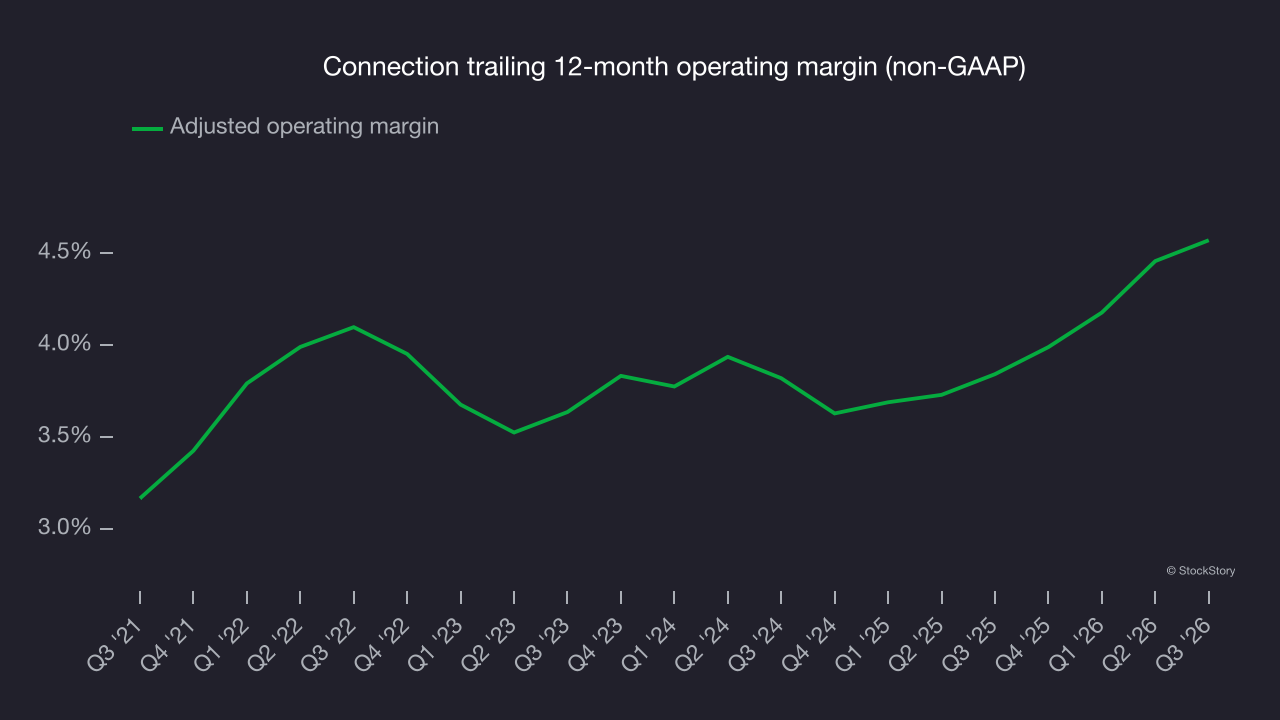
This quarter, Connection generated an adjusted operating margin of 5%, in line with the same quarter last year. This indicates the company’s overall cost structure has been relatively stable.
Earnings per share
We track the long-term change in earnings per share (EPS) for the same reason as long-term revenue growth. Compared to revenue, however, EPS highlights whether a company’s growth is profitable.
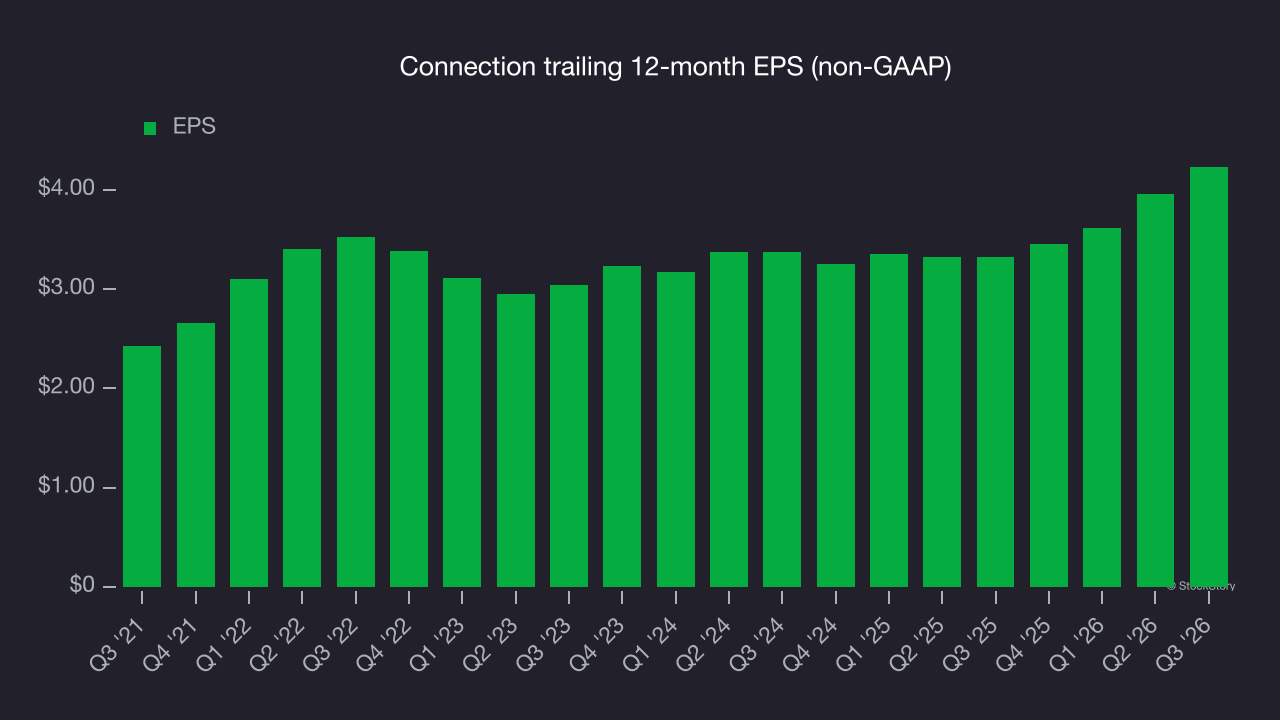
Connection’s EPS grew at an 11.7% compounded annual growth rate over the last five years, higher than its 2.6% annualized revenue growth. This tells us the company became more profitable on a per-share basis as it expanded.
As with revenue, we analyze EPS over a shorter period to see if we are missing a change in the business.
For Connection, its two-year annual EPS growth of 12% is similar to its five-year trend, implying strong and stable earnings power.
In Q3, Connection reported adjusted EPS of $1.24, up from $0.97 in the same quarter last year. EPS came in well above analysts’ consensus estimates, a positive result for shareholders. Over the next 12 months, Wall Street expects Connection’s full-year EPS to grow 3.9% from $4.23 to $4.40, according to S&P.
Key takeaways from Connection’s Q3 results
Connection delivered a solid quarter, with revenue beating Wall Street’s consensus estimates by a wide margin and EPS also topping expectations. Shares rose 4.6% to $90.57 immediately after the results.
Connection may have had a good quarter, but that alone does not make the stock a good investment. When making that decision, consider its valuation, business quality and latest quarterly results. For more on those factors, read the full research report here (it’s free).