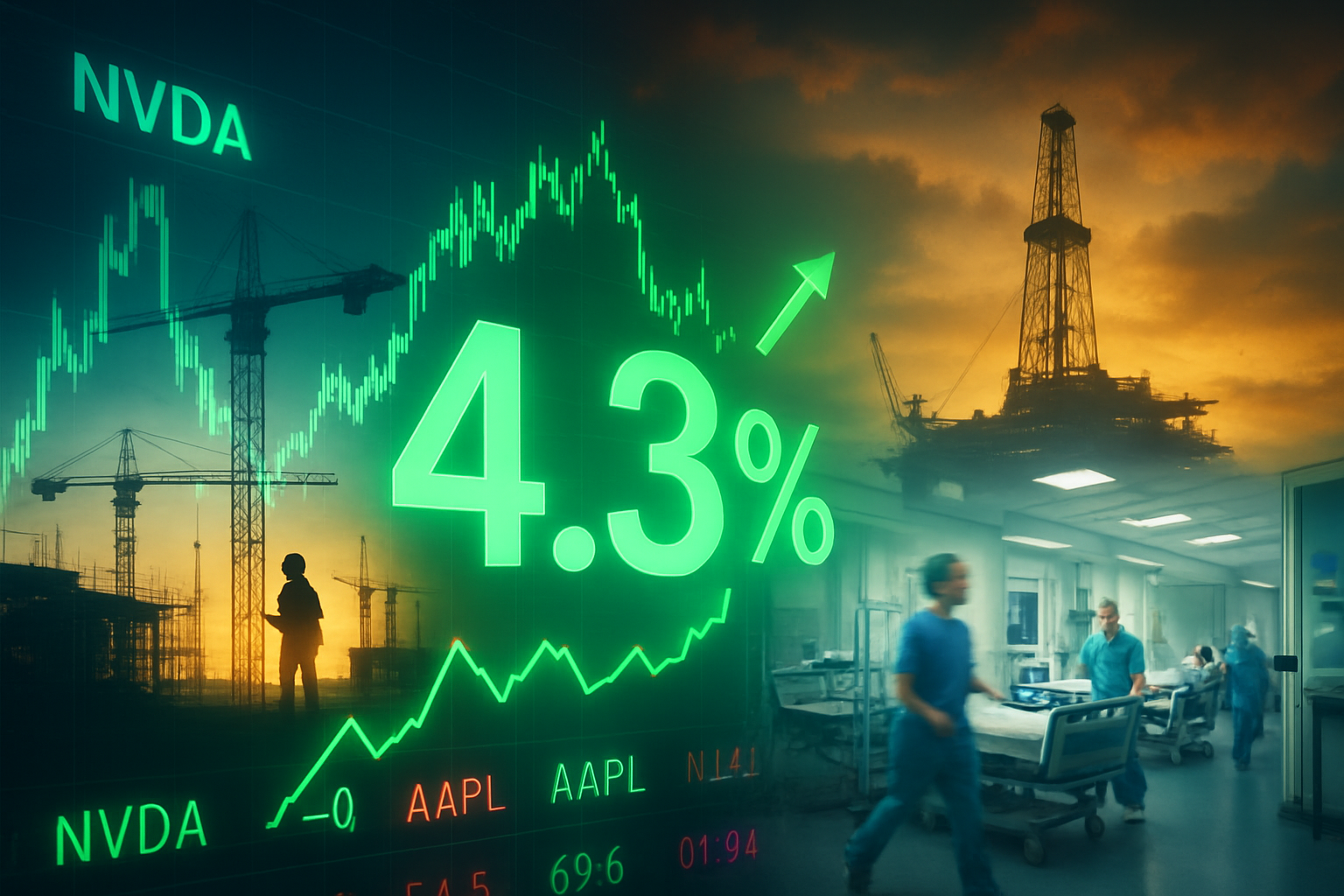
The American labor market once again defied gravity this week, posting a robust hiring surge that has forced Wall Street to recalibrate its expectations for the remainder of 2026. According to the March Employment Situation report released by the Bureau of Labor Statistics on April 3, 2026, the economy added 178,000 non-farm payroll jobs—nearly triple the consensus estimate of 60,000. This unexpected strength pushed the unemployment rate down to 4.3%, signaling a dramatic reversal from the job losses recorded in February.
The timing of the report, landing on Good Friday while major exchanges were shuttered, created a pressure cooker environment for futures markets. As trading resumed in earnest on Monday, April 6, investors were left to parse a complex narrative: a labor market that refuses to cool, set against the backdrop of a massive energy shock triggered by the escalating conflict between Israel, the United States, and Iran. While the "beat" suggests economic resilience, it simultaneously complicates the Federal Reserve’s path toward interest rate cuts, likely keeping borrowing costs elevated well into the autumn.
A "Low-Hire, Low-Fire" Paradox
The March figures represent a significant swing in momentum. Following a revised loss of 133,000 jobs in February, the addition of 178,000 positions in March caught almost every major bank's research department off guard. This volatility in the data can be largely attributed to specific sectoral shifts. Healthcare was the primary engine of growth, adding 76,000 jobs, a figure heavily bolstered by approximately 31,000 nurses returning to work after a series of protracted strikes. Construction also remained a pillar of strength, contributing 26,000 jobs as infrastructure projects continue to break ground despite higher financing costs.
However, the report was not without its warning signs. The drop in the unemployment rate to 4.3% was partially influenced by a shrinking labor force, with the participation rate slipping to 61.9%. Furthermore, the federal government continued to shed positions, losing 18,000 jobs during the month. Wage growth, while still positive, slowed to a 3.5% annual pace. This is perhaps the most significant "silver lining" for the Federal Reserve, as it suggests that while people are working, the wage-price spiral that characterized the 2022-2023 era has not yet returned.
Winners and Losers: Healthcare and Energy Lead, Tech Retrenched
In the wake of the report, HCA Healthcare (NYSE: HCA) and UnitedHealth Group (NYSE: UNH) emerged as potential beneficiaries. The resolution of labor disputes and the successful re-entry of nursing staff suggest that the operational bottlenecks which plagued the sector throughout late 2025 are easing. Similarly, Caterpillar Inc. (NYSE: CAT) saw increased interest as the construction data confirmed that demand for heavy machinery remains robust, even in a high-interest-rate environment.
Conversely, the "higher for longer" interest rate narrative continues to cast a shadow over growth-oriented technology firms. Companies like Nvidia (NASDAQ: NVDA) and Apple (NASDAQ: AAPL) experienced volatility in the futures market as the 10-year Treasury yield climbed to 4.35%. Higher yields typically discount the value of future earnings, making expensive tech stocks less attractive. Meanwhile, Exxon Mobil (NYSE: XOM) and other energy giants are operating in a different reality; with crude oil prices surging past $111 per barrel due to the "Operation Epic Fury" conflict in the Middle East, the labor market strength only serves to reinforce the idea that consumer demand for fuel might remain inelastic even as prices at the pump soar.
Geopolitics and the Fed's Tightrope
The March jobs report arrives at a historical crossroads. While the labor data suggests a "soft landing" or even a "no landing" scenario is possible, the geopolitical situation introduces a massive wildcard. The U.S.-Israeli conflict with Iran has fundamentally altered the inflationary landscape. With the Federal Funds Rate currently sitting between 3.5% and 3.75%, Fed Chair Jerome Powell and the Board of Governors are in a bind. The strong job numbers would typically embolden a central bank to keep rates high, but the oil shock represents a "supply-side" inflation spike that interest rates are ill-equipped to fix.
This situation draws comparisons to the 1970s, where geopolitical shocks and labor resilience created a stagflationary environment. However, the current slowdown in year-over-year wage growth to 3.5% provides a counter-argument to the stagflation narrative. Analysts at JPMorgan Chase & Co. (NYSE: JPM) noted that the Fed is likely to prioritize financial stability and energy-price monitoring over the next two quarters, effectively putting any planned rate cuts on ice until the fourth quarter of 2026.
The Road Ahead: Monitoring the "Iran Factor"
In the short term, the market will be hyper-focused on the next Consumer Price Index (CPI) print. If the energy shock from the Middle East begins to bleed into "core" inflation (which excludes food and energy), the Federal Reserve may be forced to consider an unthinkable move: resuming rate hikes in the face of a geopolitical crisis. The strategic pivot for many firms will involve aggressive cost-cutting in non-essential areas to offset rising energy and logistics costs, even as they continue to hire in critical operational roles.
For investors, the coming months will be a test of patience. The "low-hire, low-fire" dynamic suggests that while massive layoffs are unlikely, the period of easy capital is firmly in the rearview mirror. Market opportunities may migrate toward value-oriented sectors and "defensive" plays that can pass on energy costs to consumers. The primary risk remains a scenario where the labor market finally cracks under the weight of sustained high rates just as energy prices peak, leading to a more traditional, painful recession.
Final Takeaways for the Q2 Market
The March jobs report is a testament to the underlying durability of the American consumer and the critical nature of the healthcare and construction sectors. However, the celebration of 178,000 new jobs is tempered by the reality of $111 oil and a central bank that has no incentive to provide relief to the markets. The key takeaway for the second quarter of 2026 is that "good news is bad news" for the bond market, and by extension, for high-valuation equities.
Investors should keep a close watch on the labor force participation rate and the weekly jobless claims for any signs that the March surge was merely a "strike-recovery" anomaly. Moving forward, the interplay between the BLS data and the developments in the Middle East will dictate the movement of the S&P 500. While the economy is currently winning the battle against unemployment, the war against energy-driven inflation is only just beginning.
This content is intended for informational purposes only and is not financial advice