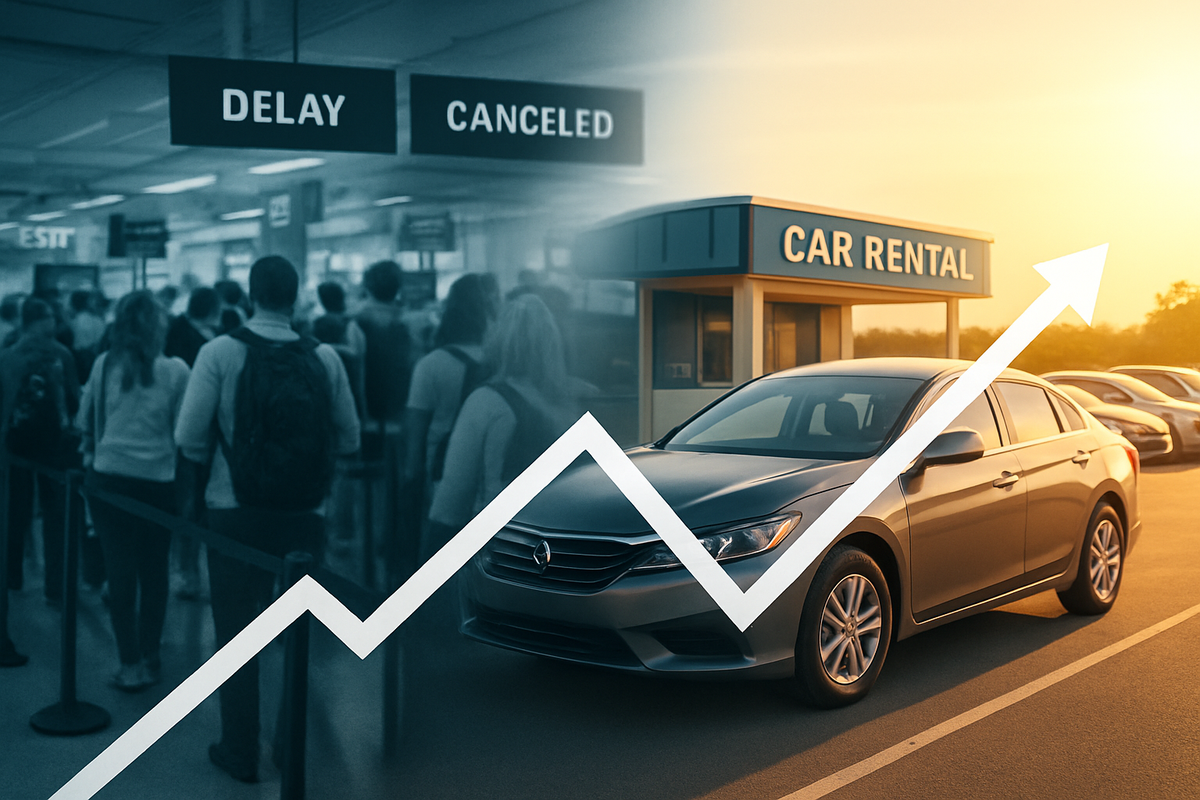
NEW YORK — A dramatic shift in the American travel landscape is reaching a fever pitch this week as a prolonged staffing crisis at the Transportation Security Administration (TSA) sends travelers fleeing airports for the open road. What began as a logistical headache has transformed into a windfall for the car rental industry, sparking a massive stock market rally that has caught Wall Street by surprise.
As of today, April 7, 2026, shares of car rental giants are decoupling from the broader travel sector in a historic divergence. While major airlines struggle to manage the fallout of record-long security lines and passenger cancellations, the car rental market is seeing a "tactical rotation" of capital. Investors are betting that the "Road Trip Renaissance" is more than a passing trend, as travelers prioritize the certainty of a steering wheel over the unpredictability of a boarding pass.
The TSA Meltdown: A Timeline of Turbulence
The current crisis traces its roots back to mid-February 2026, when a partial U.S. government shutdown left nearly 50,000 TSA officers working without pay. By late March, the financial strain on frontline workers reached a breaking point, resulting in widespread absenteeism that has paralyzed major hubs. In Houston, William P. Hobby Airport reported a staggering 40.8% officer absence rate last week, while security wait times at Atlanta (ATL), New York (JFK), and Los Angeles (LAX) have frequently exceeded the three-hour mark.
Despite the TSA’s efforts to accelerate the rollout of "touchless ID" facial recognition technology to 65 airports this spring, the automation has proven insufficient to offset the loss of human personnel. Over 500 officers resigned in March alone, citing financial hardship. The resulting chaos has forced thousands of travelers to miss flights, leading to a surge in last-minute cancellations and a desperate search for alternative transportation just as the spring break and summer travel seasons converge.
Industry data suggests the tipping point occurred in the final week of March, when "fly vs. drive" sentiment shifted decisively. According to recent surveys, 71% of Americans now plan to drive for their next vacation to avoid "airport chaos." This shift is reflected in digital traffic; Hertz Global Holdings (NASDAQ: HTZ) reported a 15% spike in website activity over the last fortnight, specifically for one-way rentals between major metropolitan corridors.
Winners and Losers: A Tale of Two Tickers
The primary beneficiaries of this logistical nightmare have been the industry’s two dominant players: Avis Budget Group (NASDAQ: CAR) and Hertz Global Holdings (NASDAQ: HTZ). Despite entering 2026 with significant debt loads and a costly transition away from electric vehicle (EV) fleets, both companies have seen their valuations skyrocket.
Avis Budget Group (NASDAQ: CAR) has led the charge, with its stock price surging over 100% since the beginning of the TSA disruptions. On March 26, the stock posted a 17% one-day gain, its largest in years. This rally is being fueled by a "perfect storm" of high demand and a massive short squeeze; with short interest at roughly 23.5%, bears have been forced to cover their positions as the "road trip" narrative took hold. This comes as a surprising reversal for Avis, which only months ago reported a GAAP loss of $21.25 per share due to impairment charges on its aging fleet.
Hertz Global Holdings (NASDAQ: HTZ) has similarly enjoyed a nearly 30% rally in early April, reclaiming its 200-day moving average. Hertz has found additional support from a 6.2% rise in the Manheim Used Vehicle Value Index, which has increased the book value of its massive fleet. However, the gains in the rental sector stand in stark contrast to the airline industry. On today’s trading session, while Avis rose over 9%, United Airlines (NASDAQ: UAL) fell 3.48% and Delta Air Lines (NYSE: DAL) dropped 1.48%, as investors worry that the operational bottlenecks at airports will cap airline profitability through the second quarter.
The Cultural and Economic Shift to the Highway
This event fits into a broader resurgence of the "Great American Road Trip," a trend that has been simmering since the post-pandemic travel boom but has now been codified by the failure of air infrastructure. Analysts suggest the upcoming U.S. 250th anniversary in July 2026 is acting as a cultural catalyst, encouraging domestic tourism that favors the flexibility of a rental car over the rigid schedules of commercial aviation.
The wider significance of this rally also points to a shift in how the market values transportation flexibility. Historically, rental cars were viewed as a "last mile" accessory to air travel. In 2026, they are being treated as a primary substitute. This has significant ripple effects for hospitality partners; roadside hotels and suburban dining chains are seeing increased bookings, while airport-adjacent services are reporting a decline in foot traffic.
Furthermore, the crisis has highlighted the fragility of the TSA’s staffing model. Regulatory experts suggest that this "spring of discontent" may force a fundamental policy shift toward more aggressive privatization of airport security or a massive federal reinvestment in TSA wages to prevent a total collapse of the aviation ecosystem by the busy summer months.
Looking Ahead: Sustainability of the Surge
The short-term outlook for car rental stocks remains bullish as long as airport delays persist, but the long-term sustainability of these gains is under scrutiny. Market analysts are watching to see if Avis and Hertz can translate this temporary surge in demand into permanent margin expansion. A key challenge will be fleet management; if the companies over-expand to meet this sudden "road trip" demand, they risk being caught with excess inventory if and when the government shutdown resolves and TSA staffing returns to normal.
In the coming weeks, a strategic pivot toward "long-haul" rental packages and loyalty programs targeting former frequent flyers could emerge. Investors are also keeping a close eye on the used car market. If the Manheim Index begins to soften, the "paper gains" on rental fleets could evaporate, making these stocks vulnerable to the same volatility that fueled their rise. The potential for a summer "travel truce"—where the government prioritizes aviation funding—remains the greatest downward risk for the current rally.
The Bottom Line for Investors
The rally in Avis and Hertz is a classic example of a market "tactical rotation" sparked by an external infrastructure shock. The key takeaway for investors is the power of consumer sentiment; when the friction of air travel exceeds the convenience of flight, the ground transportation sector becomes the ultimate hedge.
Moving forward, the market will likely remain highly sensitive to news out of Washington regarding TSA funding and the resolution of the government shutdown. Investors should monitor short interest levels in CAR and HTZ, as the current price action remains heavily influenced by technical squeeze dynamics rather than just fundamental growth. For now, the "Road Trip Renaissance" is in full swing, and the car rental industry is in the driver’s seat.
This content is intended for informational purposes only and is not financial advice.