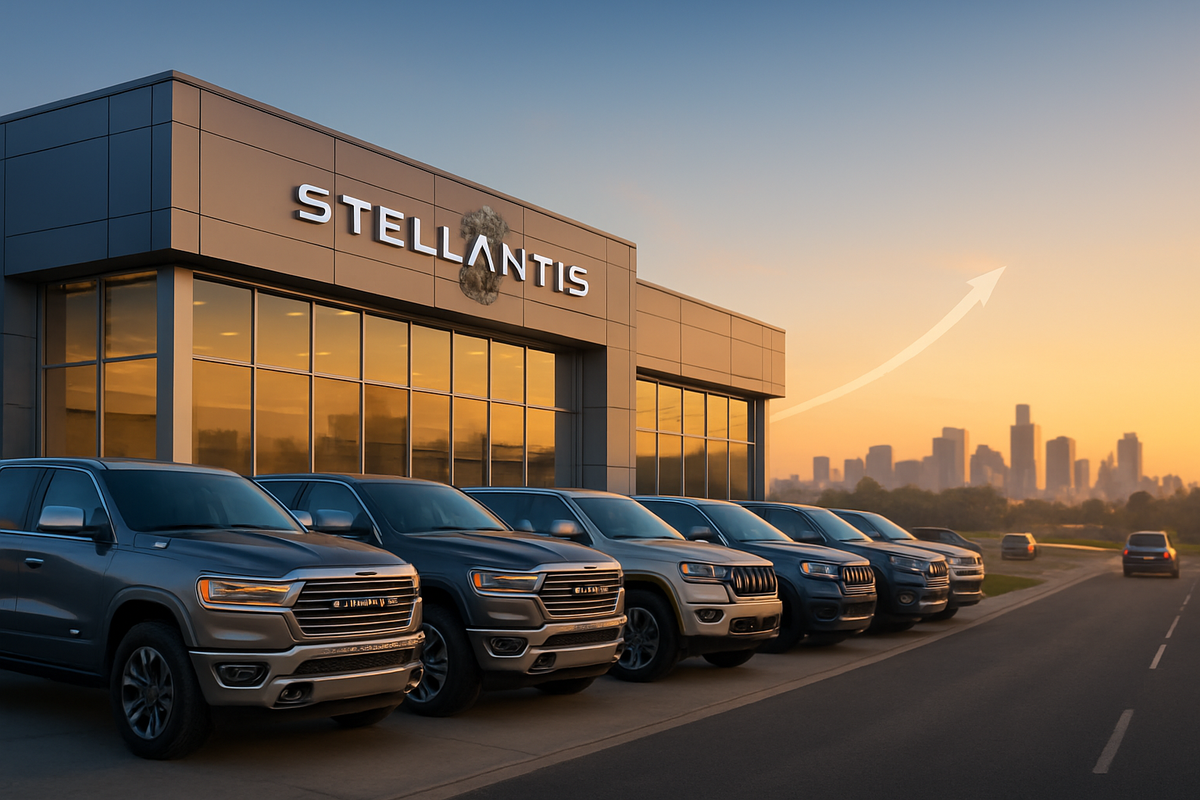
Stellantis NV (NYSE: STLA) reported a resilient 4% year-over-year increase in its U.S. first-quarter sales for 2026, a performance that stands in stark contrast to a broader domestic automotive market currently grappling with high interest rates and cooling consumer demand. While the overall U.S. light-vehicle industry saw volumes slide by an estimated 6% to 6.5% during the same period, Stellantis managed to move 305,902 units, signaling a potential turning point for the automaker after a turbulent 2025.
The uptick in sales suggests a recovery in light-vehicle demand for the company’s core brands, specifically within the truck and luxury SUV segments. This growth is being viewed by industry analysts as the first tangible result of the "business reset" initiated by Stellantis leadership late last year. By aggressively adjusting inventory levels and refining its pricing strategy, the company appears to have found a competitive edge even as economic concerns continue to weigh on the average American car buyer.
Rebounding from the "Business Reset": A Deep Dive into the Q1 Numbers
The 4% growth reported by Stellantis (NYSE: STLA) was fueled primarily by a massive resurgence in its Ram and Jeep divisions. The Ram brand led the charge with a 20% increase in sales, marking its strongest first-quarter performance in three years. The refreshed 2025 Ram 1500 was a particular standout, with sales surging 27% as dealer inventories finally stabilized. Meanwhile, the Jeep brand saw a 3% overall increase, bolstered by a 17% jump in Wrangler sales and an eye-popping 110% surge for the ultra-premium Grand Wagoneer, indicating that high-end buyers are returning to the market despite broader economic volatility.
This success follows a period of significant strategic pivoting. In the latter half of 2025, Stellantis faced mounting criticism for excessive dealer markups and an inventory glut that led to a staggering $26.3 billion net loss for the fiscal year. Under the guidance of executives like Antonio Filosa, the company spent the winter months slashing prices and realigning production schedules. The Q1 2026 data represents the first clean look at how these adjustments have resonated with consumers, showcasing a brand that has successfully "bucked the trend" of an industry-wide slowdown.
Initial market reactions have been cautiously optimistic. While the sales figures provided a much-needed boost to sentiment, investors remain wary of the company’s bottom line. Stellantis shares have traded near 52-week lows recently, pressured by the suspension of the 2026 dividend and ongoing margin concerns. However, analysts at several major firms noted that outperforming the broader industry by nearly 10 percentage points is a feat that cannot be ignored, suggesting that the company's "multi-energy" platform strategy—offering internal combustion, hybrid, and electric options—is beginning to pay dividends.
Winners and Losers: Shifting Power Dynamics in Detroit
The Q1 2026 results have created a clear divergence between the "Big Three" automakers. While Stellantis (NYSE: STLA) celebrated growth, its primary domestic rivals faced a much tougher start to the year. General Motors Co. (NYSE: GM) reported a 9.7% decline in Q1 sales, totaling 626,429 units. Despite maintaining its position as the volume leader in the U.S., GM struggled with double-digit drops in its high-volume truck segments and a sluggish performance from its Cadillac and Buick luxury wings.
Ford Motor Co. (NYSE: F) also saw a significant pullback, with sales falling 8.8% year-over-year to 457,315 units. Ford was hit hard by the discontinuation of several smaller models like the Escape, and its flagship F-Series trucks saw a 16% decline in deliveries. While Ford found success in its SUV lineup—specifically with the Explorer and Mustang—the overall contraction suggests that Stellantis was able to peel away market share from its neighbors in Dearborn and Detroit during the quarter.
Beyond the manufacturers, the "winners" include Stellantis' vast dealer network, which had been vocal about inventory mismanagement in previous years. The clearance of older stock and the influx of popular new models have improved dealer morale and floorplan stability. Conversely, the "losers" in this scenario are the pure-play electric vehicle manufacturers. As Stellantis leans into its hybrid and combustion-heavy "SIXPACK" engine offerings, the slowing momentum of companies like Tesla Inc. (NASDAQ: TSLA) in the face of expiring federal tax credits has allowed traditional legacy brands to regain their footing with "multi-energy" alternatives.
Broader Industry Trends and the Multi-Energy Shift
The performance of Stellantis in Q1 2026 fits into a larger, evolving narrative within the global automotive industry: the "cooling" of the pure EV transition. Following the expiration of several key federal tax credits in late 2025, consumer interest in battery-electric vehicles (BEVs) hit a plateau. Stellantis' strategy of maintaining robust internal combustion engine (ICE) and hybrid options across its Jeep and Dodge lineups appears to have aligned perfectly with a consumer base that is increasingly hesitant to go fully electric amid high purchase prices and infrastructure concerns.
This event also highlights a growing divide in how automakers handle affordability. With the average vehicle price hovering near $49,000, Stellantis’ decision to implement pricing adjustments in late 2025 acted as a preemptive strike against the interest rate hikes that have crippled sales for other brands. By offering more competitive financing and incentive packages, Stellantis has successfully navigated a high-rate environment that has left competitors like Ford (NYSE: F) and GM (NYSE: GM) struggling to move metal off the lots.
Historically, such a divergence among the Big Three is rare. Typically, macroeconomic factors like fuel prices or interest rates move the entire sector in unison. The fact that Stellantis grew while others shrank suggests a company-specific recovery. This mirrors the post-2008 era where strategic product refreshes allowed certain brands to decouple from broader economic misery. For Stellantis, the Q1 results serve as a validation of their controversial decision to delay some EV projects in favor of refining their core high-margin truck and SUV portfolios.
The Road Ahead: Strategic Pivots and Investor Watchlist
Looking forward, the short-term focus for Stellantis (NYSE: STLA) will be its highly anticipated Investor Day on May 21, 2026. CEO Antonio Filosa is expected to unveil a comprehensive new industrial plan that further doubles down on "freedom of choice" for consumers. This will likely involve expanding hybrid options across the entire Ram and Jeep lineups, ensuring that the company remains insulated from any further shifts in EV policy or consumer sentiment.
However, challenges remain on the horizon. The long-term success of Stellantis will depend on its ability to convert this sales volume into actual profit. After the catastrophic losses of 2025, the market is looking for more than just unit growth; it is looking for margin recovery. Investors should watch closely to see if the high incentive spending used to drive these Q1 numbers begins to eat away at the company’s operational cash flow. Furthermore, potential regulatory shifts regarding emissions standards in the latter half of 2026 could force another pivot if the "multi-energy" approach faces new legal hurdles.
The immediate opportunity for Stellantis lies in its upcoming product launches, including the full rollout of the Dodge Charger SIXPACK and the expansion of the "Pro One" commercial vehicle lineup. If the company can maintain the momentum seen in the Ram 1500 segment, it may be able to reclaim its spot as one of the most profitable legacy automakers by the end of the decade.
Conclusion: A Market in Transition
The 4% year-over-year sales increase for Stellantis in Q1 2026 is more than just a data point; it is a sign of a massive corporate turnaround in progress. By outperforming a contracting market and its primary rivals, General Motors (NYSE: GM) and Ford (NYSE: F), Stellantis has demonstrated that a flexible, consumer-focused product mix can overcome even the harshest economic headwinds. The "business reset" of late 2025 appears to be taking hold, providing a blueprint for how legacy automakers can survive the volatile transition to a post-ICE world.
Moving forward, the market remains in a state of flux. While Stellantis has proven it can move vehicles, the ultimate test will be its financial health and its ability to reinstate the dividend that once made it a favorite among income investors. For now, the Q1 report offers a glimmer of hope that the U.S. light-vehicle market is not in a terminal decline, but rather a complex transformation where the spoils go to the most adaptable players.
Investors should keep a sharp eye on the May 21 Investor Day and subsequent Q2 earnings reports. The key takeaway from this quarter is clear: Stellantis is back in the fight, but the path to long-term stability will require continued discipline in pricing and a relentless focus on what the American consumer actually wants to drive today, rather than what regulators hope they will drive tomorrow.
This content is intended for informational purposes only and is not financial advice.