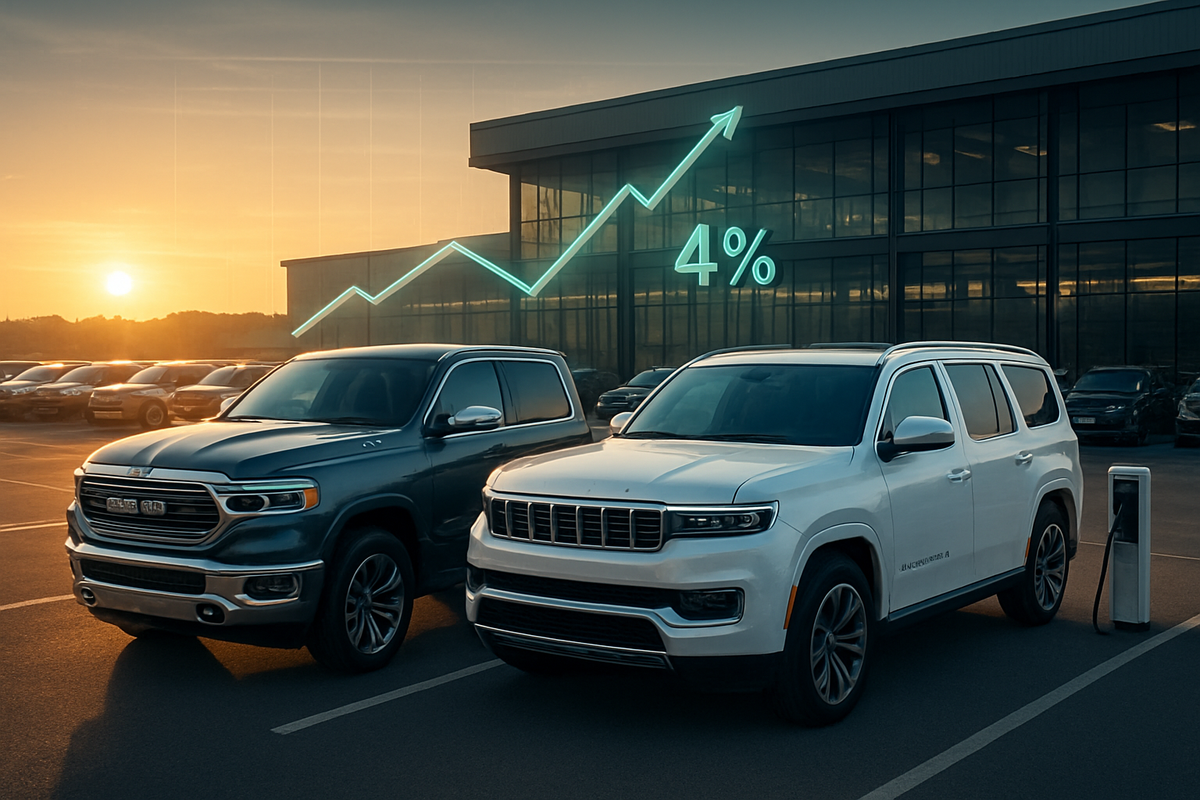
Stellantis (NYSE: STLA) has reported a surprising 4% year-over-year increase in its U.S. sales for the first quarter of 2026, delivering 305,902 vehicles and signaling a significant recovery in consumer demand for its light vehicle lineup. This performance stands in sharp contrast to a broader automotive market that faced significant headwinds, with industry analysts estimating a total U.S. volume decline of approximately 6% to 6.5% during the same period.
The sales jump marks a critical "business reset" for the transatlantic automaker, which spent much of 2024 and 2025 grappling with inventory gluts, high interest rates, and a contraction in market share. By bucking the downward trend seen by its closest rivals, Stellantis has signaled to investors that its strategic pivot toward a "multi-energy" product mix—offering traditional combustion, hybrid, and electric options—is beginning to resonate with a cautious American consumer base.
The Engines of Growth: Ram and Jeep Lead the Charge
The Q1 success was driven largely by a resurgence in the company's core powerhouse brands. The Ram truck brand saw a staggering 20% increase in sales, fueled by a 27% jump in Ram 1500 deliveries as the refreshed 2025 models fully reached dealer lots. The heavy-duty segment also remained robust, posting a 21% gain. Jeep, the company's primary profit driver, saw a more modest but stable 3% increase, bolstered by double-digit growth for the Grand Cherokee (up 10%) and the Wrangler (up 17%). Most notably, the high-end Grand Wagoneer saw a 110% surge, indicating that luxury buyers are returning to the brand in force.
The timeline leading to this recovery began in late 2025, when Stellantis management initiated a series of aggressive pricing adjustments and incentive programs to clear out aging inventory. By the start of 2026, the company had streamlined its distribution and launched several key "multi-energy" platforms, including the new Dodge Charger SIXPACK, which helped the Dodge brand post a 4% gain this quarter. However, the recovery was not universal across the portfolio; the Chrysler brand suffered a 28% decline, primarily due to a 33% drop in Pacifica minivan sales, though retail activity showed signs of stabilization in late March.
Market Winners and Losers in the Q1 Shakeup
Stellantis emerged as the clear winner among the "Big Three" in Detroit for the start of 2026. While Stellantis grew by 4%, General Motors (NYSE: GM) reported a 9.7% decline in U.S. sales, totaling 626,429 units. Although GM remains the overall market leader by volume, the double-digit drop in some of its high-volume truck segments suggests a temporary loss of momentum to Ram. Similarly, Ford Motor Company (NYSE: F) saw its sales slide by 8.8% to 457,315 units, citing product transitions and difficult year-over-year comparisons as the primary factors.
The divergence in performance highlights a shift in consumer behavior. While Ford and GM have leaned heavily into their "all-in" EV strategies, Stellantis’s decision to maintain a diverse range of powertrains allowed it to capture buyers who were deterred by high EV prices and a spike in fuel costs. Other winners in the quarter included Toyota Motor Corp (NYSE: TM), which remained resilient with only a 0.1% slide, and Hyundai-Kia, which continued to gain market share through aggressive hybrid offerings.
Navigating the Hybrid Pivot and Economic Headwinds
The success of Stellantis in Q1 2026 is a microcosm of a broader industry shift toward hybrid electric vehicles (HEVs). Following the expiration of several federal EV tax credits in late 2025, pure battery-electric vehicle (BEV) market share in the U.S. dipped to approximately 5%. Consumers have increasingly viewed hybrids as a "practical bridge," offering fuel efficiency without the "range anxiety" or higher price tags of full EVs. Stellantis capitalized on this by offering Plug-in Hybrid (PHEV) versions of its most popular models, which have seen sustained demand even as fuel prices topped $4 per gallon.
This event also highlights the impact of sustained high interest rates on the light vehicle market. With the average vehicle price hovering above $45,800, manufacturers have had to increase incentive spending to keep monthly payments within reach for the average consumer. Stellantis’s ability to grow in this environment suggests that its recent focus on affordability and "value-packed" trim levels for the Ram and Jeep brands is paying off, even as competitors struggle to maintain volume without eroding margins.
The Road Ahead: Strategic Pivots and Long-Term Outlook
Looking forward to the remainder of 2026, Stellantis faces the challenge of maintaining this momentum. The company is expected to continue rolling out its STLA Frame and Large platforms, which are designed to support multiple engine types on a single assembly line. This flexibility will be crucial if fuel prices remain volatile or if regulatory pressure on emissions intensifies. In the short term, the market will be watching to see if the Chrysler brand can find a path to recovery, potentially through the introduction of new crossover models rumored for late 2026.
Potential challenges include a cooling labor market and the possibility of further interest rate hikes if inflation remains sticky. However, the Q1 results provide a cushion for Stellantis, allowing it to move from a defensive posture to an offensive one. If the company can successfully integrate its next generation of electrified muscle cars and off-roaders while keeping prices competitive, it may continue to outpace the broader market's sluggish recovery.
Investor Takeaway: A New Chapter for Stellantis
The 4% sales increase for Stellantis in Q1 2026 is more than just a data point; it is evidence of a successful turnaround in the world’s most profitable auto market. By reversing a two-year decline and outperforming peers like GM and Ford, Stellantis has demonstrated the resilience of its brand portfolio and the wisdom of its flexible powertrain strategy.
For investors, the key takeaway is that Stellantis is proving it can navigate a high-interest-rate environment better than many expected. Moving forward, the market will closely monitor the company's margin health, as the increased incentive spending used to drive these sales could weigh on profitability. However, for now, the "house of brands" appears to have found its footing, marking a significant win for CEO Carlos Tavares and his leadership team.
This content is intended for informational purposes only and is not financial advice.