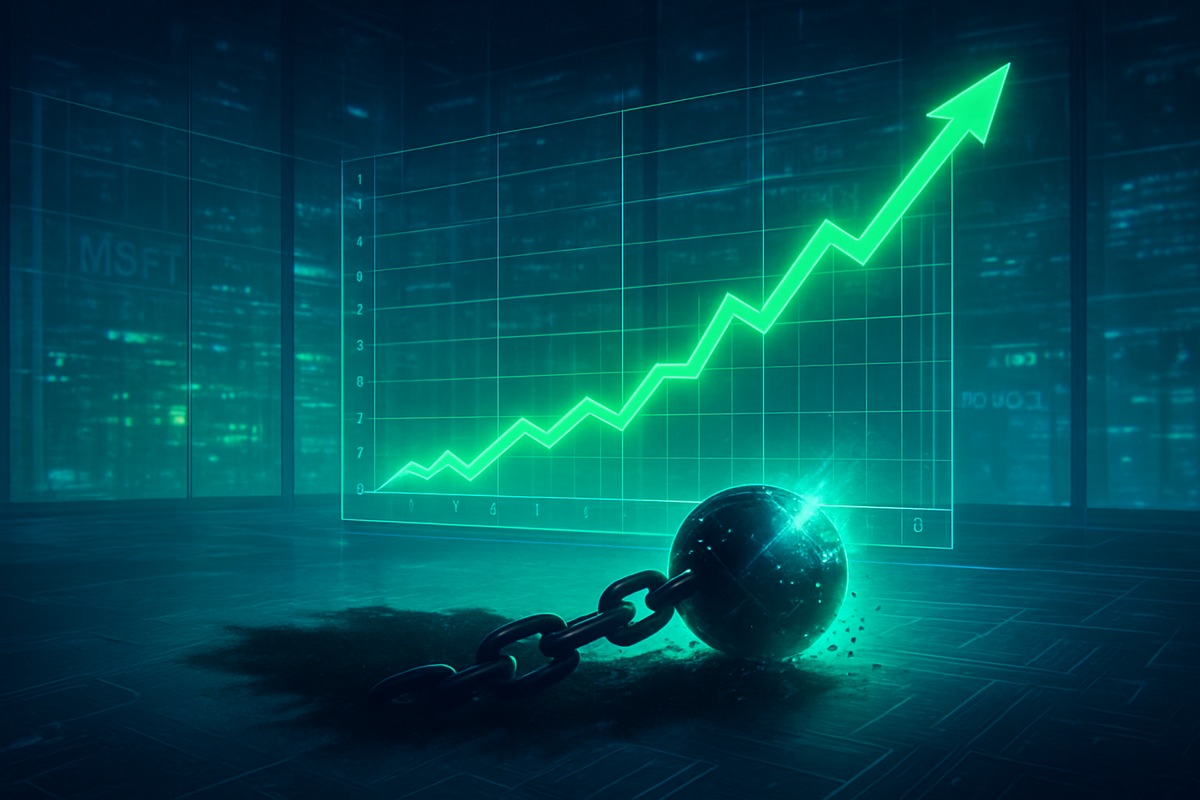
In a stunning reversal of fortune that has blindsided short-sellers and recalibrated global market sentiment, the Nasdaq Composite notched its tenth consecutive day of gains on April 14, 2026. This historic run marks the index's longest winning streak since the post-pandemic euphoria of late 2021, signaling a definitive shift in the market's risk appetite. As of mid-April, the tech-heavy benchmark has surged nearly 14% from its March lows, effectively erasing the "war discount" that had plagued equities following a volatile month of geopolitical brinkmanship in the Middle East.
The rally, which began on April 1, has been propelled by a cooling of hostilities between the United States and Iran, alongside a series of cooler-than-anticipated inflation prints that have temporarily sidelined the Federal Reserve’s hawkish rhetoric. For investors, the 10-day streak is more than just a technical milestone; it represents a fundamental pivot back to the "AI-first" growth narrative that defined the start of the decade. With the Strait of Hormuz tentatively reopening and diplomacy gaining the upper hand, the "fear trade" in commodities has subsided, allowing the "Magnificent Seven" to reclaim their mantle as the market’s primary growth engines.
A Timeline of Resilience: From Blockades to Breakthroughs
The path to this 10-day rally was paved with significant turbulence. In early March 2026, the global economy faced a severe supply chain shock when Iranian forces declared a blockade of the Strait of Hormuz, a critical artery for nearly 30% of the world’s maritime petroleum trade. The resulting "war discount" saw the Nasdaq shed approximately 9% of its value in a matter of weeks, while Brent crude oil prices spiked to a peak near $120 per barrel. The tech sector, particularly semiconductor firms reliant on stable energy and logistical corridors, bore the brunt of the sell-off.
However, the tide began to turn in late March after a flurry of diplomatic back-channeling led to a 48-hour ultimatum from the U.S. administration, followed by a surprise shift toward a two-week ceasefire. By April 1, 2026, as news broke of potential peace negotiations to be hosted in Pakistan, the Nasdaq found its footing. What started as a relief rally quickly transformed into a momentum-driven surge. By the time the streak hit its eighth day, the index had eclipsed its pre-conflict levels, and by April 14, it closed at 23,639.08, officially recording the longest daily win streak in nearly five years.
Initial market reactions have been characterized by a "fear of missing out" (FOMO) among institutional players who had moved to cash during the height of the March blockade. The rally was further bolstered by the April 13 Producer Price Index (PPI) report, which suggested that core inflation was stabilizing despite the temporary energy spike. This rare combination of geopolitical de-escalation and favorable macroeconomic data provided the perfect "Goldilocks" environment for the tech sector to thrive.
The AI Giants Rebound: Winners and Losers in the Post-Conflict Surge
The primary beneficiaries of this streak have been the titans of artificial intelligence and semiconductor manufacturing. NVIDIA (Nasdaq: NVDA) led the charge, matching the index with its own 10-day winning streak ending April 14. Despite a "stall" in early March due to fears that a helium shortage—exacerbated by the Middle East conflict—would disrupt chip production, NVDA shares surged 3.8% on the final day of the streak as investors focused on the relentless demand for AI infrastructure. Micron Technology (Nasdaq: MU) was perhaps the most aggressive gainer, skyrocketing 9.2% on April 14 to reach a new record high, driven by a persistent supply shortage in High Bandwidth Memory (HBM) that analysts believe will last until 2027.
Other members of the "Magnificent Seven" also saw significant inflows. Alphabet (Nasdaq: GOOGL) staged a remarkable recovery, gaining over 7% in the second week of April alone, supported by strong performance in its Google Cloud division and the rapid adoption of its Gemini 3 AI model. Microsoft (Nasdaq: MSFT) remained a cornerstone of the rally, with shares edging up 2.1% by April 15, as it continues to demonstrate a high "ROI audit" for its AI investments.
However, the rally was not a tide that lifted all boats equally. Tesla (Nasdaq: TSLA) remained a notable laggard, with Q1 delivery figures of 358,000 units falling short of the 372,000 consensus. While the stock moved higher in sympathy with the broader market, it continues to face headwinds from narrowing margins and increased competition in the EV space. Similarly, Apple (Nasdaq: AAPL) saw more modest gains of 0.4% as it navigates a "sluggish" integration of generative AI into its hardware ecosystem, though it remains a defensive favorite for value-oriented tech investors.
Historical Precedents and the Regulatory Frontier
The historical significance of a 10-day Nasdaq streak cannot be overstated. Analysts point to 1999 and 2021 as the most relevant comparisons. In late 1998, a similar streak preceded the most aggressive "blow-off" phase of the Dot-Com boom. Conversely, the 10-day run in November 2021 occurred just months before the 2022 bear market took hold. While historical data suggests the Nasdaq often finishes higher six months after such a momentum episode (with a median 12-month return of 30.3%), the 2026 rally faces a unique set of challenges—most notably, a bifurcated regulatory environment.
As of April 2026, the U.S. and the EU are moving in opposite directions regarding AI oversight. In the United States, the "One Rule" Executive Order and the proposed TRUMP AMERICA AI Act seek to create a "regulatory sandbox," preempting state-level restrictions to foster American AI dominance. Meanwhile, the EU AI Act is entering a critical compliance phase, with a looming August 2, 2026, deadline that mandates strict transparency for "High-Risk" AI systems. This "Great Divergence" is forcing companies like Amazon (Nasdaq: AMZN) and Microsoft to navigate "Compute Sovereignty" costs, as they are increasingly required to build localized data centers to comply with regional data governance laws.
What Comes Next: The Earnings Hurdle and a Fed in Transition
As the market enters the second half of April, the focus is shifting from technical momentum to fundamental performance. The Q1 2026 earnings season is expected to be a "show-me" period for AI monetization. The Information Technology sector is projected to deliver a staggering 27.1% year-over-year earnings growth. Investors will be scrutinizing the Capital Expenditure (CapEx) of firms like Microsoft and Amazon, whose combined infrastructure spending is projected to exceed $750 billion this year. Any sign that AI revenue is not keeping pace with this massive spending could quickly truncate the current rally.
Furthermore, the Federal Reserve remains a wildcard. While the 10-day streak suggests the market has dismissed the "higher for longer" narrative, the Fed’s "Dot Plot" remains divided. With Chairman Jerome Powell’s term set to expire on May 15, 2026, and inflation re-accelerating to 3.3% in March due to the recent oil shock, the transition to a new, potentially more hawkish leadership could trigger a repricing of risk. Bond markets have already begun to signal caution, with 10-year Treasury yields hovering near 4.44%.
Conclusion: A Market at a Crossroads
The Nasdaq’s 10-day winning streak in April 2026 is a testament to the enduring power of the technology sector and the market's capacity to look past immediate geopolitical crises. By erasing the "war discount" in record time, the index has reaffirmed that AI and digital transformation remain the primary drivers of 21st-century equity valuations.
However, the road ahead is fraught with complexity. Investors must balance the euphoria of a historic rally against the realities of a 27% earnings growth hurdle, a shifting regulatory landscape in Europe, and a potential leadership change at the Federal Reserve. While the "fear trade" has subsided for now, the "monetization trade" is just beginning. In the coming months, the distinction between AI leaders and AI pretenders will become the defining theme for a market that is currently running on pure, unadulterated momentum.
This content is intended for informational purposes only and is not financial advice.