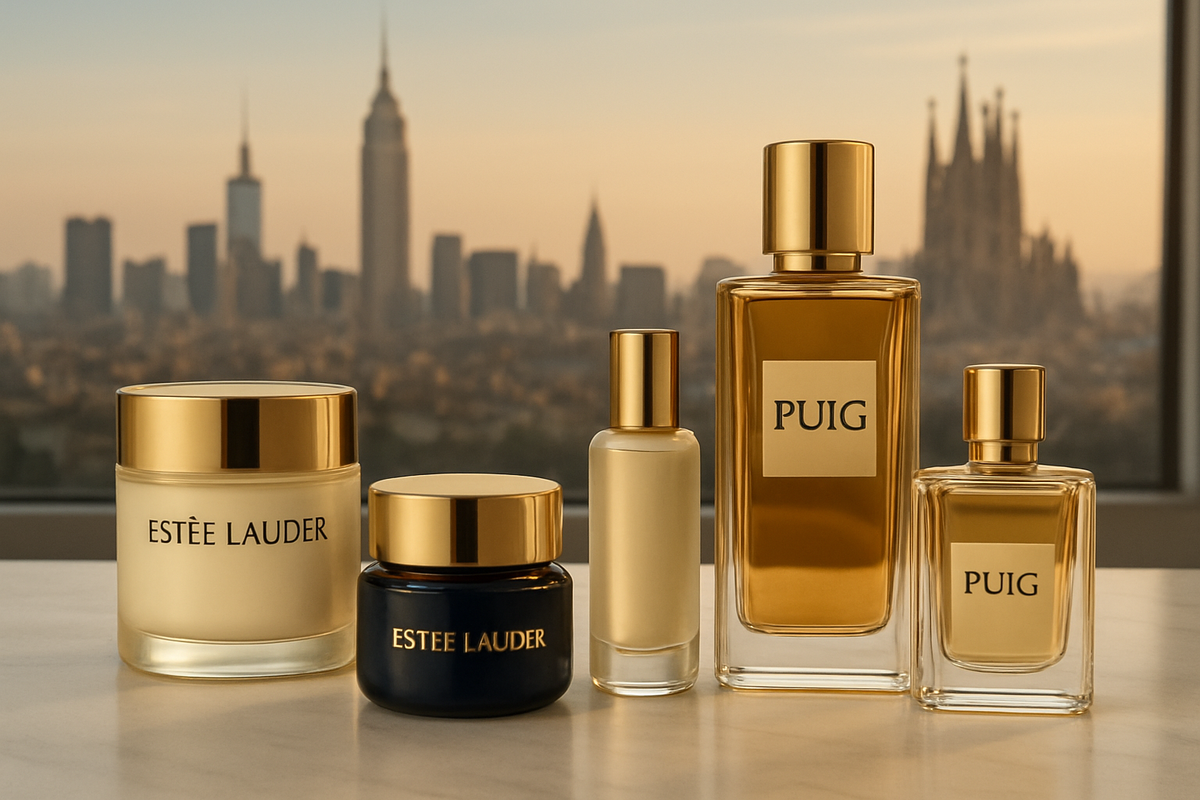
The global luxury landscape was jolted this week as two of the world’s most prominent beauty dynasties confirmed they are in active negotiations for a historic business combination. On March 24, 2026, the Spanish fragrance and fashion powerhouse Puig (BME: PUIG) released a regulatory filing in Madrid confirming "discussions regarding a potential business combination" with the American heritage giant The Estée Lauder Companies Inc. (NYSE: EL). The announcement follows a flurry of reports from the Financial Times and Wall Street Journal that sent shockwaves through the New York and Madrid stock exchanges, signaling what could be the most significant consolidation in the beauty sector in a decade.
The potential tie-up aims to create a "fragrance powerhouse" with a combined market valuation exceeding $40 billion and projected annual sales of approximately $20 billion. For Estée Lauder, the move represents a bold—and some say risky—attempt to fast-track its recovery following years of sluggish performance in Asian markets. For Puig, which only recently transitioned to public life following its landmark 2024 IPO, the deal offers a chance to leverage a massive global distribution network and cement its status as a top-tier global player alongside titans like L'Oréal and LVMH.
The Path to Consolidation: A Timeline of the Deal
The rumors of a tie-up transitioned into official confirmation over a high-stakes 48-hour period starting on March 23, 2026. Initial reports suggested that the two companies were nearing a definitive agreement after months of quiet back-channel negotiations led by Estée Lauder’s CEO, Stéphane de La Faverie, and the Puig family leadership. By the afternoon of March 23, Estée Lauder issued a formal statement confirming the discussions, sending its stock into a tailspin as investors weighed the benefits of the merger against the immense debt and integration risks involved.
This move comes at a critical juncture for both firms. Estée Lauder has been mired in its "Beauty Reimagined" turnaround plan, struggling to reverse inventory gluts and declining sales that began in late 2023. While the company reported a modest 6% organic sales growth in its most recent quarterly results, it remains vulnerable to newly enacted trade tariffs and shifting consumer preferences. Conversely, Puig has been on a meteoric rise since its May 2024 IPO, which was Spain’s largest in ten years. Reporting record FY2025 revenues of over €5 billion and maintaining high EBITDA margins, Puig entered 2026 holding three of the top ten global fragrance spots with brands like Rabanne, Carolina Herrera, and Jean Paul Gaultier.
The market reaction to the news has been polarized. Shares of Puig surged between 15% and 16% in Madrid as investors cheered the prospect of a massive premium and expanded scale. However, Estée Lauder shares on the NYSE fell nearly 9% immediately following the confirmation. Wall Street analysts expressed concern that a $10 billion-plus acquisition could distract Estée Lauder’s management from its core recovery efforts and saddle the company with significant leverage just as it was beginning to find its footing.
Winners and Losers in the Luxury Shakeup
The primary winner in the short term appears to be the Puig family and their shareholders. By negotiating from a position of financial strength, Puig is poised to secure a dominant role in the combined entity’s creative direction while gaining access to Estée Lauder’s superior R&D and skincare infrastructure. Analysts at RBC Capital noted that the deal would essentially "supercharge" Puig’s "Love Brands"—including Charlotte Tilbury and Byredo—by plugging them into a distribution machine that Puig could not have built alone in such a short timeframe.
Conversely, L’Oréal (EPA: OR) and LVMH (EPA: MC) find themselves facing a more formidable rival. For years, Estée Lauder has lagged behind these French conglomerates in the high-growth prestige fragrance category. This merger would jumpstart Estée Lauder’s fragrance market share from roughly 6% to 15%, placing it neck-and-neck with L'Oréal’s 16%. The combined EL-Puig entity would possess an unrivaled portfolio of scent licenses and niche houses, potentially stripping market share from LVMH’s Dior and Givenchy lines.
However, the "loser" could potentially be the Estée Lauder shareholder if execution falters. Critics argue that the company is taking on too much, too soon. Integration risks are substantial, particularly regarding the governance of two companies historically controlled by powerful founding families. There is a palpable fear that the clash of corporate cultures—the disciplined, turnaround-focused Lauder vs. the high-growth, creatively autonomous Puig—could lead to a period of internal friction that benefits nimble, independent "indie" beauty brands.
Analyzing the Fragrance Gap and Regulatory Hurdles
The significance of this deal lies in its strategic focus on the "Fragrance Gap." As skincare and color cosmetics markets have become increasingly saturated and sensitive to economic downturns, prestige fragrances have proven to be remarkably resilient. This merger is a direct counter-move to L’Oréal’s 2025 aggressive expansion, which included the acquisition of Kering’s beauty licenses. By combining forces, EL and Puig are attempting to build a moat around the luxury scent category, which has seen double-digit growth even in inflationary environments.
From a regulatory perspective, the deal is likely to face intense scrutiny in both the European Union and the United States. A combined EL-Puig would control a significant portion of the "niche" and "ultra-prestige" fragrance markets. Antitrust regulators may demand divestitures of certain brands to prevent a near-monopoly on high-end perfume formulations and shelf space at premium retailers like Sephora and Neiman Marcus. Furthermore, the Spanish government may take a keen interest in ensuring that Puig’s headquarters and manufacturing jobs remain in Barcelona, adding a layer of political complexity to the negotiations.
Historically, this event mirrors the 2016 acquisition of Elizabeth Arden by Revlon, though on a much grander and more luxurious scale. It signals that the "middle ground" of beauty is disappearing; companies must either be massive conglomerates with diversified portfolios or hyper-focused niche players. The EL-Puig talks suggest that even heritage giants now believe they cannot survive alone in an era where LVMH and L'Oréal are increasingly weaponizing their scale.
What Lies Ahead: Integration and Governance
The immediate future of the deal hinges on the governance structure. A key sticking point in the current negotiations is the "Puig family clause," which reportedly seeks to maintain creative autonomy for its brands. If a deal is struck, the market will be looking for a clear leadership transition plan. Will Stéphane de La Faverie lead the combined group, or will a member of the Puig family take a more central role in global operations? The answers to these questions will determine whether the merger is viewed as a strategic masterstroke or a governance nightmare.
In the long term, the combined entity will need to prove it can capture the projected $1.5 billion in cost synergies. This will likely involve a massive supply chain realignment and the consolidation of fragrance manufacturing sites. Investors should also watch for a potential "white knight" bid. Some analysts speculate that LVMH might launch a counter-offer for specific Puig assets if the EL merger hits regulatory roadblocks, seeking to prevent a unified EL-Puig from challenging its dominance.
Final Assessment: A New Era for Luxury
The Estée Lauder-Puig deal talks mark a turning point for the beauty industry. It is a defensive maneuver born of necessity for Lauder and an offensive land-grab for Puig. If the deal closes, it will create a duopoly in the prestige beauty world, with EL-Puig on one side and L'Oréal on the other, forcing other players like Coty Inc. (NYSE: COTY) and Shiseido (TYO: 4911) to reconsider their own independent futures.
For investors, the coming months will be a period of high volatility. The focus will shift from quarterly earnings to the minutiae of the merger agreement and the signals sent by regulators in Brussels and Washington. While the strategic rationale—closing the fragrance gap and scaling up against French rivals—is sound, the execution risk remains the elephant in the room. Investors should watch closely for any signs of management distraction at Estée Lauder or pushback from the Puig family, as these will be the early indicators of whether this multi-billion dollar bet will pay off or become a cautionary tale of over-expansion.
This content is intended for informational purposes only and is not financial advice.