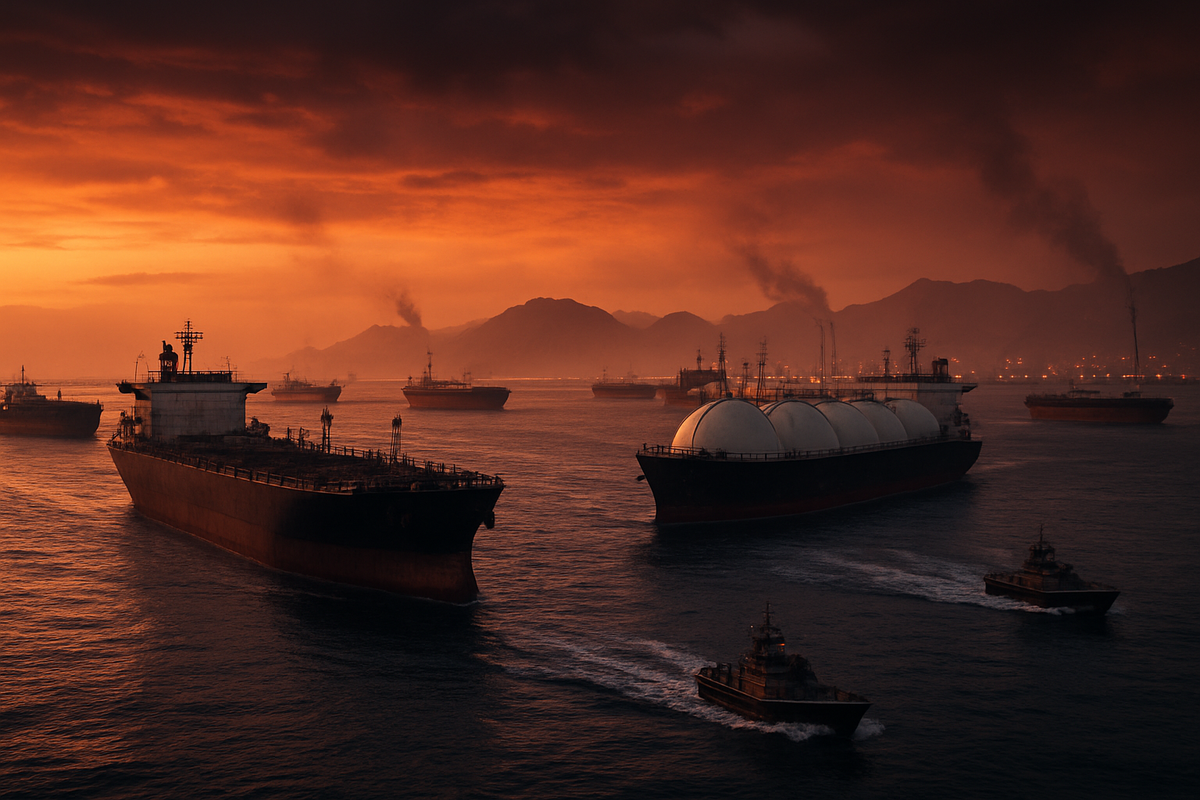
The global energy landscape is currently facing its most severe disruption in decades as the Strait of Hormuz, the world’s most vital maritime chokepoint, remains effectively closed to commercial traffic. This morning, March 24, 2026, the international community is holding its breath as a critical deadline looms. The closure has successfully paralyzed approximately 20% of the world’s daily oil consumption and 20% of global liquefied natural gas (LNG) shipments, sending shockwaves through every major economy. As tanker traffic in the Persian Gulf remains at a virtual standstill, the lack of supply has triggered a frantic scramble for alternative energy sources and a massive coordinated response from global reserves.
The geopolitical tension reached a boiling point yesterday when President Donald Trump announced a five-day extension to a previous 48-hour ultimatum, demanding that Iran immediately cease its interference in the waterway. The President has made it clear that if the Strait is not fully reopened by the new deadline, the United States will move to target Iranian infrastructure, specifically naming the country’s power plants and the Bushehr nuclear facility. This high-stakes "infrastructure warfare" has led to a dual-sided crisis: a massive physical shortage of energy and the looming threat of a regional military escalation that could permanently alter the geography of global trade.
The Chokehold on Global Trade: Timeline of the Crisis
The current crisis began in earnest on February 28, 2026, following a series of maritime skirmishes and drone attacks that led Iran’s Islamic Revolutionary Guard Corps to declare the Strait "unsafe for navigation." By mid-March, the flow of vessels had plummeted by nearly 95%, with only a handful of Chinese-flagged tankers attempting the passage. The effective closure has stranded an estimated 200 million barrels of oil and billions of cubic meters of Qatari LNG, which cannot reach buyers in Asia and Europe. The International Energy Agency (IEA) has labeled this event the most significant threat to global energy security since the 1970s oil shocks, prompting a record-breaking release of 400 million barrels of crude from emergency stockpiles across its member nations.
On Saturday, March 21, President Trump initially issued a stark 48-hour deadline for Iran to clear the mines and stop drone patrols in the Strait. However, in a surprising turn of events on Monday, March 23, the administration granted a five-day reprieve, citing "productive communications" through regional intermediaries. While this extension provided a brief 10% relief drop in Brent crude prices—which had spiked toward $120 per barrel—the market remains in a state of high-alert. Iran has countered the U.S. threats by warning that any strike on its power grid will result in "irreversible destruction" of regional desalination plants and the Barakah Nuclear Power Plant in the United Arab Emirates, threatening the basic water and power needs of millions in the Gulf.
Market Bifurcation: The Winners and Losers of the Energy Shock
The closure of the Strait has created a sharp divide among public companies, with domestic producers and tanker fleets seeing unprecedented volatility. ExxonMobil (NYSE: XOM) has emerged as a primary "safe haven" for investors, with its shares hitting all-time highs as the market pivots toward U.S.-based Permian Basin production that is insulated from Middle Eastern logistics. Similarly, Chevron (NYSE: CVX) has seen its valuation bolstered by surging commodity prices, though the company faces operational risks due to its joint ventures in the UAE, where drone threats have already caused temporary shutdowns at major gas fields.
On the other side of the ledger, European energy giants with heavy reliance on Middle Eastern LNG are struggling. Shell (NYSE: SHEL) and BP (NYSE: BP) have been forced to declare force majeure on several international contracts as the supply of Qatari gas—which must pass through the Strait—has completely evaporated. In the shipping sector, tanker companies are experiencing a "geopolitical gold rush." Frontline (NYSE: FRO) and DHT Holdings (NYSE: DHT) have seen spot rates for Very Large Crude Carriers (VLCCs) surge to over $107,000 per day. As vessels are rerouted around the Cape of Good Hope to avoid the Persian Gulf, the increased voyage length is tightening the global fleet supply, driving shares of firms like Nordic American Tankers (NYSE: NAT) up by more than 60% since the crisis began.
A New Era of Energy Insecurity and Policy Shifts
This crisis marks a definitive shift in the broader trend toward "energy regionalism." For years, the global market relied on the seamless transit of the Strait of Hormuz, but the current closure has exposed the fragility of this dependence. The IEA's decision to release 400 million barrels, including 172 million from the U.S. Strategic Petroleum Reserve, is a temporary bandage on a structural wound. Regulatory bodies are now expected to fast-track permits for domestic energy infrastructure and alternative pipeline routes that bypass chokepoints, as the "security premium" becomes a permanent fixture in energy pricing.
Historically, the current standoff draws parallels to the "Tanker War" of the 1980s, but the scale is vastly different. In the 2020s, the world’s reliance on LNG for electricity generation means that a closure of the Strait does not just affect gasoline prices—it threatens the stability of power grids in Japan, South Korea, and parts of Europe. The threat by the U.S. administration to target power plants signals a new doctrine where economic chokepoints are met with infrastructure-level retaliation, a policy shift that could lead to more frequent and more destructive "grey zone" conflicts between major energy producers and consumers.
Strategic Pivots: Navigating the Five-Day Window
In the short term, the market is laser-focused on the expiration of President Trump's five-day deadline. If a diplomatic resolution is reached, we could see one of the largest single-day drops in oil prices in history as the "war premium" evaporates. However, the more likely scenario involves a prolonged period of "managed tension," where limited shipping resumes under heavy military escort. This would require shipping companies to adapt to significantly higher insurance costs; war risk premiums have already jumped from 0.2% to 1% of total ship value, adding millions to the cost of a single voyage.
Long-term, this event will likely accelerate the decoupling of global energy markets. Nations in East Asia are already looking to increase their intake from Russian and Central Asian pipelines, while the U.S. may see a renewed push for LNG export terminals on its West Coast to bypass the need for Atlantic-to-Pacific transit. Investors should prepare for a high-inflation environment in the energy sector, as the cost of securing transit and insuring cargo becomes a non-negotiable expense for the foreseeable future.
Conclusion: A Watershed Moment for Global Markets
The Strait of Hormuz crisis of 2026 is a watershed moment that has effectively ended the era of cheap, reliable global energy transit. While the five-day deadline offers a sliver of hope for a diplomatic climbdown, the fundamental trust in the safety of the Persian Gulf has been shattered. The IEA’s unprecedented intervention and the U.S. administration's aggressive posture underscore the reality that energy security is now the paramount concern for global leaders, overshadowing previous environmental and economic priorities.
Moving forward, the market will remain hyper-sensitive to any military movement in the Gulf. Investors should closely watch for signs of a "grand bargain" involving regional powers or, conversely, the first signs of physical infrastructure damage which would signal a transition into a hot war. The coming months will determine whether the global economy can successfully pivot to a more fragmented, yet perhaps more resilient, energy supply chain, or if the closure of a 21-mile-wide waterway will trigger a prolonged global recession.
This content is intended for informational purposes only and is not financial advice