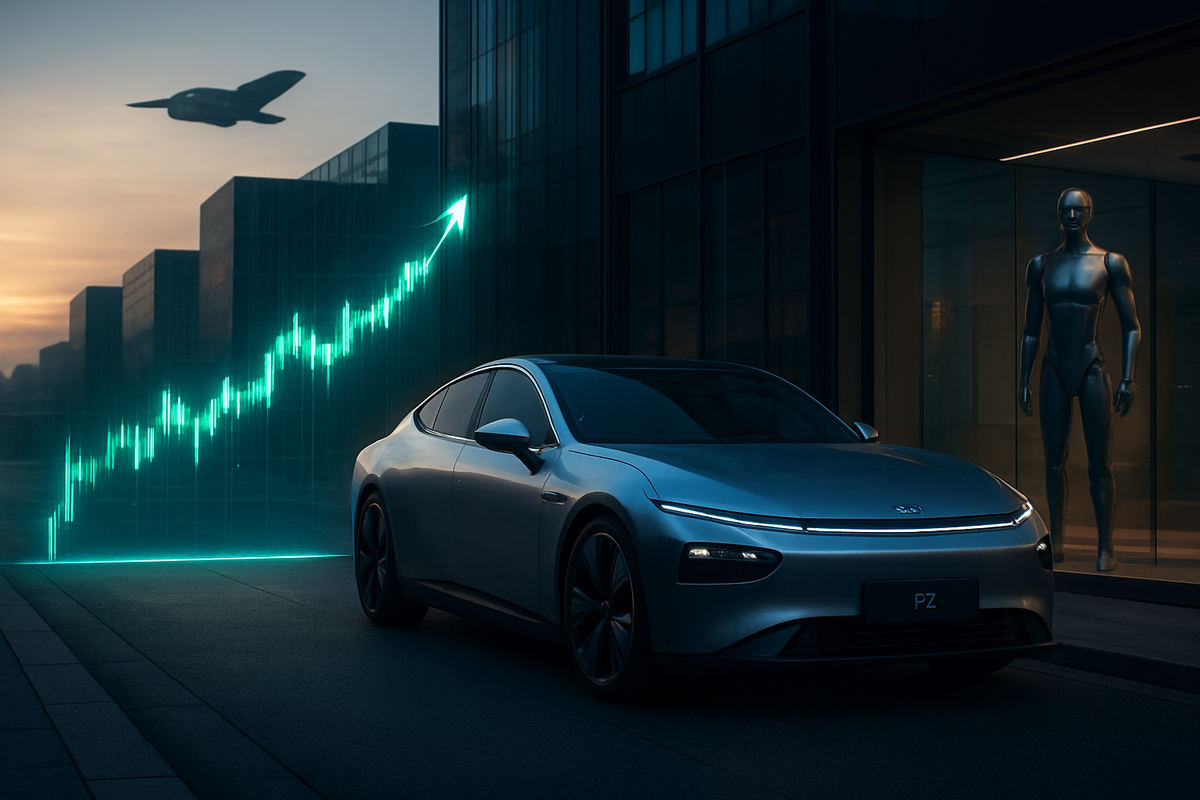
As the global electric vehicle market enters a pivotal transition phase, all eyes are on XPeng Inc. (NYSE: XPEV) as it prepares to release its fourth-quarter and full-year 2025 financial results on March 20, 2026. After a tumultuous start to the year that saw shares dip toward a 52-week low of $16.13, the stock has staged an impressive 21% technical recovery in the last two weeks, currently hovering just above the $20 mark. This rebound is more than just a relief rally; it represents a high-stakes bet by investors that the Guangzhou-based automaker is finally on the verge of its first-ever quarterly non-GAAP profit.
The immediate implications of this price action are significant. Market analysts suggest that XPeng is currently testing a major resistance level at its 200-day moving average. A positive surprise in the upcoming earnings report could serve as the catalyst for a definitive breakout, potentially propelling the stock toward the $25 to $30 range. Conversely, any indication that the company’s push into Extended-Range Electric Vehicles (EREV) or its "Physical AI" initiatives are draining cash faster than expected could see the stock retreat to its recent floors. With delivery numbers for January and February showing a seasonal slowdown, the narrative for the March 20 call has shifted entirely toward margins, profitability, and the roadmap for autonomous driving.
The Path from $15 to $20: A Technical and Strategic Rebound
The timeline leading up to this moment has been a rollercoaster for stakeholders. In late 2025, XPeng ended the year on a high note, but the momentum was abruptly halted in January 2026. The Chinese government’s introduction of a new 5% purchase tax on NEVs, replacing previous full exemptions, sent shockwaves through the industry. XPeng was hit particularly hard, with January deliveries falling to 20,011 units—a 34% year-over-year decline. By early February, the stock had bottomed out near $16, as investors feared the end of the hyper-growth era for Chinese startups.
However, the tide began to turn in late February and early March. The recovery was sparked by two key factors: the global launch of the P7+ and the strategic unveiling of XPeng’s 2nd Generation Visual-Language-Action (VLA) model. By integrating foundational L4 autonomous driving capabilities into its production fleet, XPeng signaled to the market that it was no longer just a car manufacturer but a "Physical AI" powerhouse. This shift in identity, combined with a narrowing net loss in the previous quarter—which sat at a mere 380 million yuan—convinced institutional buyers that a profitability "inflection point" was imminent. As of March 17, the stock's Relative Strength Index (RSI) has climbed to a neutral-bullish 58, suggesting there is still room for upward movement before the stock becomes overbought.
Market Dynamics: Winners, Losers, and the Battle for Profitability
In the current landscape, XPeng finds itself in a "Show-Me" position, sandwiched between the established dominance of BYD Company Limited (OTC: BYDDY) and the recent financial breakthrough of NIO Inc. (NYSE: NIO). NIO recently shocked the market on March 10 by reporting its first-ever quarterly net profit, causing its stock to surge 15%. This has put immense pressure on XPeng to follow suit. If XPeng delivers a profit on March 20, it would validate the "Big Three" Chinese startup narrative, potentially leading to a massive inflow of capital into the sector.
On the other side of the spectrum, Tesla, Inc. (NASDAQ: TSLA) continues to face headwinds in the China market. As BYD widens its lead with aggressive pricing and a more diverse model lineup, Tesla’s market share in China has plateaued at approximately 8.2%. For XPeng, Tesla's relative stagnation is an opportunity. By launching the 2026 P7+ and the G7 with both battery-electric and EREV options, XPeng is directly targeting the "charging dead zones" in Northern China and overseas markets where Tesla’s pure-BEV strategy struggles. Meanwhile, Li Auto Inc. (NASDAQ: LI) reported a slim profit in its latest filing but remains cautious about 2026 delivery targets, leaving a window open for XPeng to capture the spotlight as the next growth champion.
Beyond the Battery: The Shift to Physical AI and Global Scaling
The wider significance of XPeng’s current position lies in its fundamental pivot away from traditional EV metrics. The industry is no longer just about range and acceleration; it is about the "AI-defined vehicle." XPeng’s decision to mass-produce its "IRON" humanoid robot by the end of 2026 and begin scaled deliveries of flying vehicles marks a historical precedent in the automotive sector. This diversification is a calculated move to hedge against the slowing growth of the domestic Chinese car market and the rising regulatory barriers in the West.
Regulatory and policy implications are also playing a crucial role. To navigate the high tariffs imposed by the European Union, XPeng has utilized its manufacturing partnership with Magna in Austria. This move allows XPeng to brand itself as a global player with European production roots, a strategy that competitors like Geely and BYD are also exploring. Furthermore, XPeng’s focus on the VLA model positions it as a leader in the race for L4 autonomy, potentially creating a new revenue stream through software licensing—a move that mirrors the high-margin business models of Silicon Valley tech giants.
The Road Ahead: Scenarios and Strategic Pivots
Looking forward, the short-term trajectory of XPeng will be decided in the 48 hours following the March 20 earnings call. If the company confirms non-GAAP profitability, the immediate challenge will be scaling the EREV versions of the P7+ and G7 to meet demand in rural China and Europe. A successful rollout could see XPeng achieving its goal of 300,000+ total deliveries for 2026. However, if profitability remains elusive, management may be forced to pivot again, perhaps by slowing down its "Moonshot" projects like flying cars to preserve cash for its core automotive business.
In the long term, the market will be watching for the convergence of XPeng's humanoid robotics and its vehicle manufacturing. The "IRON" robot is intended to work on XPeng’s own assembly lines before being sold to external customers, a move that could significantly lower production costs and improve margins. The potential for a "Robot-as-a-Service" model represents a massive market opportunity that could decouple XPeng’s stock price from the traditional, cyclical automotive market.
Final Assessment: A High-Stakes Earnings Countdown
XPeng is currently standing at the most critical juncture in its decade-long history. The technical rebound from $15 to $20 has set the stage for a dramatic market move. The key takeaway for investors is that XPeng has successfully transitioned its brand from a niche EV maker to a diversified AI technology firm. Whether the financials have caught up to the vision remains the billion-dollar question that will be answered on Friday.
Moving forward, the market will be less interested in raw delivery numbers and more focused on gross margins and the adoption rate of XPeng’s advanced driver-assistance systems (ADAS). As the 5% purchase tax in China begins to normalize and global expansion via Magna takes hold, XPeng has a clear path to becoming a sustainable, profitable leader in the "Physical AI" era. Investors should watch for the $21.18 resistance level; a clean break above this mark post-earnings would likely signal the start of a new, long-term bull cycle for XPEV.
This content is intended for informational purposes only and is not financial advice.