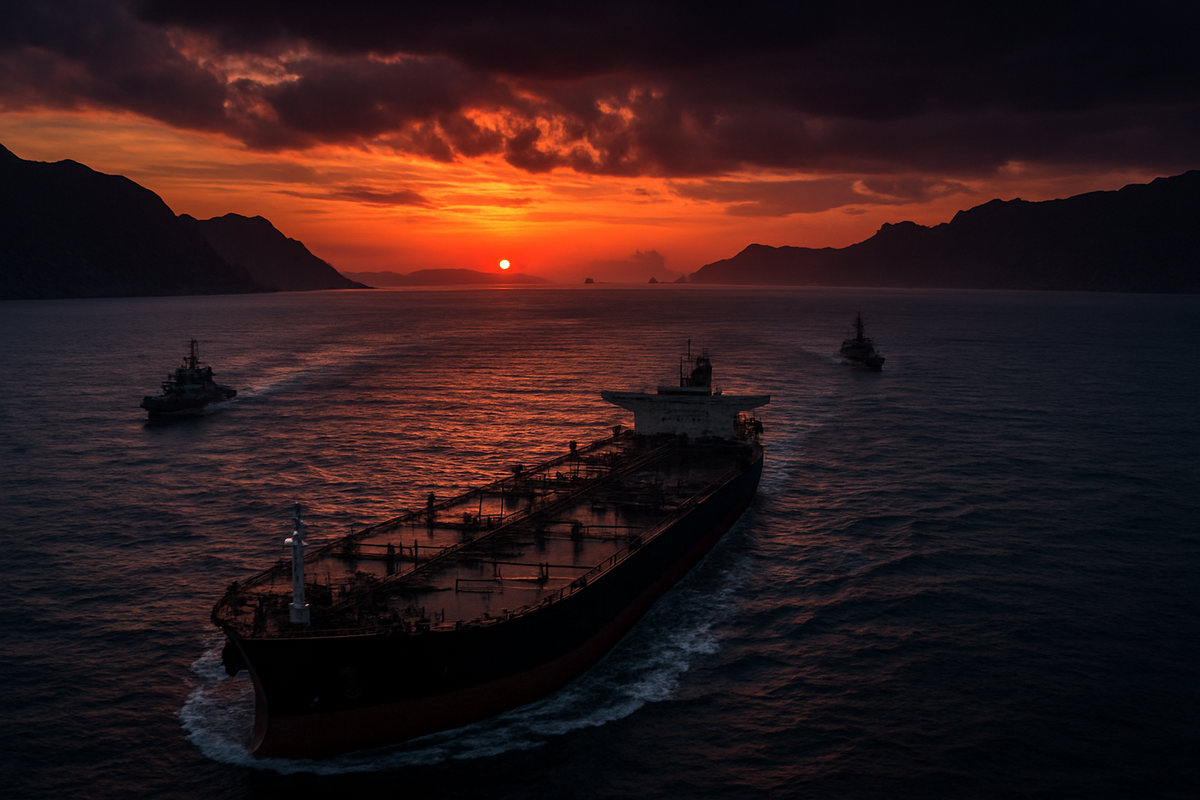
March 16, 2026 — The global energy landscape is currently navigating its most perilous stretch in decades as the Strait of Hormuz, the world’s most critical maritime artery for oil, remains "effectively closed" following a series of military escalations and Iranian threats. What began as a localized geopolitical skirmish in late February has metastasized into a full-blown energy crisis, stranding nearly 20 million barrels per day (mb/d) of crude and liquefied natural gas (LNG). The immediate implications have been felt at every fuel pump and factory floor globally, with West Texas Intermediate (WTI) and Brent crude benchmarks experiencing some of the most violent price swings in the history of the commodities market.
As of today, March 16, the initial "fear premium" that drove oil prices toward record highs has begun to cool, but the reprieve remains fragile. WTI, which flirted with $120 per barrel just a week ago, has retreated to approximately $94.70, while Brent crude has stabilized near the $100 mark. This retreat is not a sign of de-escalation in the Middle East, but rather the result of unprecedented intervention by Western governments and a strategic redirection of global supply chains. However, with the Islamic Revolutionary Guard Corps (IRGC) maintaining a "closed military zone" in the Strait, the threat of a prolonged structural deficit continues to haunt the global economy.
The current crisis traces its origins to February 28, 2026, when a joint U.S.-Israeli military operation targeted Iranian drone and missile infrastructure in response to regional provocations. By March 2, the IRGC retaliated by declaring the Strait of Hormuz—through which one-fifth of the world’s oil consumption passes—closed to all "hostile" traffic. The situation deteriorated rapidly; by March 12, twenty-one merchant vessels had been attacked by sea mines or "kamikaze" drones, including the Thai bulk carrier Mayuree Naree. Insurance providers, led by major P&I clubs, responded by canceling war-risk coverage, effectively ending commercial navigation through the waterway for the vast majority of the global fleet.
Market reaction was instantaneous and parabolic. In the first ten days of March, Brent crude prices surged by nearly 30%, evoking memories of the 2022 energy shock following the invasion of Ukraine. However, the Trump administration and the International Energy Agency (IEA) moved with a speed that surprised market participants. On March 11, a coordinated release of 400 million barrels from strategic reserves—including a record-breaking 172 million barrels from the U.S. Strategic Petroleum Reserve (SPR)—was announced to flood the market with liquidity. This "shock and awe" policy, combined with a temporary 30-day waiver on Russian oil sanctions granted by Treasury Secretary Scott Bessent, provided the necessary downward pressure to pull WTI back from its triple-digit peak.
Key stakeholders, including Saudi Aramco (TADAWUL: 2222), have pivoted to survival and mitigation strategies. The Saudi state giant has significantly ramped up flows through its 745-mile East-West Pipeline to the Red Sea port of Yanbu, bypassing the blocked Strait. Despite these efforts, the "quality over quantity" blockade enforced by Iran has left Asian markets—which receive over 80% of the oil transiting the Strait—scrambling for alternatives in a market that remains on a hair-trigger.
The fallout from the Hormuz disruption has created a stark divide between energy "winners" and "losers." Standing at the forefront of the winners are U.S. upstream majors like ExxonMobil (NYSE: XOM), Chevron (NYSE: CVX), and ConocoPhillips (NYSE: COP). These companies, with their vast Permian Basin assets, have become the primary beneficiaries of a "security premium." As Brent crude spiked, shares of ExxonMobil and Chevron saw double-digit gains, as investors flocked to companies with Western Hemisphere production that is immune to Middle Eastern naval blockades. ConocoPhillips, in particular, has been viewed as a "clean play" on higher prices, with its low-cost portfolio generating record cash flows at the $95–$100 price level.
Conversely, the refining sector in Asia has emerged as the primary victim of the blockade. Sinopec (HKG: 0386), the world’s largest refiner, has been forced to slash throughput by nearly 10% due to a sudden lack of medium-sour crude imports. The technical difficulty of switching to lighter U.S. grades has left many Asian refineries operating at half capacity, squeezing margins and hurting regional equity markets. Similarly, global shipping giants like A.P. Møller - Mærsk A/S (CPH: MAERSK-B) and Hapag-Lloyd AG (ETR: HLAG) are facing a logistical nightmare. By redirecting vessels around the Cape of Good Hope, these companies have seen their operational costs skyrocket, leading to a fourfold increase in freight rates for Middle East-to-Asia routes.
In the European theater, the impact has been mixed. TotalEnergies SE (NYSE: TTE) has taken the extraordinary step of freezing fuel prices at its stations to mitigate public backlash, while RWE AG (ETR: RWE) has accelerated a multi-billion dollar pivot toward U.S. LNG infrastructure to secure long-term energy independence. The crisis has reinforced the value of geographical diversification, punishing those most reliant on the fragile stability of the Persian Gulf.
The closure of the Strait of Hormuz in 2026 is more than a temporary price spike; it represents a fundamental shift in the global energy order. This event fits into a broader trend of "energy regionalism," where the globalized, just-in-time oil market is being replaced by a system of secure, allied supply chains. The Trump administration’s decision to invoke the Defense Production Act to restart shuttered offshore platforms in California signals a return to aggressive "energy dominance" policies that prioritize domestic production over global market stability.
Historically, the market has seen similar threats to the Strait in 1984 and 2011, but the 2026 crisis is unique due to the sophistication of drone warfare and the decreased spare capacity of OPEC+. The ripple effects are already being felt in the automotive and manufacturing sectors, where rising energy costs are threatening to reignite inflation just as central banks were beginning to normalize rates. The regulatory landscape is also shifting; the IEA’s unprecedented 400-million-barrel release has sparked a debate over the long-term viability of strategic reserves, which now sit at their lowest levels in three decades.
Furthermore, the "Russian waiver" implemented by the U.S. Treasury highlights a cold-eyed realism in current foreign policy: the need to keep the global economy afloat often supersedes long-term geopolitical sanctions. This precedent may change how sanctions are applied in future conflicts, suggesting that in the hierarchy of global concerns, the "price at the pump" remains the ultimate political metric.
Looking ahead, the market faces two distinct paths. In the short term, the primary question is whether Iran will maintain its "selective transit" policy or if the U.S. Navy will attempt a forceful reopening of the Strait. Any military move to clear sea mines could lead to another price spike toward $130, while a diplomatic resolution—however unlikely it seems today—could see oil prices collapse back toward the $70 range. Strategic pivots are already underway; expect to see a massive acceleration in U.S. LNG export capacity and a renewed focus on nuclear energy projects across Europe and Asia as "Hormuz-proofing" becomes a standard corporate strategy.
Market opportunities are emerging in the midstream and energy services sectors. Companies capable of enhancing pipeline capacity or providing maritime security will likely see a surge in demand. However, the long-term challenge remains the replenishment of the SPR. Energy Secretary Chris Wright has committed to a massive buyback program, but doing so without driving prices back up will require a delicate balancing act that could take years to complete. Investors should prepare for a "new normal" of high volatility, where geopolitical headlines carry more weight than traditional supply-and-demand fundamentals.
The Strait of Hormuz crisis of 2026 has served as a brutal reminder of the world’s continued dependence on a single, vulnerable waterway. While the immediate retreat of WTI from its $120 high offers some relief to consumers, the underlying structural deficit remains unresolved. The key takeaways for the market are clear: U.S. energy independence is no longer a political slogan but a critical economic buffer, and the "security of supply" has officially replaced "cost of production" as the most important factor in energy valuation.
Moving forward, the market will be characterized by extreme sensitivity to Middle Eastern naval activity and the pace of U.S. shale production increases. Investors should watch for the expiration of the 30-day Russian sanctions waiver in mid-April and any signs of "force majeure" extensions from Middle Eastern LNG producers. The lasting impact of this event will be a permanent shift in how energy is priced, traded, and secured. In the world of 2026, the only certainty is that the era of cheap, easy energy has been replaced by a period of strategic, high-stakes competition.
This content is intended for informational purposes only and is not financial advice.