In a high-stakes gambit that has reverberated across global energy markets, Saudi Arabia has effectively "turned off the tap" to the United States in the first quarter of 2026. This deliberate reduction in crude exports to the American market—which recently bottomed out at less than 500,000 barrels per day (bpd)—marks a significant shift from the Kingdom's late-2025 strategy of pursuing market share. By targeting the U.S. Gulf Coast, Riyadh is leveraging the extreme transparency of American inventory data to engineer a perception of global scarcity, successfully driving prices upward despite a backdrop of broader geopolitical instability.
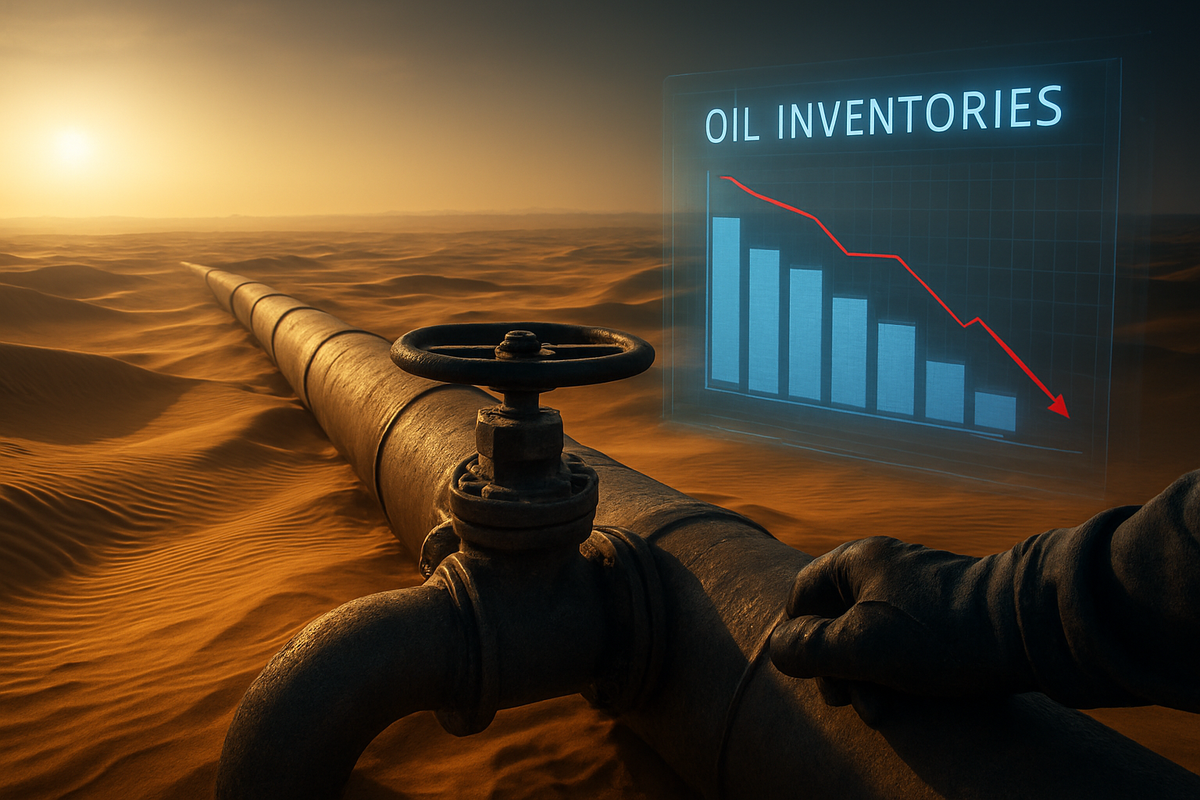
The immediate implications have been severe for both consumers and industry players. As U.S. commercial oil inventories plummet at an unprecedented rate, the price of West Texas Intermediate (WTI) has surged to nearly $120 per barrel, converging with the international Brent benchmark. This strategic "inventory management" has forced the U.S. government to take drastic measures, including a massive release from the Strategic Petroleum Reserve (SPR), leaving the nation’s emergency backstop at its lowest level in decades.
A Calculated Desertion of the American Market
The road to this supply squeeze began in late 2025, when Saudi Arabia—represented by the state-owned giant Saudi Arabian Oil Company (TADAWUL: 2222), commonly known as Saudi Aramco—briefly flirted with abandoning its unofficial $100 price floor to reclaim market share from high-cost producers. However, as 2026 dawned, a combination of regional conflict and a strategic pivot by the OPEC+ alliance led to the "Q1 Pause." On January 4, 2026, the Kingdom and seven other members of the cartel announced they would halt all planned production increases through March to counter seasonal demand weakness.
The strategy took a more targeted turn in February 2026. Rather than broad, across-the-board production cuts, Saudi energy officials focused specifically on throttling heavy sour crude exports to the U.S. market. The impact was immediate: a mid-February report from the Energy Information Administration (EIA) revealed a staggering 9-million-barrel weekly drawdown in U.S. commercial crude stocks. This "shock" report acted as a catalyst for market bulls, with Helima Croft of RBC Capital Markets noting that the Kingdom was intentionally utilizing the "high transparency" of the EIA to signal "visible tightness" to a nervous market.
By early March 2026, the situation was further complicated by a geopolitical crisis in the Middle East that led to the near-closure of the Strait of Hormuz. In response, Saudi Aramco (TADAWUL: 2222) accelerated the redirection of its remaining export volumes through its East-West pipeline to the Red Sea port of Yanbu, bypassing the Persian Gulf entirely. This pivot has allowed Saudi Arabia to maintain its shipments to Asian markets like China and India—where inventory reporting is notoriously opaque—while leaving the U.S. market in a state of physical and psychological deficit.
Refiners in the Crosshairs: Winners and Losers
The "turning off the tap" strategy has created a stark divide between the winners and losers in the corporate energy sector. The primary victims have been independent U.S. refiners situated along the Gulf Coast, who rely heavily on the specific grades of heavy and medium sour crude that Saudi Arabia provides. Companies such as Valero Energy Corporation (NYSE: VLO) and PBF Energy Inc. (NYSE: PBF) have faced soaring feedstock costs and narrowed margins. Marathon Petroleum Corporation (NYSE: MPC) has similarly struggled to find suitable replacements for the Saudi barrels, leading to reduced refinery utilization rates in several key hubs.
Conversely, integrated oil majors with global reach have found ways to navigate the volatility. Exxon Mobil Corporation (NYSE: XOM) and Chevron Corporation (NYSE: CVX) have utilized their diversified upstream assets to mitigate the impact of rising crude prices on their downstream operations, though both reported significant volatility in their refining segments in recent earnings calls. While the high crude price benefits the production arms of these companies, the scarcity of specific crude grades has disrupted the refined product balance, particularly for diesel and jet fuel.
In the infrastructure and services sector, the shift in Saudi export logistics has created unexpected opportunities. Saipem S.p.A. (BIT: SPM) was recently awarded roughly $600 million in offshore contracts by Saudi Aramco to support the expansion of production and maintenance capabilities, as the Kingdom seeks to harden its export infrastructure against regional disruptions. Meanwhile, Saudi Aramco (TADAWUL: 2222) itself remains the ultimate winner; despite lower export volumes to the West, the higher price per barrel has bolstered its bottom line, with the company reporting a 2025 profit of $104.7 billion just as the current crisis peaked.
The EIA Signal: A Masterclass in Market Psychology
The wider significance of this event lies in the weaponization of data transparency. For years, energy analysts have pointed out that Saudi Arabia views the U.S. oil market as the "global shop window." Because the U.S. provides the most accurate and frequent data on oil stocks through the EIA, any reduction in supply there is immediately visible to every trader in the world. By "turning off the tap" to the U.S. while keeping flows to Asia relatively stable, Riyadh can create a global price surge without having to cut as much overall production as it might otherwise need to.
This strategy draws direct comparisons to the "inventory management" tactics seen in 2017 and during the 2020 price wars, but with a more sophisticated, regional focus. It represents a move away from the "volume-at-all-costs" approach and toward a "value-per-barrel" strategy that prioritizes price stability for the Saudi domestic budget over market share in the West. It also reflects a cooling of the long-standing "oil-for-security" relationship between Washington and Riyadh, as the Kingdom increasingly aligns its economic interests with the growing demand centers in the East.
Furthermore, this event highlights the increasing fragility of the global supply chain. The redirection of five million barrels per day via the Red Sea is a massive logistical feat that underscores the strategic importance of the Yanbu port. This shift suggests that the "Hormuz risk" is being permanently priced into the market, and that the traditional routes of global energy trade are undergoing a fundamental and perhaps permanent realignment.
The SPR Gamble and the Road Ahead
Looking ahead, the market faces a period of extreme uncertainty. In a bid to counter the Saudi squeeze, the U.S. government ordered the release of 172 million barrels from the Strategic Petroleum Reserve in March 2026. This move was intended to provide a bridge for refiners, but with only approximately 100 million barrels of readily accessible emergency reserves remaining, the "emergency" tool is nearly exhausted. If the Saudi "tap" remains closed and the Hormuz disruption persists, the U.S. will have little leverage left to prevent a further price spiral.
In the short term, the market will be watching the Permian Basin for a response. While U.S. shale producers like Occidental Petroleum Corporation (NYSE: OXY) and Devon Energy Corporation (NYSE: DVN) are benefiting from triple-digit prices, they face logistical constraints and a cautious investor base that demands capital discipline over rapid growth. A significant surge in U.S. domestic production could eventually offset the Saudi cuts, but this would take months, if not years, to materialize.
Long-term, this episode may force a strategic pivot in U.S. energy policy toward even greater diversification and a renewed focus on domestic refining capabilities for light, sweet crude. For Saudi Arabia, the challenge will be maintaining its delicate balancing act between the East and West. If the Kingdom pushes prices too high, it risks accelerating the global transition toward electric vehicles and renewable energy, potentially destroying the very demand it seeks to monetize.
Summary of the Market Landscape
Saudi Arabia’s "inventory management" strategy of 2026 has proven that the Kingdom remains the world’s most influential "swing producer," capable of moving markets not just through production levels, but through the tactical redirection of supply. By starving the transparent U.S. market, Riyadh has successfully buoyed global prices and signaled its strategic independence from Western policy pressures.
For investors, the coming months will require a close watch on two primary indicators: the weekly EIA inventory reports and the status of the East-West pipeline flows to Yanbu. While high oil prices provide a windfall for producers, the strain on refiners like Valero (NYSE: VLO) and the depletion of the U.S. SPR create a volatile environment with significant downside risks for the broader economy. The "turning off the tap" event is not just a temporary supply hiccup; it is a clear manifestation of a new era of energy brinkmanship that will define the geopolitical and financial landscape for years to come.
This content is intended for informational purposes only and is not financial advice.