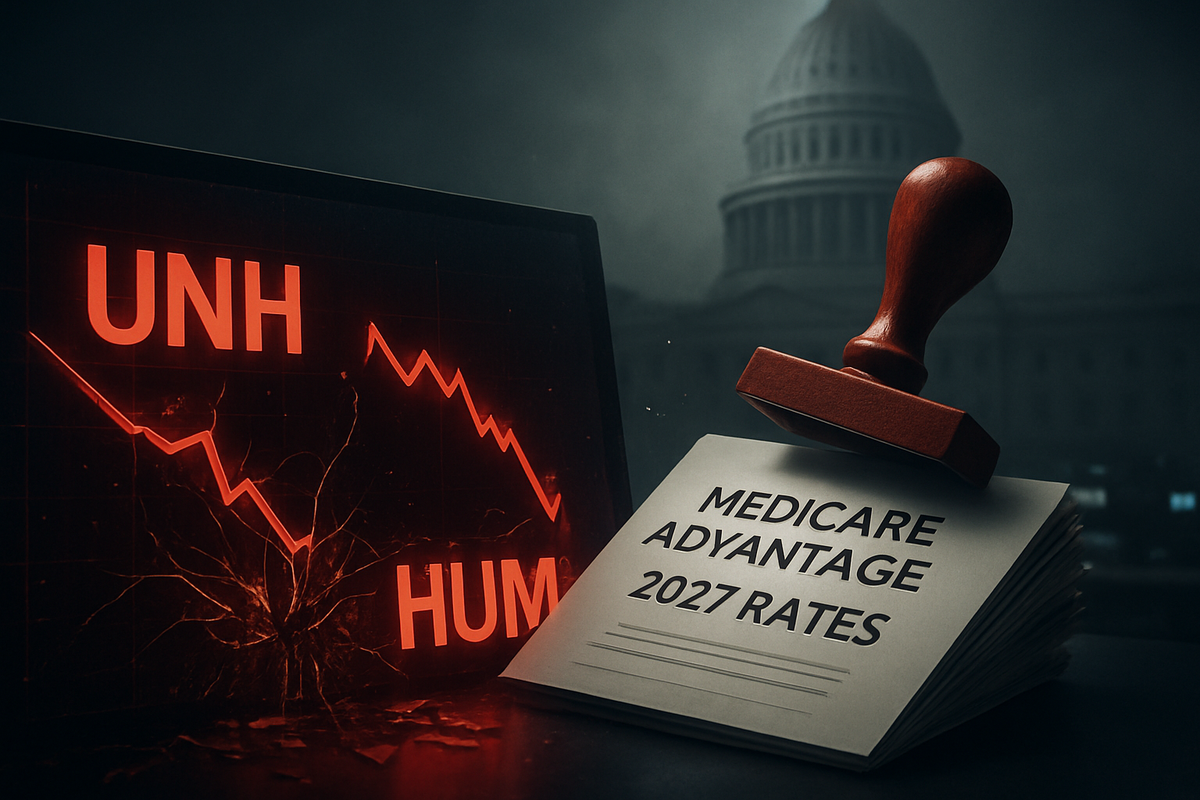
The healthcare sector is reeling this February as a series of aggressive regulatory maneuvers from the Trump administration has sent shockwaves through the insurance industry. In what analysts are already calling the "Medicare Rate Shock of 2026," the proposed 2027 payment rates for Medicare Advantage (MA) have effectively frozen revenue growth for the nation’s largest insurers. The announcement has triggered a massive sell-off, erasing billions in market value and forcing a fundamental re-evaluation of the highly profitable private Medicare market.
The immediate fallout has been centered on the industry's titans. UnitedHealth Group (NYSE: UNH) has seen its shares plunge 13% year-to-date, while Humana Inc. (NYSE: HUM), which is more heavily reliant on Medicare Advantage, has tumbled over 20% in the wake of the news. The "flat" rate proposal—a stark departure from the generous annual increases seen over the last decade—signals a new era of austerity and intense regulatory scrutiny for managed care organizations.
A Regulatory Earthquake: The 0.09% 'Shock'
The crisis began in late January 2026, when the Centers for Medicare & Medicaid Services (CMS), under the direction of the Trump administration, released its Advance Notice for 2027 payment rates. Contrary to Wall Street's expectations of a 4% to 6% increase, CMS proposed a net average payment boost of just 0.09%. When adjusted for inflation and rising clinical costs, the proposal effectively amounts to a significant funding cut for private insurers.
The timeline of the collapse accelerated following comments from the President, who publicly stated that insurers were "making too much money" and needed to "make a lot less" to protect the solvency of the Medicare Trust Fund. This rhetorical shift was accompanied by a proposal to eliminate payments for "chart reviews"—a common industry practice used to identify patient diagnoses and increase reimbursement levels. CMS estimated this single change would strip 1.53 percentage points from the rate, targeting what the administration described as "upcoding inefficiencies."
The Fallout: Ground Zero for Managed Care
The impact of this "rate shock" has not been felt equally across the sector, with Humana Inc. (NYSE: HUM) bearing the brunt of the damage. Because Medicare Advantage accounts for the vast majority of Humana’s revenue, the company has been described as "ground zero" for the regulatory shift. Following the CMS announcement, Humana issued a stark guidance update, revealing a potential $3.5 billion profit headwind for the upcoming fiscal year. The company’s stock, which traded above $310 just months ago, has now cratered into the $180 range as investors flee the uncertainty of its core business model.
UnitedHealth Group (NYSE: UNH), while more diversified through its Optum health services and global operations, has not been immune. The stock suffered its worst single-day drop in years following the January announcement. Beyond the rate freeze, UnitedHealth is facing a "double whammy" of regulatory pressure: a renewed Department of Justice (DOJ) probe into its internal billing practices and new legislation targeting Pharmacy Benefit Managers (PBMs). The Consolidated Appropriations Act of 2026 has mandated a 100% rebate pass-through to plan clients, directly threatening the lucrative margins of UnitedHealth's OptumRx division.
A Fundamental Shift in Industry Trends
This event marks a definitive end to the "gold rush" era of Medicare Advantage, which saw insurers experience double-digit enrollment growth and high margins for nearly twenty years. The Trump administration’s move to "right-size" the program reflects a broader bipartisan trend toward reining in the costs of privatized Medicare. Historically, insurers could rely on "Star Ratings" bonuses to offset lower base rates, but a "Star Ratings Cliff" in early 2026 saw many plans lose their quality-focused bonuses due to tightened performance metrics.
The ripple effects are extending beyond the large-cap insurers. CVS Health (NYSE: CVS), which owns Aetna, has also seen its stock under pressure as it attempts to balance its retail pharmacy struggles with the tightening MA margins. Competitors are already signaling a shift in strategy, moving away from aggressive member acquisition and toward "margin over membership." For the 2026 and 2027 plan years, experts anticipate insurers will exit hundreds of rural counties where providing care is no longer profitable under the new rate structure.
The Road Ahead: Strategic Pivots and Market Contraction
Looking forward, the healthcare industry faces a grueling 60-day comment period during which lobbying groups like AHIP (America's Health Insurance Plans) will attempt to pressure CMS into revising the 2027 rates upward. However, with the administration’s current stance focused on fiscal conservatism and drug price transparency, a significant reversal appears unlikely. Insurers will likely respond by cutting supplemental benefits—such as dental, vision, and gym memberships—that have traditionally been used to lure seniors into private plans.
In the long term, this "shock" may lead to a wave of consolidation. Smaller players that cannot survive the margin compression may become acquisition targets for more diversified entities or be forced to exit the Medicare market entirely. For the giants like UnitedHealth Group (NYSE: UNH) and Humana Inc. (NYSE: HUM), the focus will shift toward internal efficiencies and the integration of artificial intelligence to lower administrative costs, as the days of "easy growth" through government subsidies appear to be over.
Summary and Investor Outlook
The Medicare Rate Shock of 2026 represents a pivotal moment for the U.S. healthcare system. The combination of flat-line reimbursement rates, PBM reform, and aggressive "upcoding" crackdowns has fundamentally altered the risk-reward profile of the managed care sector. For investors, the takeaway is clear: the era of predictable, high-margin growth in Medicare Advantage is transitioning into a period of high volatility and regulatory headwinds.
As the market moves forward, investors should closely watch the final rate announcement due in April 2026 and any further legislative action regarding PBM transparency. While the current sell-off may present a "buy the dip" opportunity for those who believe the industry can innovate its way out of the crisis, the prevailing sentiment is one of caution. The "Rate Shock" has proven that in the world of government-funded healthcare, the regulatory pen is often mightier than the corporate balance sheet.
This content is intended for informational purposes only and is not financial advice.