As of January 19, 2026, Caterpillar Inc. (NYSE: CAT) stands as the undisputed titan of the Dow Jones Industrial Average, capping off a historic 12-month run that saw its share price surge nearly 62%. Once viewed primarily as a barometer for global construction and mining, the company has successfully rebranded itself as a linchpin of the artificial intelligence revolution. This metamorphosis has decoupled the stock from traditional industrial cycles, propelling it to record highs as it becomes the primary provider of the "muscle" behind the digital age's massive power requirements.
The immediate implications of this rally are profound for the broader market, signaling a shift in investor appetite toward "old economy" companies that provide the physical infrastructure necessary for high-tech expansion. By transitioning its focus from earth-moving equipment to sophisticated on-site power generation, Caterpillar has not only shielded itself from a cooling global construction market but has also captured a dominant share of the burgeoning data center utility sector. This strategic pivot has left analysts re-evaluating the company’s valuation, treating it more like a high-growth technology enabler than a legacy manufacturer.
The Engines of Growth: Data Centers and the Energy Pivot
The story of Caterpillar’s 2025 dominance is rooted in the explosive demand for AI-capable data centers, which consume power at a scale previously unseen in the private sector. Throughout 2024 and 2025, the company’s Energy & Transportation (E&T) segment underwent a radical expansion, officially surpassing the Construction Industries segment in total revenue for the first time in the company's 100-year history. This shift was fueled by the "gigawatt era," where tech giants and specialized developers required massive, on-site primary power solutions to bypass long utility interconnection queues.
Caterpillar entered 2026 with a record-breaking $40 billion backlog, a significant portion of which is dedicated to high-capacity natural gas turbines and reciprocating engines. Key to this success was the performance of its subsidiary, Solar Turbines, which provides the large-scale primary power units preferred by hyperscale data center operators. While competitors scrambled to adjust their supply chains, Caterpillar leveraged its existing manufacturing footprint, including a $725 million expansion of its Lafayette, Indiana, facility, to stay ahead of the curve.
Initial market reactions to this shift were skeptical in early 2024, but by the third quarter of 2025, the narrative had firmly shifted. Major institutional investors began viewing Caterpillar as a "pick-and-shovel" play for the AI boom. The timeline of this ascent was punctuated by a series of massive contract wins, including a landmark deal with Hunt Energy to deliver a full gigawatt of power capacity across North America. By the time the final 2025 earnings reports were teased in early January 2026, the market had fully priced in Caterpillar’s new role as the premier energy partner for Silicon Valley.
Winning the Industrial Divide: Winners and Losers
The surge in Caterpillar’s valuation has created what analysts are calling the "Great Industrial Divide." While Caterpillar (NYSE: CAT) soared, its traditional rival Deere & Company (NYSE: DE) faced a challenging 2025, with its stock price returning a modest 12% compared to Caterpillar's 62%. Deere has been hampered by a prolonged agricultural recession, as falling net farm income and high interest rates forced North American farmers to slash equipment spending. Without a dedicated power generation segment to offset the decline in machinery sales, Deere has struggled to keep pace with the broader Dow.
In the power generation space, Cummins (NYSE: CMI) remains a formidable competitor, but it has largely been relegated to the backup power and standby market. While Cummins saw a respectable 20% gain in 2025, it lacked Caterpillar’s deep penetration into the "primary" on-site power market—the systems that run 24/7 rather than just during outages. This distinction proved critical as data center developers sought long-term energy independence from struggling municipal grids.
Benefiting alongside Caterpillar is Vertiv (NYSE: VRT), a specialist in data center digital infrastructure. The two companies solidified a strategic partnership in 2025 to develop integrated "Power & Cooling" architectures. This collaboration has allowed both firms to capture higher margins by offering a turnkey solution for the thermal and electrical challenges of AI chips. Conversely, traditional utility companies may see this trend as a threat, as large-scale industrial users increasingly opt for self-generation, potentially eroding the long-term industrial load growth that utilities typically rely upon.
Infrastructure and the Gigawatt Era: A Perfect Macro Storm
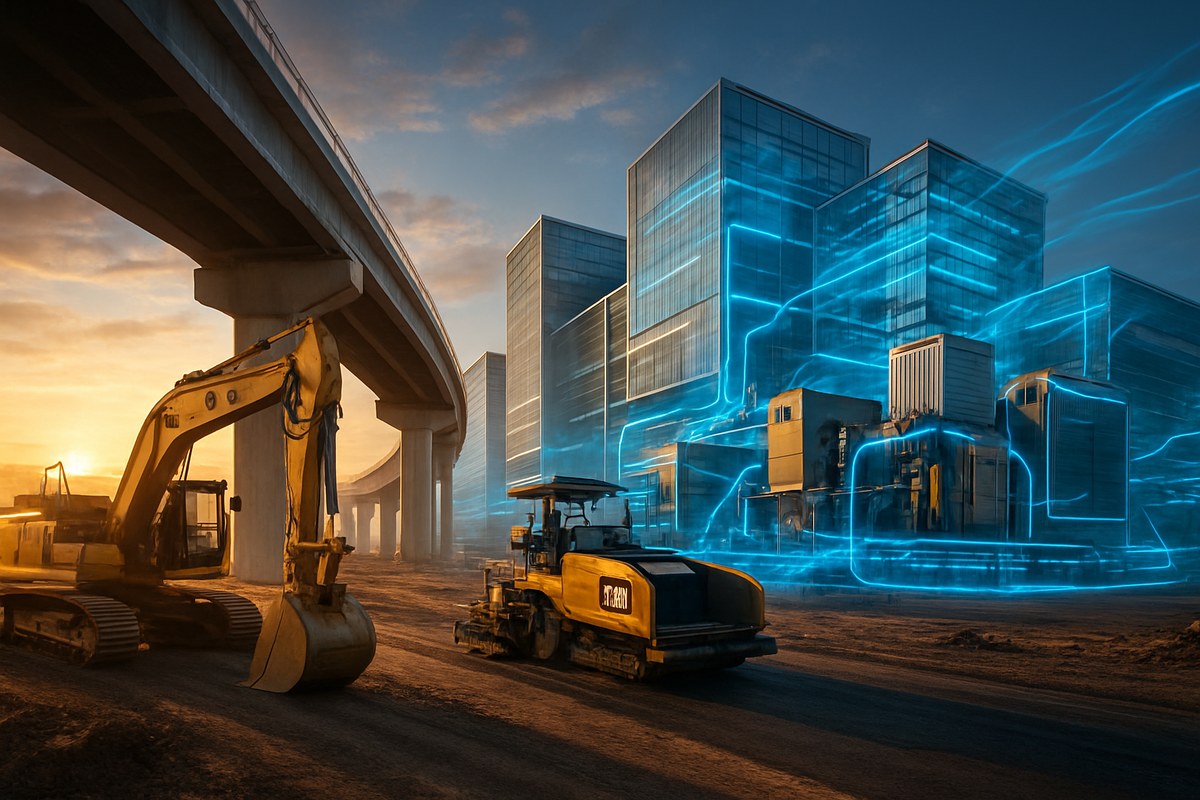
Caterpillar’s success is not solely a product of the AI boom; it is also the beneficiary of a "perfect storm" of domestic policy and global trends. The continued rollout of the Infrastructure Investment and Jobs Act (IIJA) provided a sturdy floor for the company’s traditional construction business. Throughout 2025, federal funds were actively deployed into large-scale road, bridge, and telecommunications projects across the United States, ensuring that demand for Caterpillar’s "yellow iron" remained steady even as the power segment accelerated.
This dual-engine growth model—traditional infrastructure recovery paired with AI energy needs—echoes historical precedents such as the post-WWII industrial boom, where Caterpillar provided the tools to rebuild both the physical world and the burgeoning power grid. Today, the "infrastructure" being built is as much digital as it is physical. The regulatory environment has also played a role; as the EPA and other agencies tighten emissions standards, Caterpillar’s investment in hydrogen-ready engines and low-emission natural gas turbines has positioned it as the preferred choice for companies looking to meet ESG goals without sacrificing power density.
The ripple effects are being felt across the industrial landscape. Competitors who focused too heavily on purely electric or small-scale solutions are now pivoting to mimic Caterpillar’s heavy-duty gas turbine strategy. However, Caterpillar’s massive service network and global distribution footprint provide a competitive moat that is difficult to replicate. The company’s ability to service these gigawatt-scale power plants in remote locations gives it a distinct advantage over newer entrants in the energy transition space.
The 2026 Roadmap: Scaling for a High-Power Future
Looking toward the remainder of 2026 and into 2027, the primary challenge for Caterpillar will be execution. With a $40 billion backlog to clear, the company must ensure its supply chain can handle the volume without sacrificing quality. The ongoing expansion in Lafayette is expected to reach full capacity by mid-2026, which should alleviate some of the production bottlenecks that limited growth in late 2025. Investors are also watching for a potential strategic pivot into more aggressive battery storage and hybrid power systems, which could further solidify the company's energy credentials.
In the short term, the market remains bullish, with median price targets for 2026 ranging between $604 and $630. There are, however, potential headwinds. Should interest rates remain elevated for longer than anticipated, the capital-intensive nature of data center construction could slow down, potentially cooling the demand for new power units. Additionally, any significant slowdown in the rollout of IIJA infrastructure funds could expose the cyclical vulnerabilities that Caterpillar has worked so hard to mitigate.
Scenario planning for 2026 suggests that Caterpillar will continue to outperform as long as the "compute-to-power" ratio remains high. As AI models become more complex, the demand for reliable, off-grid power will only increase. Caterpillar is currently testing its next generation of modular power plants, which could allow for even faster deployment of data center capacity. If successful, this could open up a new recurring revenue stream in power-as-a-service, moving the company even further away from the volatile world of equipment sales.
Final Thoughts: The New Industrial Standard
Caterpillar’s performance in 2025 and its position in early 2026 represent a fundamental shift in what it means to be an industrial leader. By successfully navigating the intersection of traditional infrastructure and cutting-edge technology, the company has proven that legacy brands can adapt and thrive in the digital age. The key takeaway for investors is that Caterpillar is no longer just a "tractor company"; it is a critical infrastructure provider for the 21st century's most important technology.
Moving forward, the market will be watching for the company’s ability to maintain its margins amidst rising material costs and its success in integrating more sustainable energy solutions into its portfolio. The "Great Industrial Divide" is likely to persist, with Caterpillar leading the charge while companies focused on more traditional, cyclical markets may struggle to find the same level of growth.
As 2026 unfolds, the focus will remain on the power segment. If Caterpillar can continue to deliver on its backlog while expanding its footprint in the AI energy ecosystem, its status as a Dow leader will be secure for years to come. For the savvy investor, the lesson of Caterpillar’s recent surge is clear: in the race for AI dominance, do not overlook the companies providing the power to keep the lights on.
This content is intended for informational purposes only and is not financial advice.