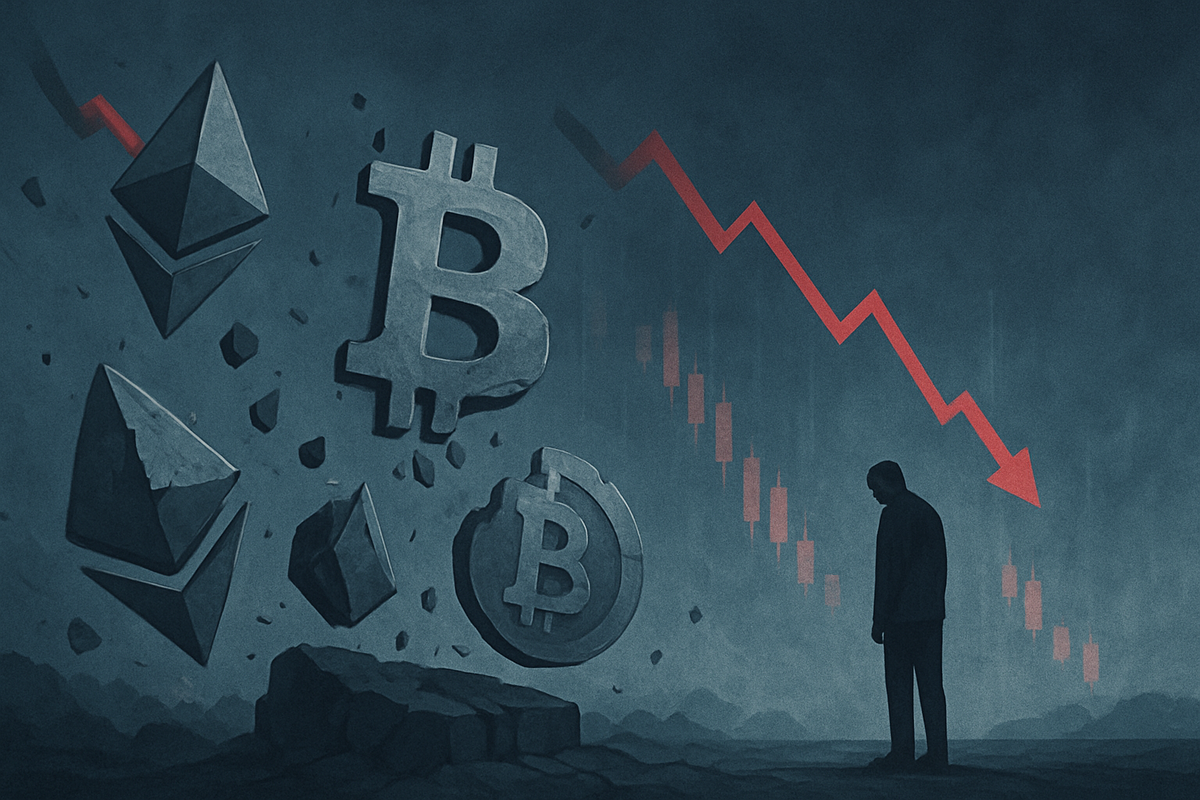
As of December 2, 2025, the digital asset landscape is in the throes of a significant downturn, with a pervasive "Extreme Fear" sentiment gripping the cryptocurrency market. This widespread sell-off, characterized by sharp declines in major cryptocurrencies, is sending ripple effects throughout the financial ecosystem, immediately threatening the foundational support retail traders have provided to the broader stock market. The current environment suggests a pronounced "risk-off" mentality, diminishing both the capital and the confidence of individual investors who have increasingly diversified into digital assets.
The immediate implications are stark: retail traders, many of whom entered the crypto space with enthusiasm and often leveraged positions, are facing substantial losses. This erosion of wealth and sentiment directly impacts their capacity to engage in "buy the dip" strategies or inject fresh capital into equities. With Bitcoin (BTC) experiencing a considerable drop from its recent peaks and altcoins following suit, the crypto market's volatility is now acting as a leading indicator of wider de-risking trends, potentially signaling further headwinds for major stock market benchmarks.
Crypto Carnage: A Deep Dive into the Sell-Off
The current cryptocurrency sell-off is a multifaceted event, driven by a confluence of macroeconomic pressures, profit-taking, and regulatory uncertainties. Bitcoin, the market's bellwether, has witnessed a significant depreciation, plummeting approximately 33% from its October peak of around $126,210.50 to below $85,000 in early December. This decline is mirrored across the altcoin market, with Ethereum (ETH) down about 7% from a week prior and Solana (SOL) experiencing a similar percentage drop on December 1st alone. The widely cited Crypto Fear & Greed Index is firmly entrenched in "Extreme Fear" territory, underscoring the deep pessimism prevalent among investors.
Several key factors are fueling this downturn. A prevailing "risk-off" sentiment in the broader global market, exacerbated by ongoing uncertainty surrounding the Federal Reserve's interest rate decisions and potential rate hikes from the Bank of Japan, is pushing investors away from riskier assets. This macroeconomic backdrop is compounded by a wave of profit-taking from institutional and long-term crypto holders, eager to lock in gains from previous rallies. Simultaneously, stalled progress on clear cryptocurrency regulation continues to undermine market confidence, creating an environment of uncertainty that deters new investment.
The correlation between the crypto market and technology stocks is also playing a significant role. The current crypto sell-off is tracking closely with a broader downturn in technology companies, particularly those within the AI sector. This indicates that many high-risk investors hold positions in both asset classes, leading to a synchronized unwinding of risk. A particularly sharp drop in prices on December 1st triggered nearly $1 billion in leveraged crypto position liquidations, as numerous traders failed to meet margin requirements. This cascade of forced selling has only intensified the downward pressure, creating a feedback loop of declining prices and increased fear.
Initial market reactions have been swift and largely negative. Stocks with significant exposure to the crypto industry have been "hammered," reflecting the contagion effect. The broader stock market also felt the pinch, with the S&P 500, Nasdaq-100, and Dow Jones Industrial Average all closing lower on December 1st. This suggests that the "risk-off" sentiment originating in the crypto space is spilling over into traditional equities, weakening overall market performance.
Corporate Crossroads: Winners and Losers in a Volatile Market
The ongoing cryptocurrency sell-off is creating a distinct divide among public companies, with some facing significant headwinds while others may find unexpected opportunities amidst the market turmoil. Companies with direct or indirect exposure to the crypto market, particularly those heavily reliant on retail investor sentiment or the performance of digital assets, are likely to be among the biggest losers. Conversely, firms with robust balance sheets, diversified revenue streams, or those that benefit from a flight to safety could emerge relatively unscathed, or even strengthen their positions.
Companies that have heavily invested in Bitcoin or other cryptocurrencies on their balance sheets, such as MicroStrategy Inc. (NASDAQ: MSTR), are experiencing direct hits to their asset values. As Bitcoin's price tumbles, the carrying value of their digital assets decreases, potentially impacting their financial statements and investor perception. Similarly, companies involved in cryptocurrency mining, like Riot Platforms Inc. (NASDAQ: RIOT) or Marathon Digital Holdings Inc. (NASDAQ: MARA), face reduced profitability as the value of mined coins declines and the cost of operations remains high. The decreased enthusiasm for crypto could also dampen demand for their services and hardware.
Furthermore, financial technology (FinTech) companies and trading platforms that cater specifically to retail crypto investors, such as Coinbase Global Inc. (NASDAQ: COIN), are likely to see reduced trading volumes and lower fee revenues. A prolonged period of "Extreme Fear" and declining asset prices typically leads to less active trading and fewer new entrants, directly impacting their core business models. Exchange-traded funds (ETFs) designed to offer leveraged returns on crypto-related stocks, which have already plummeted over 80% this year, highlight the severe impact on investment vehicles tied closely to the digital asset market.
On the flip side, companies that offer traditional, less volatile investment options or have strong defensive characteristics might see increased interest. Traditional financial institutions that have maintained a cautious stance on direct crypto exposure could be viewed as safer havens. Companies in sectors that are typically resilient during economic downturns, such as utilities or consumer staples, might also attract capital fleeing riskier assets. Additionally, firms providing robust cybersecurity solutions (e.g., Palo Alto Networks Inc. (NASDAQ: PANW)) or secure digital infrastructure could see increased demand as the industry grapples with the fallout and potential vulnerabilities exposed by market instability. The "risk-off" environment could also indirectly benefit companies that are seen as alternatives to high-growth, high-risk tech stocks.
Wider Significance: Beyond the Crypto Winter
The current crypto sell-off transcends the immediate losses in digital asset portfolios; it represents a significant stress test for broader financial market stability and has profound implications for investor behavior, regulatory frameworks, and the ongoing integration of digital assets into the global economy. This event is not merely a "crypto winter" but rather a crucial indicator of shifting dynamics within the financial landscape.
This downturn fits into broader industry trends marked by increasing interconnectedness between traditional and digital finance. What was once viewed as a niche, uncorrelated asset class is now demonstrably influencing mainstream markets, particularly technology stocks. The "risk-off" sentiment originating in crypto is spilling over into equities, demonstrating that institutional adoption and increased accessibility have blurred the lines. This heightened correlation means that future crypto volatility could pose more systemic risks than previously anticipated, impacting a wider array of public companies and investment vehicles.
The ripple effects extend to competitors and partners within the financial ecosystem. Traditional banks and financial service providers that have been exploring or implementing crypto-related services might re-evaluate their strategies, potentially slowing down adoption or increasing their due diligence. Fintech innovators heavily reliant on crypto for their business models could face existential challenges, prompting consolidation or strategic pivots. Furthermore, the event could accelerate the development of central bank digital currencies (CBDCs), as governments seek to regain control and stability in the digital currency space.
From a regulatory standpoint, this sell-off will undoubtedly intensify calls for clearer and more stringent oversight. The lack of comprehensive regulation has often been cited as a factor contributing to market volatility and investor vulnerability, especially concerning leveraged products and stablecoins. Policymakers and regulators globally are likely to scrutinize the mechanisms that led to such rapid liquidations and significant retail losses. This could lead to new legislation aimed at investor protection, market transparency, and systemic risk mitigation, potentially reshaping how digital assets are traded and managed in the future.
Historically, this event draws parallels to past speculative bubbles and market corrections, such as the dot-com bust of the early 2000s or even previous crypto "winters." In each instance, an initial period of irrational exuberance was followed by a sharp correction, weeding out unsustainable projects and ultimately paving the way for more robust, value-driven innovation. However, the current situation is unique due to the sheer scale of retail participation and the sophisticated financial products now available, amplifying both the gains and the losses. The "Extreme Fear" sentiment and rapid liquidations serve as a potent reminder of the inherent risks in highly speculative markets, regardless of the underlying asset.
What Comes Next: Navigating the Digital Storm
The path forward for the cryptocurrency market and its implications for broader financial stability remains uncertain, but several short-term and long-term possibilities can be explored. In the immediate future, continued volatility and downward pressure are likely, especially if macroeconomic headwinds persist and regulatory clarity remains elusive. Retail traders, having incurred significant losses, may remain on the sidelines, further reducing their supportive capacity for the stock market. This could lead to a period of consolidation, where only the most resilient projects and companies survive, while weaker ones are forced out of the market.
In the short term, we might see a flight to quality within the crypto space, with investors gravitating towards established assets like Bitcoin and Ethereum, or stablecoins, as they seek refuge from extreme volatility. However, even these assets are not immune to broader market sentiment. Strategic pivots will be crucial for companies deeply embedded in the crypto ecosystem. This could involve diversifying revenue streams away from pure trading fees, focusing on blockchain infrastructure and enterprise solutions, or exploring new applications of distributed ledger technology that are less susceptible to speculative market swings. Companies with strong cash reserves and adaptable business models will be best positioned to weather the storm.
Looking further ahead, the long-term outlook will depend heavily on the evolution of regulatory frameworks and the broader acceptance of blockchain technology beyond speculative trading. Increased regulatory clarity, while potentially imposing stricter controls, could ultimately foster greater institutional adoption and bring more stability to the market. This might involve the development of more robust legal frameworks for digital asset classification, consumer protection, and market surveillance. The market opportunities that may emerge from this period of correction include the acquisition of undervalued assets and technologies by well-capitalized players, as well as the potential for innovation in more regulated and utility-driven blockchain applications.
Potential scenarios and outcomes vary widely. A best-case scenario involves a gradual stabilization of the crypto market, followed by a renewed focus on fundamental value and technological innovation, supported by clear regulatory guidelines. This could lead to a more mature and resilient digital asset ecosystem. A worst-case scenario could see a prolonged bear market, further retail capitulation, and increased regulatory intervention that stifles innovation. Investors should anticipate continued market choppiness, with potential for both sharp rallies and further declines, driven by news events, macroeconomic data, and shifts in investor sentiment. The ability of central banks to manage inflation and interest rates will also play a critical role in determining the trajectory of both crypto and traditional markets.
A New Era of Prudence: Assessing the Market's Future
The current cryptocurrency sell-off is a watershed moment, serving as a stark reminder of the inherent risks and interconnectedness within modern financial markets. The key takeaway from this event is the diminishing power of retail traders to unilaterally prop up the stock market in the face of broader institutional de-risking and macroeconomic headwinds. The "Extreme Fear" gripping the crypto space is not isolated; it reflects a wider sentiment shift that impacts investment decisions across asset classes.
Moving forward, the market will likely operate under a heightened sense of prudence. Investors, both retail and institutional, are re-evaluating their risk exposure and portfolio allocations. The notion of crypto as a completely uncorrelated asset has been thoroughly debunked, necessitating a more integrated approach to risk management. The lasting impact of this event will likely be a more cautious and discerning investment public, demanding greater transparency and regulatory oversight in the digital asset space. This could lead to a more mature, albeit less frenzied, market environment.
What investors should watch for in the coming months includes several critical indicators. Firstly, monitor macroeconomic developments, particularly inflation data, central bank interest rate decisions, and global geopolitical stability, as these will continue to dictate overall "risk-on" or "risk-off" sentiment. Secondly, pay close attention to regulatory pronouncements and legislative efforts concerning cryptocurrencies globally. Any significant progress or setbacks in establishing clear frameworks will heavily influence market confidence and institutional participation. Thirdly, observe the performance of companies with significant crypto exposure; their financial health and strategic adaptations will provide insights into the broader industry's resilience. Finally, watch for signs of renewed retail investor engagement – a sustained return of confidence will be crucial for any significant market recovery, but it is likely to be a slow and cautious process.
This content is intended for informational purposes only and is not financial advice