As of February 17, 2026, Occidental Petroleum (NYSE: OXY) stands at a pivotal crossroads in its century-long history. Known traditionally as a Permian Basin powerhouse, the company is aggressively rebranding itself as a leader in the global energy transition. With its fourth-quarter 2025 earnings report scheduled for release tomorrow, February 18, all eyes are on Chief Executive Officer Vicki Hollub. The narrative surrounding Occidental has shifted from the debt-laden concerns of the 2019 Anadarko acquisition to a forward-looking strategy centered on carbon management, reinforced by a massive $9.7 billion divestiture of its chemical arm to Berkshire Hathaway (NYSE: BRK.A) just last month.
Historical Background
Founded in 1920, Occidental Petroleum spent decades under the flamboyant leadership of Armand Hammer, who transformed it from a small California explorer into a global oil giant with significant interests in Libya and the North Sea. However, the most transformative era began in 2019 when Vicki Hollub orchestrated a $38 billion acquisition of Anadarko Petroleum. The deal, though initially criticized for its timing and high leverage, solidified OXY’s dominance in the Permian Basin—the most prolific oil field in the United States. Following the COVID-19 pandemic's price collapse, the company spent 2021–2024 aggressively deleveraging and refining its portfolio, culminating in the 2024 acquisition of CrownRock and the subsequent 2026 strategic sale of OxyChem to pivot toward a "pure-play" upstream and low-carbon future.
Business Model
Following the divestiture of OxyChem in early 2026, Occidental’s business model now rests on three primary pillars:
- Oil and Gas (Upstream): This remains the primary engine of cash flow, focusing on the Permian and Delaware Basins, the Rockies, and the Gulf of Mexico. With the integration of CrownRock, OXY holds over 1.3 million net acres in the Permian alone.
- Midstream and Marketing: This segment optimizes the value of OXY’s production through gathering, processing, and transporting oil, gas, and NGLs. It also includes the company’s investment in Western Midstream Partners (NYSE: WES).
- Low Carbon Ventures (LCV): Operates through its subsidiary, 1PointFive. This segment is dedicated to developing Direct Air Capture (DAC) technology and carbon sequestration services, aiming to commercialize carbon as a service for hard-to-abate industries.
Stock Performance Overview
OXY’s stock performance has been a story of resilience and high-profile backing. Over the 1-year period ending early 2026, the stock has faced headwinds, declining roughly 18% due to a retreat in WTI crude prices to the $60–$65 range. On a 5-year horizon, however, the stock has been a standout performer, recovering from near-insolvency in 2020 to reach multi-year highs in 2023–2024, supported by massive buybacks and the "Buffett Put." Over the 10-year period, the stock reflects the volatility of the shale era, yet maintains a premium valuation compared to some peers due to its unique carbon-capture optionality.
Financial Performance
Financial results for the upcoming Q4 2025 report are expected to reflect a compression in margins. Analysts estimate Earnings Per Share (EPS) at $0.19, a significant year-over-year drop from $0.80 in Q4 2024. Revenue is projected at approximately $5.88 billion. However, the balance sheet is the headline: the recent $9.7 billion cash infusion from the OxyChem sale has allowed OXY to retire $6.5 billion in debt, bringing total principal debt toward the management target of $15 billion. Free cash flow generation, while impacted by lower oil prices, remains prioritized for sustaining the dividend and funding the LCV build-out.
Leadership and Management
Vicki Hollub, CEO since 2016, remains one of the most watched figures in energy. She has successfully navigated the company through a near-death experience in 2020 and has earned the staunch support of Warren Buffett. Her leadership is defined by a "double-down" strategy: securing the best rocks in the Permian while simultaneously building the infrastructure for a carbon-neutral future. The board’s governance has shifted to reflect this, with increased oversight on ESG milestones and the successful integration of major acquisitions like CrownRock.
Products, Services, and Innovations
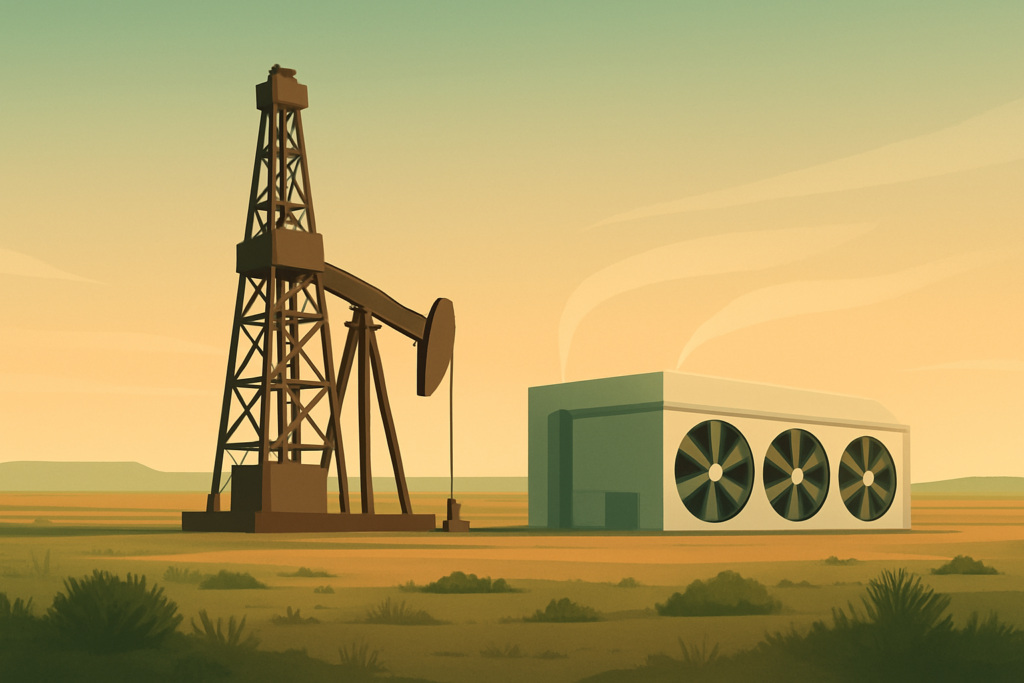
The crown jewel of OXY’s innovation pipeline is Stratos, the world’s largest Direct Air Capture plant. As of February 2026, Stratos is in the final stages of commissioning in Ector County, Texas. Once fully operational, it is designed to remove 500,000 metric tons of CO2 annually from the atmosphere. OXY’s "Net Zero" oil strategy—using captured CO2 for Enhanced Oil Recovery (EOR)—represents a paradigm shift, potentially creating a market for oil with a lower-than-zero carbon footprint.
Competitive Landscape
In the Permian Basin, OXY competes with titans like ExxonMobil (NYSE: XOM) and Chevron (NYSE: CVX). While Exxon and Chevron have larger global footprints and stronger balance sheets, OXY’s competitive edge lies in its EOR expertise. OXY is the world leader in using CO2 to push more oil out of mature wells, a technical advantage that dovetails perfectly with its carbon capture ambitions. Compared to independent E&Ps like EOG Resources (NYSE: EOG), OXY offers investors a more diversified "energy transition" play.
Industry and Market Trends
The energy sector in 2026 is grappling with "The Great Rebalancing." While global oil demand remains resilient, there is an accelerating shift toward decarbonization. US producers are prioritizing "value over volume," focusing on returning capital to shareholders rather than aggressive production growth. Furthermore, the consolidation of the Permian Basin has left fewer, larger players who are more disciplined in their capital expenditure (CapEx) programs.
Risks and Challenges
- Commodity Price Sensitivity: OXY remains highly leveraged to the price of West Texas Intermediate (WTI). A sustained dip below $60/bbl could pressure its ambitious LCV funding.
- Execution Risk: The DAC technology at scale is unproven commercially. Any technical failures or cost overruns at Stratos could sour investor sentiment.
- Regulatory Uncertainty: While the Inflation Reduction Act (IRA) provided significant tailwinds via 45Q tax credits, any future political shifts in Washington could impact the subsidies that make DAC economically viable.
Opportunities and Catalysts
- DAC Commercialization: The official startup of Stratos in mid-2026 serves as a major near-term catalyst.
- Carbon Credit Sales: OXY has already pre-sold credits to blue-chip firms like Microsoft (NASDAQ: MSFT) and Amazon (NASDAQ: AMZN), creating a high-margin, non-commodity revenue stream.
- Berkshire Factor: With Berkshire Hathaway owning nearly 27% of common stock and holding warrants to buy more, many investors believe an outright acquisition by Buffett remains a possibility, providing a "floor" for the stock price.
Investor Sentiment and Analyst Coverage
Sentiment among institutional investors is currently "cautiously optimistic." While the 2025 stock performance was disappointing, the de-risking of the balance sheet via the OxyChem sale has been hailed as a masterstroke. Hedge fund activity shows a slight increase in positioning ahead of the Q4 report, with many looking for guidance on the 2026 CapEx budget. Wall Street analysts remain divided, with a consensus "Hold/Buy" rating and price targets largely dependent on oil price assumptions for the second half of 2026.
Regulatory, Policy, and Geopolitical Factors
OXY is a primary beneficiary of U.S. federal policy, specifically the Inflation Reduction Act, which increased the 45Q tax credit to $180 per ton for CO2 captured via DAC and stored geologically. Geopolitically, OXY’s focus on domestic U.S. production insulates it from some risks in the Middle East, though its operations in Oman and Algeria remain significant enough to warrant attention regarding regional stability.
Conclusion
Occidental Petroleum enters 2026 as a leaner, more focused entity. By shedding its chemical business and doubling down on the Permian and carbon capture, Vicki Hollub has placed a massive bet on the longevity of hydrocarbons in a net-zero world. Investors should watch tomorrow’s earnings closely—not just for the bottom-line numbers, but for updates on the Stratos commissioning and the finalized debt reduction roadmap. OXY is no longer just an oil company; it is a high-stakes experiment in the future of energy.
This content is intended for informational purposes only and is not financial advice.